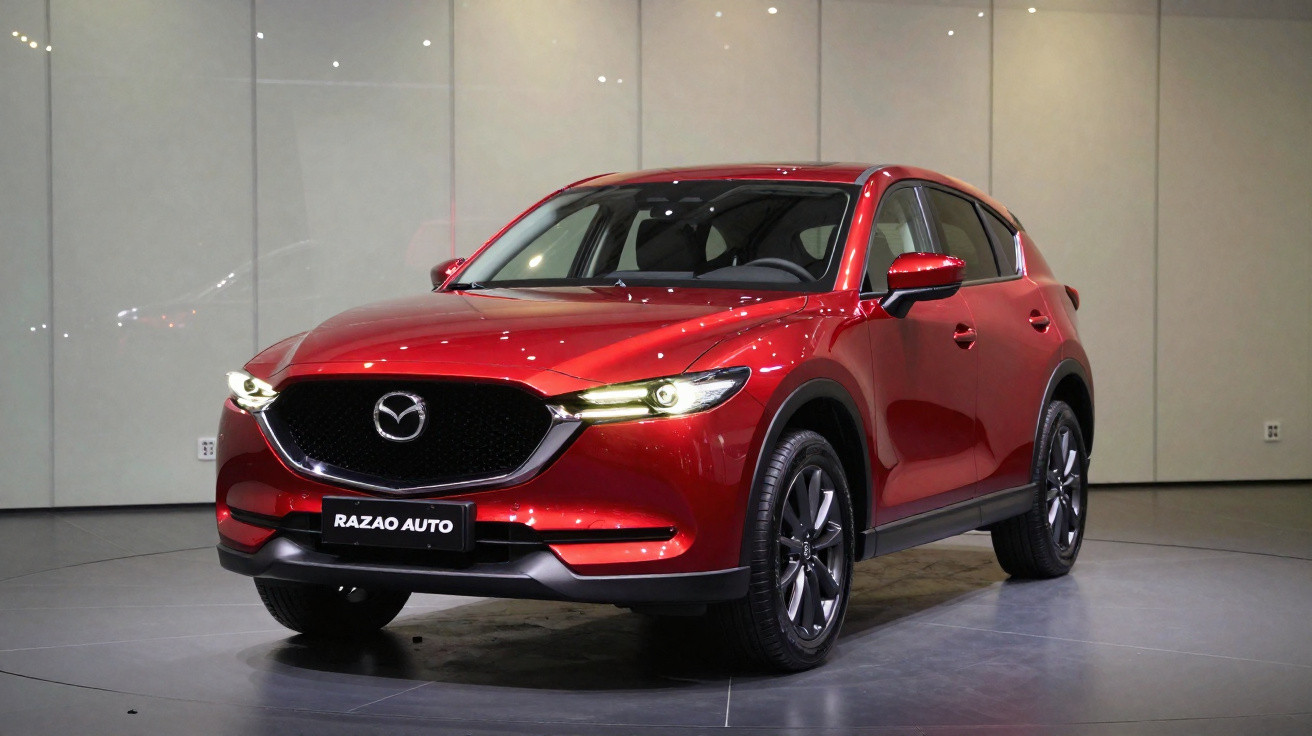
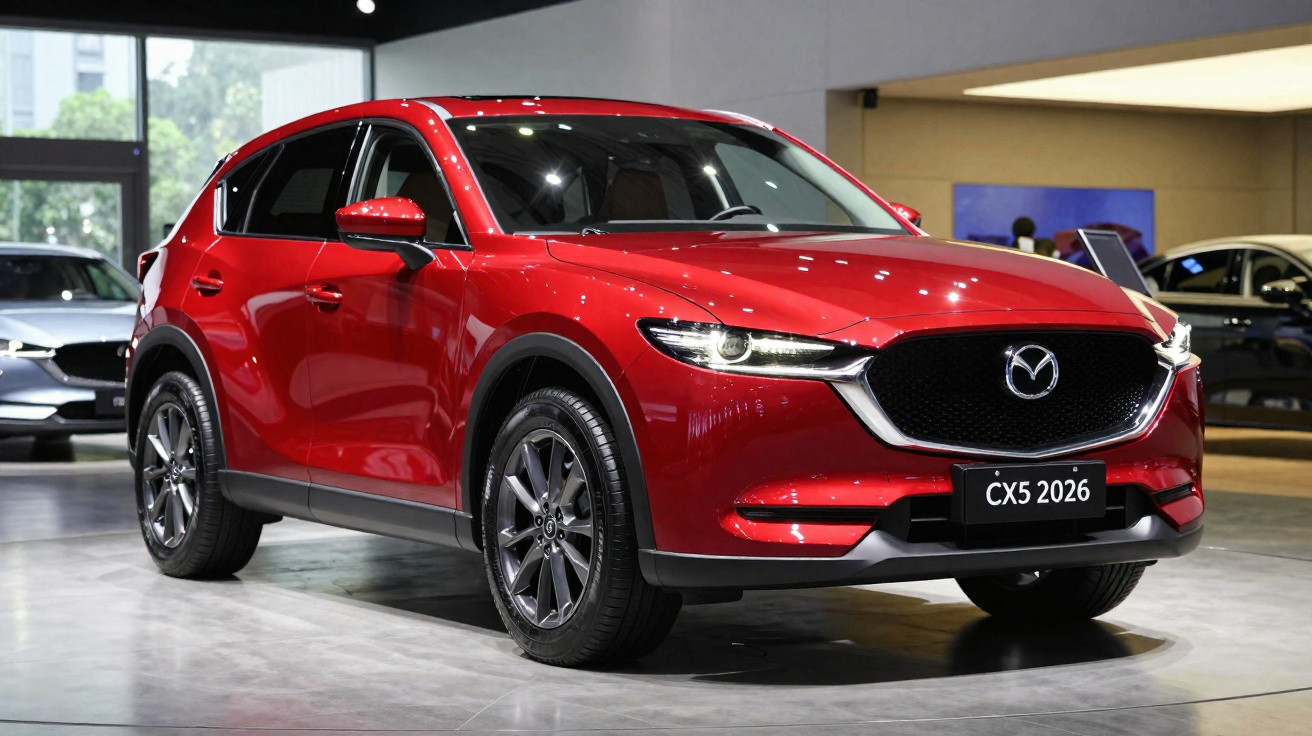
Almost a year after Miguel Dias tested it with the Skyactiv-G petrol engine, the Mazda CX-5 Homura has returned to the Razão Automóvel garage.
This time, it arrives with the 184 PS 2.2 Skyactiv-D Diesel engine - also offered with 150 PS - raising an obvious question: is this the engine that best suits the Japanese SUV?
After all, in the previous test, Miguel Dias noted that the combination of the 165 PS 2.0 Skyactiv-G engine and six-speed manual gearbox felt somewhat “underpowered” for an SUV such as the CX-5. Does the 2.2 Skyactiv-D make for a better choice?
Better than ever
Before addressing that question, it is worth noting that the CX-5 has been “refreshed” in the time between these two tests. As well as exterior revisions at both the front and rear, the CX-5 has received a technological upgrade.
The central display has grown to 10.25 inches, replacing the previous 8-inch unit, while the infotainment system is also new. The screen is easy to read, and the new system deserves praise for avoiding an excessive number of menus that, in many cases, would never even be “visited”.
However, it is in the overall quality of its cabins that Mazda has progressed most over recent years. The Mazda CX-5 Homura is no exception, and it is no exaggeration to say that the gap between this Japanese offering and premium models is becoming ever smaller in this respect.
As for space, I share Miguel’s view. Rear-seat room is plentiful, more than meeting a family’s requirements. Meanwhile, the 510-litre boot, complete with a rubber mat, is fully competitive with what rival models provide.
Is the Mazda CX-5 Homura engine worthwhile?
If we take the saying that first impressions matter most literally, I cannot say that the 2.2 Skyactiv-D immediately won me over.
When cold, it is notably noisy, although it improves as it reaches its optimum operating temperature. Even then, however, it never becomes a benchmark for refinement - a clear contrast with Mazda’s otherwise effective sound insulation.
Although the 2.2-litre Diesel does not disappoint in terms of performance, it never truly impresses either. On paper, for instance, the CX-5 Homura is quicker than a Tarraco 2.0 TDI with 150 PS and a DSG gearbox, yet in real-world driving its extra 34 PS are not especially noticeable.
The six-speed automatic gearbox is partly responsible. It operates smoothly but proved not to be particularly quick and, above all, features long gearing that reveals the CX-5’s preference for motorway driving. I must admit that this was where I appreciated it most.
On the motorway, the lengthy gearing makes the engine “sing quietly”, holding revs in their ideal range of around 2000-2500 rpm, even when travelling a little faster.
It is also in these conditions that the Mazda CX-5 Homura’s on-board comfort and impressive stability stand out most clearly.
Once the corners arrive, though, the long gearing somewhat undermines the precise, direct steering and the well-sorted chassis. Always secure, predictable and stable, the CX-5 naturally cannot match the driving enjoyment of the Japanese brand’s smaller models, but it is not far off.
Finally, regarding fuel consumption, the long gearing is only truly beneficial when driving extensively on country roads and motorways. In those conditions, averages of 5.8 l/100 km to 6.2 l/100 km can be achieved without much effort.
In urban driving, however, it is often necessary to use manual mode to “liven up” the 2.2-litre engine, and that is reflected in fuel economy: consumption rarely falls below 6.5-7.0 l/100 km in these circumstances.
Is it the right car for me?
Understated and with an overall quality level very close to that offered by the German benchmarks, the Mazda CX-5 remains an option worth considering for anyone seeking a comfortable, spacious family SUV.
The CX-5 Homura brings a more distinctive appearance, but above all a strong standard equipment package. This is an area in which it clearly distances itself from potential premium German rivals, against which Hiroshima’s models increasingly appear capable of competing.
As for the engine, while it is better suited to the CX-5’s family-focused character than its petrol counterpart, the truth is that even in this 184 PS and 445 Nm version, it does not impress with its performance.
Instead, it “fits like a glove” with this SUV’s more relaxed, family-oriented nature, proving a capable companion on long journeys - especially on the motorway, the natural “habitat” of the CX-5 Homura.





Comments
No comments yet. Be the first to comment!
Leave a Comment