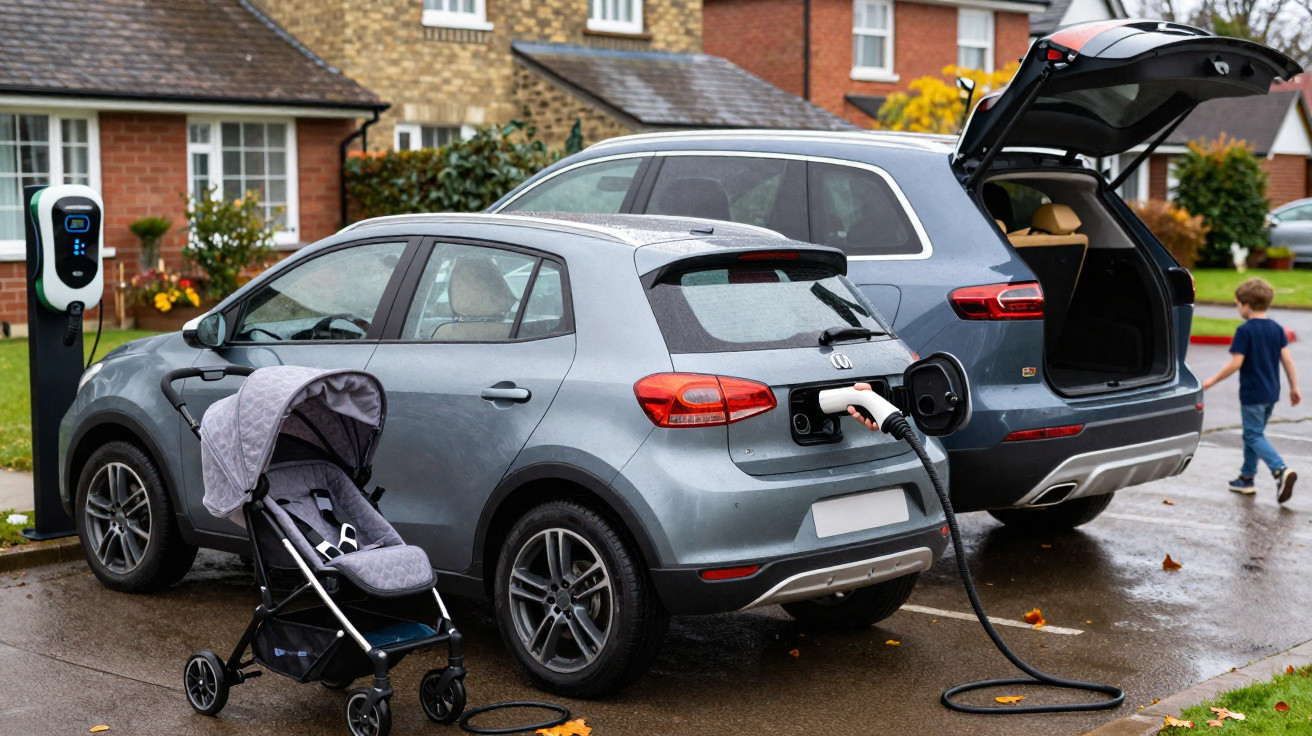
Choosing an electric SUV often means balancing two conflicting needs. A smaller car is easier to park outside a terraced house or manoeuvre through a crowded supermarket car park, but may not cope with a buggy, holiday luggage and rear-seat passengers. A larger seven-seater offers more flexibility, yet brings a higher price, bigger dimensions and potentially higher running costs.
Škoda’s forthcoming Epiq and Peaq are aimed at opposite ends of that decision. The Epiq is a compact electric SUV intended for everyday family and urban use, while the Peaq is a much larger electric SUV designed around seven seats and longer journeys. Neither should be judged on early headlines alone: final UK prices, equipment and technical figures matter just as much as the badge on the bonnet.
Two cars for two different routines
The Epiq and Peaq are not simply small and large versions of the same idea. They are likely to suit households with very different parking, passenger and charging requirements.
The Škoda Epiq is positioned as an entry-point electric SUV. Its appeal should be its compact footprint, a raised driving position and practical cabin packaging. That could make it easier to live with for drivers who regularly deal with narrow roads, tight driveways and multi-storey car parks.
The Škoda Peaq is intended to sit at the other end of the range as a large, fully electric SUV with three rows of seats. It is aimed at buyers who need regular access to six or seven seats, or who want more space for longer family trips.
The most useful EV is not necessarily the one with the biggest battery. It is the one that suits your usual passengers, parking space and charging routine.
Why the Epiq could appeal to smaller households
A compact electric SUV can make sense for buyers moving from a supermini, hatchback or older small petrol crossover. Many want easier access and a more upright seating position, but do not want the bulk of a large SUV for the school run or commute.
If Škoda delivers the promised practicality, the Epiq could be relevant to:
- couples replacing a small hatchback;
- parents with one or two young children;
- drivers who need room for weekly shopping and occasional weekend trips;
- households with limited parking space;
- buyers who want an EV without stepping up to a much larger vehicle.
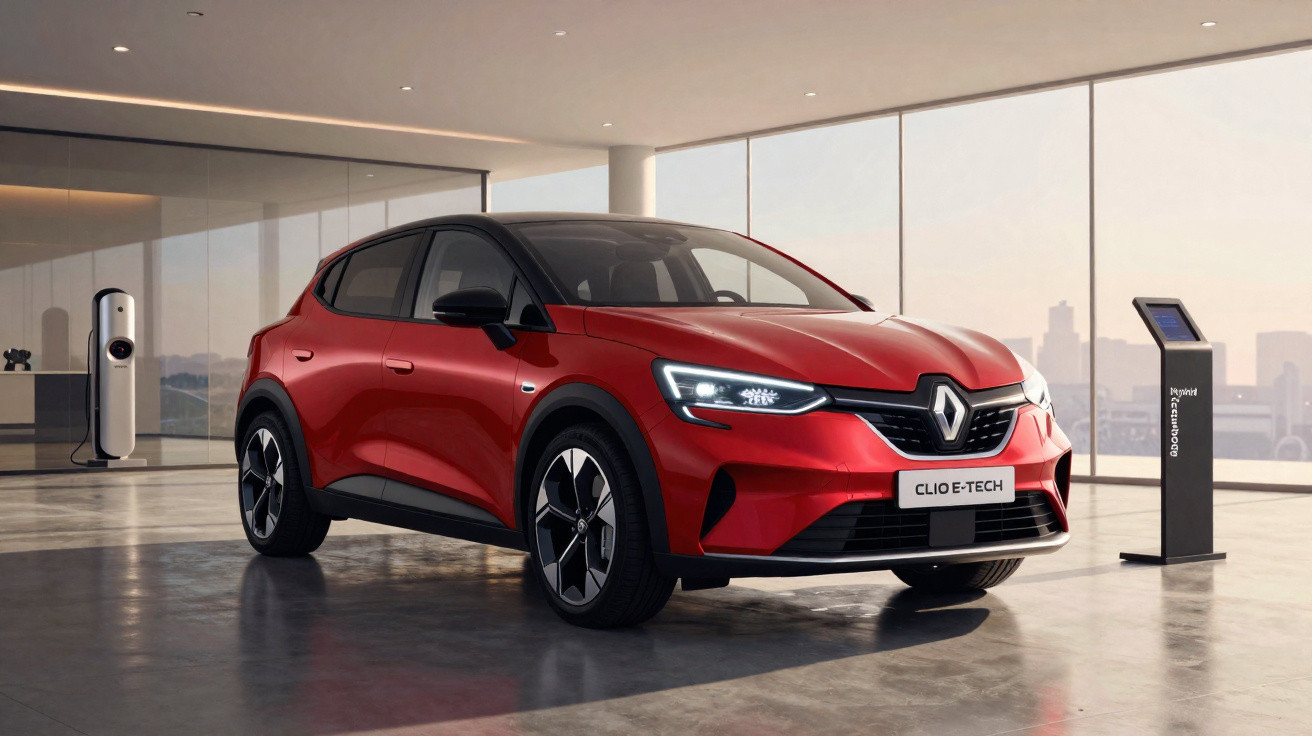
The likely competition includes compact electric crossovers such as the Renault 4 E-Tech, Kia EV3, Hyundai Inster and Citroën ë-C3 Aircross. They vary significantly in size, battery options and rear-seat space, so similar-looking list prices do not tell the full story.
For families, the useful details are often mundane ones. Can a buggy fit without removing a wheel? Is there space for rear-facing child seats? Can adults sit behind a tall driver? Is the boot square enough for luggage rather than simply generous on paper?
Checks worth making at a showroom
- Take your child seats and buggy if possible. Manufacturer measurements are useful, but your own equipment is the real test.
- Try the rear doors in a tight space. A wide-opening door is less helpful if it hits the wall of your driveway or the next car in a bay.
- Check the boot floor and load lip. A deep step can make heavy shopping, pushchairs and suitcases more awkward to lift.
The Peaq’s challenge: useful seven-seat space
The Peaq is expected to compete in a demanding part of the market. Large electric seven-seaters are still relatively expensive, and the third row in some models is best treated as occasional seating for children rather than a place adults will want to use for hours.
Škoda’s larger SUV will therefore need to offer more than an impressive official range figure. Buyers are likely to compare it with vehicles including the Kia EV9, Hyundai Ioniq 9 and Peugeot E-5008, paying close attention to real family usability.
Questions to ask when full specifications are available include:
- Is the third row suitable for adults as well as children?
- How much boot space is left with all seven seats in use?
- Are there ISOFIX mounting points where your family needs them?
- Is there practical storage for charging cables, coats and sports kit?
- How easily do the rear seats fold and slide?
- What charging performance can be expected on a long journey?
A seven-seat SUV is often bought for a handful of demanding days each year: a half-term trip in wet weather, airport runs, a camping weekend or collecting relatives. But it still has to work for weekday parking and errands. The best arrangement is not always the physically biggest car; it is the one whose space can be used easily.
Range and charging: look beyond the headline number
Official range figures provide a consistent comparison point, but they are not a promise of the distance you will cover on every journey. Motorway speed, cold weather, rain, cabin heating, steep routes and a fully loaded car can all increase energy use.
This is particularly relevant in the UK through autumn and winter, when short journeys and lower temperatures can make an EV less efficient than in mild conditions.
Compare the details that affect real trips
- Battery capacity and official range
Compare versions with similar equipment and wheel sizes. Larger wheels can affect efficiency, while a bigger battery may add range but can also add weight and cost.
- Rapid-charging performance
Do not focus solely on the highest advertised charging rate. Ask for the quoted charging time over a useful range, such as 10 to 80 per cent, and remember that speed can vary with battery temperature, charger capability and conditions.
- Your regular long journey
Think about the trip you actually make: perhaps visiting family, travelling to the coast or heading north on a bank holiday. Identify sensible charging stops and leave a margin rather than planning to arrive nearly empty.
- Home and local charging
Off-street parking can make ownership simpler, particularly if you can charge when the car is parked for several hours. If you rely on public charging, check the availability and reliability of sites near home, work and regular routes before ordering.
A large battery can be helpful, but a dependable charging plan is more valuable than chasing the highest official range figure.
Value is about the whole ownership package
It is tempting to treat the lowest advertised price as the deciding figure, particularly with a new electric model. In practice, the version that suits your needs may cost more once battery choice, charging capability and useful equipment have been considered.
Before comparing the Epiq, Peaq or any rival, look at:
- the final on-the-road price and any finance terms;
- standard safety and parking equipment;
- wheel and tyre sizes, including replacement costs;
- insurance quotes for the exact model where possible;
- servicing arrangements and warranty terms;
- whether a home chargepoint, cable or adapter is included or needed;
- vehicle dimensions, including mirrors and door-opening space.
For the Peaq, towing capacity and the effect of towing on range may also matter. Wait for confirmed UK figures rather than assuming they will match another model or an early concept.
What remains to be confirmed
Forthcoming cars can look highly convincing in official images and early announcements, but buyers should avoid treating preliminary information as a finished UK specification.
For the Epiq, the key unknowns may include final battery choices, charging capability, equipment levels, boot capacity and the price of versions with the range most buyers want. A low entry price is only useful if the specification is suitable for your normal journeys.
For the Peaq, buyers will need confirmed details on third-row room, luggage space with every seat occupied, charging times, towing data and available safety equipment. These details will decide whether it genuinely works as a seven-seat family car rather than simply looking like one.
Common mistakes when choosing an electric SUV
- Buying for one holiday journey rather than daily life. A huge vehicle may be unnecessary if it normally carries one person around town.
- Assuming seven seats mean seven people plus luggage. Always inspect the boot with the third row raised.
- Comparing only official range. Consider winter motorway travel and a loaded car, not just summer urban driving.
- Ignoring physical dimensions. Measure your drive, garage and usual parking spaces.
- Choosing a car before checking charging access. Public charging can work well, but it needs more planning than plugging in at home.
- Ordering without sitting in every row. Comfort, visibility, ride quality and screen usability can become tiring very quickly.
Charging safely at home and away
Use a properly installed chargepoint where possible, follow the vehicle and chargepoint instructions, and have electrical work carried out by an appropriately qualified installer. Do not use damaged cables, improvised adapters or extension leads not intended for EV charging.
Keep connectors clean and dry, and avoid routing a cable across a pavement, shared access or any area where it could create a trip hazard. If you park on the street or live in a flat, investigate local charging provision and any permissions needed before making home charging central to your plans.
The Epiq could be the more natural fit for buyers who want a compact electric SUV that is easier to park and potentially less costly to buy than a full-size family model. The Peaq is the one to watch for households that genuinely need three rows and more long-distance flexibility.
For now, add either car to a shortlist rather than making a decision on promises alone. When final UK specifications are published, compare like-for-like versions, take your family gear to the showroom and build a charging plan around real journeys. That is how to decide whether either Škoda fits your life, not just an attractive announcement.








Comments
No comments yet. Be the first to comment!
Leave a Comment