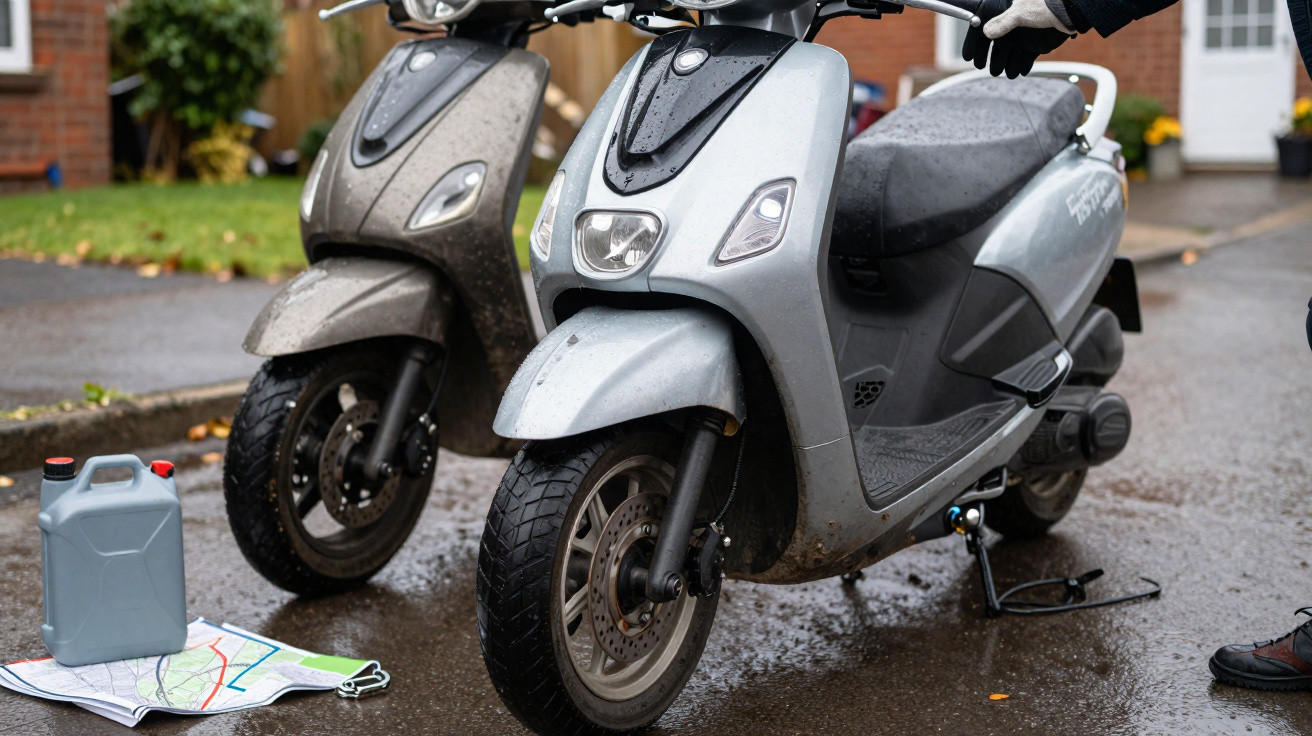
A low-priced 125cc scooter with ABS, heated grips and a large fuel tank sounds tailor-made for a British commute. It promises lower fuel costs than a car, easier progress through traffic and a little more comfort when the weather turns cold and wet.
The important catch is that an attractive price in a Lidl listing elsewhere in Europe does not automatically make the scooter a straightforward UK purchase. Before focusing on the claimed 500-kilometre range or the equipment list, establish whether the exact machine can be registered, insured, serviced and supplied with parts in Britain.
The real bargain is not the cheapest scooter on screen; it is the one you can register, insure and keep running without a struggle.
What the listing appears to offer
The Prike XDV 125 is presented as an adventure-styled automatic scooter, with a tall screen, crossover-inspired bodywork and a continuously variable transmission rather than manual gears. Specifications shown in overseas listings include a liquid-cooled single-cylinder engine, a 13.5-litre fuel tank and a stated kerb weight of 156kg.
The advertised equipment list includes:
- Claimed power of 8.4kW, or around 11.4bhp
- A claimed top speed of 95km/h, roughly 59mph
- Front and rear disc brakes with ABS
- Heated grips
- LED lighting
- Tyre-pressure monitoring
- Keyless starting
- A TFT-style instrument display
- Centre and side stands
These are useful features on paper, particularly heated grips and ABS. However, buyers should ask the seller to confirm the final specification for the individual scooter being supplied. Equipment levels, colours, approval details and warranty arrangements can vary between markets.
Put the 500-kilometre range claim in perspective
The range figure appears to be based on the stated 13.5-litre tank and a quoted fuel consumption figure of 2.5 litres per 100km. On that calculation, the theoretical distance is about 540km, or around 335 miles.
That is not the same as a dependable real-world range. Fuel use will change with the rider’s weight, passenger or luggage, tyre pressures, hills, wind, stop-start traffic and cruising speed. Cold weather can also affect economy, while riding at fast dual-carriageway speeds will make a small-capacity engine work harder.
Rather than trying to extract every mile from a tank, get to know the scooter’s real consumption after several fill-ups. Keep a sensible fuel reserve, especially when travelling through rural areas or outside normal filling-station opening hours.
A more realistic way to plan journeys
- Treat the maximum figure as a best-case calculation. Do not assume every tank will deliver 335 miles.
- Fill up before long stretches of motorway-free rural roads. Petrol stations can be less frequent in some parts of the UK.
- Check tyre pressures when the tyres are cold. Use the manufacturer’s recommended settings for the load you are carrying.
- Record fuel use over a few tankfuls. Brim-to-brim calculations are more useful than relying entirely on a dashboard estimate.
For everyday commuting, a larger tank may simply mean fewer visits to the petrol station. For longer trips, comfort, screen protection, seat shape and luggage capacity are likely to matter more than the headline range.
Why ABS and heated grips matter in Britain
ABS is a worthwhile feature on a scooter used through the British autumn and winter. It can reduce the risk of a wheel locking under heavy braking, particularly on wet tarmac or surfaces contaminated with leaves, diesel or loose gravel.
It cannot create grip where there is none. A rider still needs a safe following distance, suitable tyres and smooth brake application. Painted road markings, metal drain covers and wet leaves can all be particularly slippery.
Heated grips can make cold journeys more tolerable, but they are not a substitute for waterproof, insulated gloves. They warm the palms rather than every part of the hand, and should not tempt anyone into riding in icy conditions or severe weather.
LED lighting is also useful for visibility and can reduce electrical load compared with older systems. If the scooter is sourced from outside the UK, though, check that its headlamp, indicators, rear reflector and speedometer meet the requirements for registration and use here.
Helpful equipment makes a commute more comfortable, but good tyres, training and sensible riding make it safer.
Can you ride it legally in the UK?
A 125cc scooter is not automatically suitable for every car driver. In general, riders using a provisional motorcycle entitlement need to complete compulsory basic training (CBT) before riding a 125cc machine on the road.
A learner may ride a scooter of up to 125cc and no more than 11kW after CBT, provided it displays L-plates. They cannot carry a passenger or use motorways. The claimed 8.4kW output shown in the listing would be within the usual learner power limit, but the official documents for the exact vehicle are what matter.
Riders with an A1, A2 or full category A motorcycle entitlement have different permissions. Licence rules can depend on the categories held and when they were gained, so check the current position with the DVLA before buying.
Registration checks for an overseas deal
Before paying a deposit, ask for written evidence that the scooter can be registered in the UK. Confirm:
- The vehicle identification number is present, legible and matches all paperwork.
- The scooter has appropriate type-approval documentation or can meet the relevant Individual Vehicle Approval process where needed.
- It meets UK requirements for lighting, emissions, mirrors and other road equipment.
- The speedometer has a clear mph reading suitable for UK use.
- VAT, delivery, registration, number plate and any import charges are included in the final price.
- An insurer will cover the exact make, model and imported specification.
Do not rely on a seller saying that registration is ‘easy’. Ask who will complete the DVLA process, what documents will be supplied and what happens if registration is refused.
Check parts and servicing before the price tempts you
A scooter can be mechanically sound yet become frustratingly expensive if routine parts or diagnostic support are hard to obtain. This matters more with a model that does not have an established UK dealer network.
Ask the seller for clear answers to these questions:
- Which UK workshop can carry out warranty repairs?
- Where will service parts be held?
- Are brake pads, drive belts, filters and tyres available quickly?
- Can the supplier provide replacement keys, body panels, electronic control units and sensors?
- Is the warranty valid if servicing is carried out by an independent motorcycle workshop?
- Who pays for collection or transport if a fault leaves the scooter unable to be ridden?
Most competent motorcycle workshops can deal with tyres, oil changes and basic brake work. Model-specific electronic faults, immobiliser keys and bodywork can be much more difficult without a reliable UK parts route.
Common mistakes with online scooter deals
The listed price is only one part of the cost. Watch for these avoidable errors:
- Assuming a marketplace listing is sold by Lidl itself. Identify the actual trader and read its terms and contact details.
- Comparing a euro price with a UK on-the-road price. Include delivery, tax, registration, insurance, security and the first service.
- Treating a calculated range as a guarantee. Weather and riding conditions can make a substantial difference.
- Skipping a proper handover inspection. Check lights, brakes, fluid levels, tyres, charging and all supplied keys before regular use.
- Underestimating a 156kg scooter. Try moving it on a slope and using the centre stand if possible.
- Buying before obtaining an insurance quote. Some insurers may not recognise a less familiar imported model immediately.
- Leaving theft protection until later. Budget for a suitable lock or chain, and use secure parking wherever possible.
Compare the whole ownership package
The attraction here is the combination of a substantial fuel tank and comfort-focused equipment at a low advertised price. It is sensible, however, to compare the delivered UK cost with scooters sold through established British dealers.
A more familiar model may cost more initially but offer a local test ride, clearer warranty arrangements, readily available parts and easier resale. That does not automatically make the cheaper scooter poor value; it simply means the buyer needs to place a value on support and convenience.
If most journeys are short and home charging is practical, an electric 125-equivalent scooter may also be worth considering. Check real-world range in colder weather, battery warranty, charging access and insurance in the same detail as you would petrol consumption.
A practical final checklist
Request the full specification sheet, VIN, warranty conditions, service schedule and a complete delivered price in writing. Obtain confirmation of UK registration eligibility, then get an insurance quote using the exact model description.
Finally, sit on the scooter and assess it as a machine you will use on a dark, wet weekday morning. Check whether both feet reach the ground comfortably, whether you can manage its weight and whether a local workshop is willing to support it.
If the paperwork is clear, the final cost remains competitive and a dependable parts route exists, the ABS, heated grips and larger tank could make this an appealing commuter. If any of those basics are uncertain, a cheaper-looking deal can become the more expensive choice.



Comments
No comments yet. Be the first to comment!
Leave a Comment