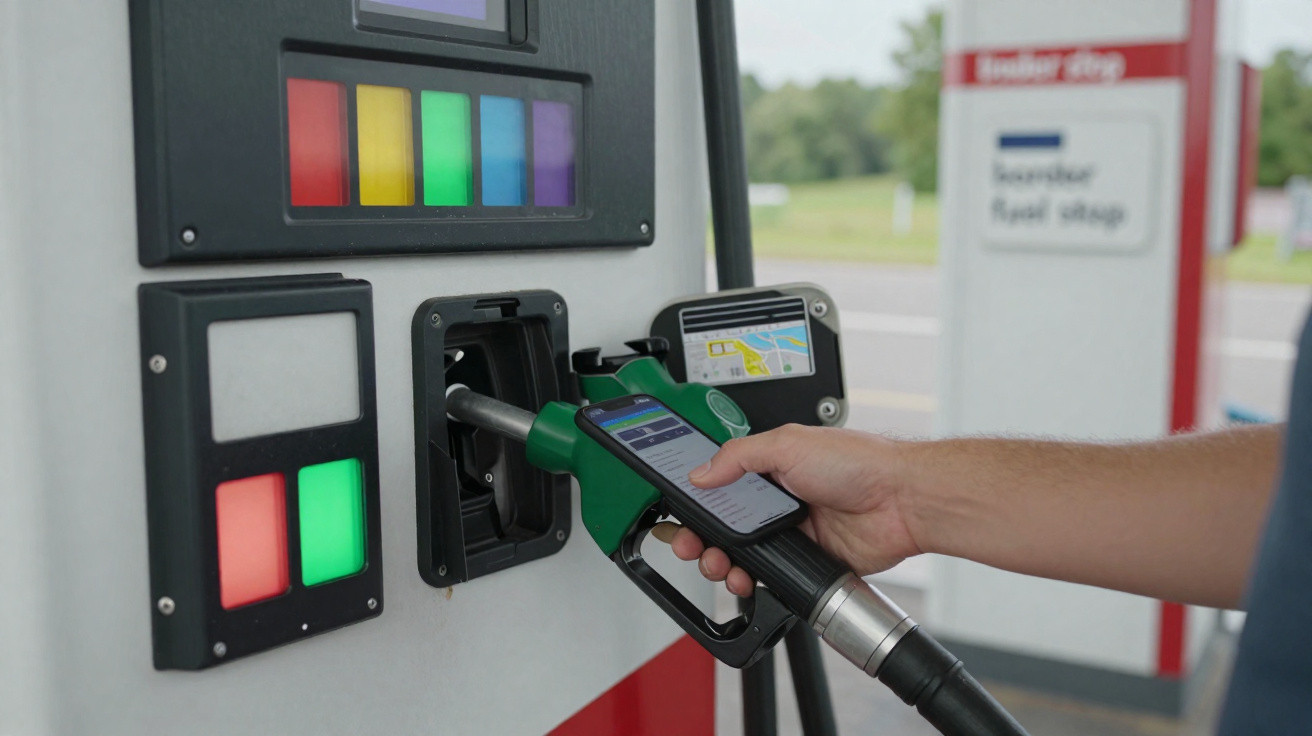
A low number on a European petrol-station sign can make a fill-up look like a bargain. Yet €1.84 a litre does not automatically mean cheaper fuel than you would buy in the UK, and it certainly does not prove that a future tax announcement will put more money in your pocket.
The useful trick is to compare the whole cost, not just the pump price: convert euros to pounds, allow for card charges, check the fuel is suitable, then subtract the cost of any detour. For most drivers travelling from Great Britain, a special journey abroad solely to save on petrol will not stack up.
Convert the pump price before comparing it
A price displayed in euros must be converted into pounds using the rate your payment provider will apply. That may differ slightly from the rate shown by a search engine, currency app or newspaper.
A simple calculation is:
foreign pump price ÷ euros received for £1 = approximate price in pounds per litre
For example, if fuel is €1.84 per litre and your card converts at €1.17 to £1, the base cost is about £1.57 per litre. That figure can rise if your bank charges for overseas transactions.
Check your card terms before travelling. Some debit and credit cards add a foreign-transaction fee; others use the card network’s exchange rate without an additional charge. Cash also has a cost if you have paid a poor exchange rate to obtain it.
The number on the foreign pump is the start of the calculation, not the saving itself.
Do not treat a proposed tax change as a price cut
Fuel prices are influenced by wholesale oil prices, refining, distribution, exchange rates, taxes and retailer margins. Local competition can make a noticeable difference too, even between nearby filling stations.
A reported tax change, subsidy or levy may eventually affect forecourt prices, but it is not the same as a guaranteed reduction at every pump. Measures can be changed, delayed or withdrawn, while other costs can move in the opposite direction.
Before planning around a claimed future saving, check:
- whether the policy has actually taken effect;
- the date it starts and the fuels it covers;
- whether the reported reduction is an estimate rather than a fixed amount;
- current prices at stations on your route;
- the exchange rate and fees attached to your payment method.
The same caution applies in the UK. A change in fuel duty or wholesale prices does not mean every forecourt will reduce its price by the same amount, or at the same time.
Work out whether a detour is worthwhile
You need four numbers: the saving per litre, the litres you will buy, the extra distance and the cost of driving it.
1. Find the genuine saving per litre
Compare equivalent products. The word “Super” is not a universal grade: in some European countries it commonly refers to 95 RON petrol, whereas UK forecourts often use “super unleaded” for higher-octane petrol. Read the label, not just the name.
If the foreign fuel works out at £1.50 a litre and your comparable local fuel costs £1.60, the difference is 10p a litre.
2. Use the amount you will actually buy
A 50-litre fill at a 10p saving is worth £5. But that only applies if you can take 50 litres. If the tank is already half full, the saving will be much lower.
Do not run the tank down unnecessarily while chasing a cheaper station. Low fuel levels leave less margin for traffic, road closures and diversions.
3. Cost the extra miles
A detour consumes fuel and time. It may also involve queues, slower roads and tolls.
As a rough example, a 25-mile round-trip detour in a car averaging 45mpg uses around 2.5 litres. Multiply that by the price you pay for fuel to find the minimum direct cost of the diversion. It may already cancel out a modest saving.
4. Include costs you cannot avoid
From Great Britain, travelling to mainland Europe normally means paying for a ferry or Channel Tunnel crossing. That cost will outweigh the saving on a single tank unless you were making the crossing anyway.
Also allow for tolls, parking and purchases you would not otherwise make. A day out can be enjoyable, but it is not a fuel-saving exercise if the extra spending exceeds the pump-price difference.
The UK reality: save while travelling, not because of it
For drivers in England, Scotland and Wales, crossing the Channel specifically to buy cheaper fuel is rarely economical. Even a sizeable difference per litre is small compared with the cost and time of an international journey.
It can make sense to compare prices if you are already travelling for a holiday, work or family visit. Filling up away from expensive motorway service areas, where practical, may reduce the overall motoring cost of the trip.
In Northern Ireland, comparing prices with the Republic of Ireland can be more realistic because the border is reached by road. Even then, prices vary between towns and the same full-cost calculation applies.
Useful habits when driving abroad include:
- checking established fuel-price tools for the country you are visiting;
- choosing a busy, well-lit forecourt where possible;
- keeping sufficient fuel for an unexpected diversion;
- checking whether an unattended pump needs chip-and-PIN verification;
- keeping your route and overnight stops in mind before choosing where to fill up.
Make sure the fuel is suitable for your car
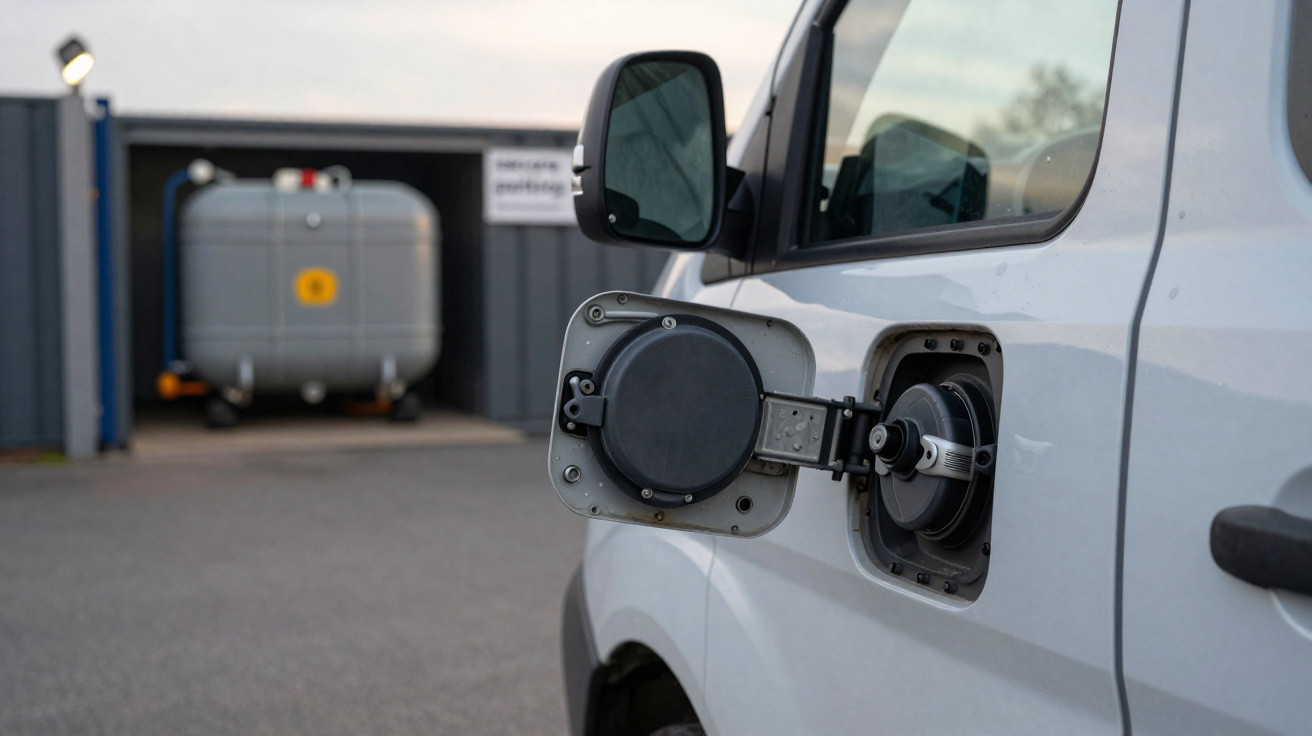
Use the vehicle handbook or the label inside the fuel flap to identify the permitted fuel grades. Check both octane rating and ethanol content.
Many petrol cars sold in recent years can use E10, but some older cars, classics and specialist vehicles may need E5 or another specified grade. Higher octane is not automatically better, and an unfamiliar product name is not proof that it matches what your engine needs.
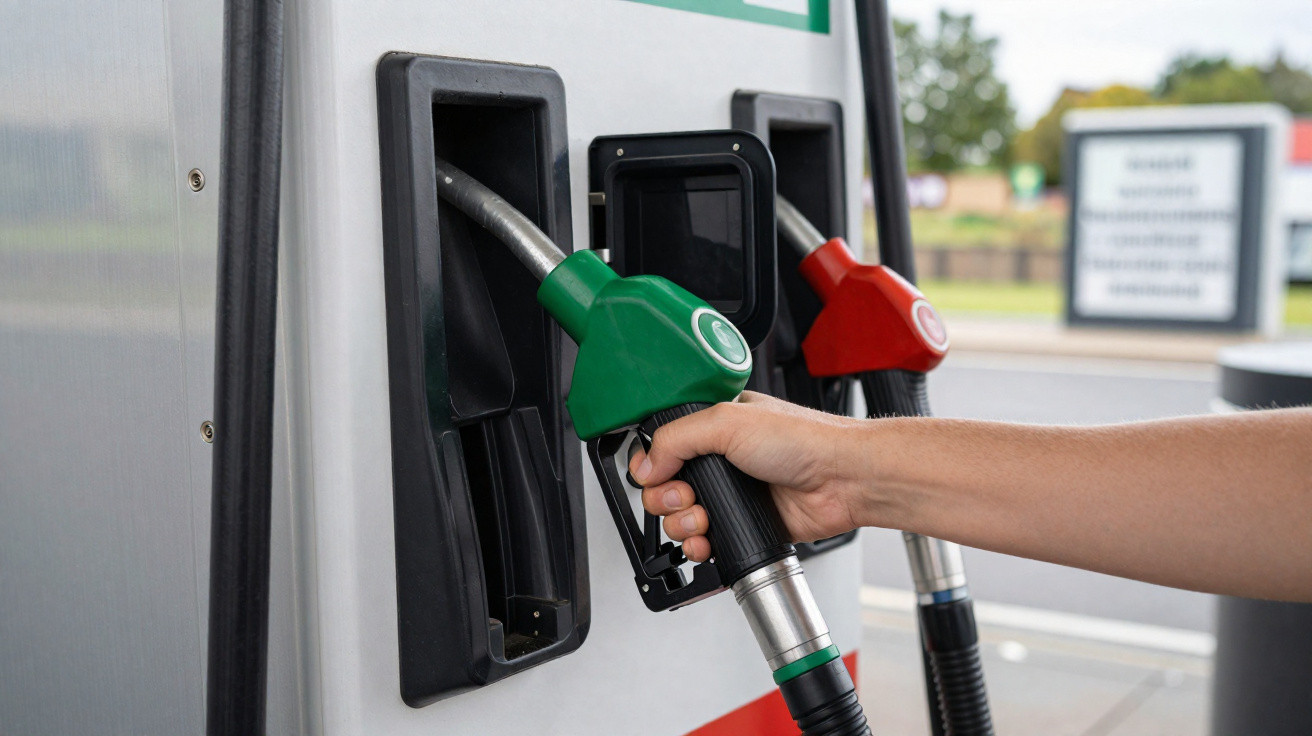
Diesel drivers should be equally careful. Labels, nozzle designs and AdBlue arrangements may differ between countries. Never identify a fuel by nozzle colour alone.
A cheaper fill is no bargain if the fuel is unsuitable for the vehicle.
Common mistakes when chasing cheaper fuel
The most expensive errors are often made before reaching the forecourt.
- Comparing euros directly with pounds. €1.84 is not £1.84.
- Using an old exchange rate. Your provider’s live rate may be different.
- Ignoring overseas card fees. These can remove a small price advantage.
- Forgetting the detour. Fuel, tolls and time can cost more than the saving.
- Assuming “Super” means premium fuel. Check the RON rating and ethanol label.
- Relying on a political headline. Confirm current prices and whether a policy is in force.
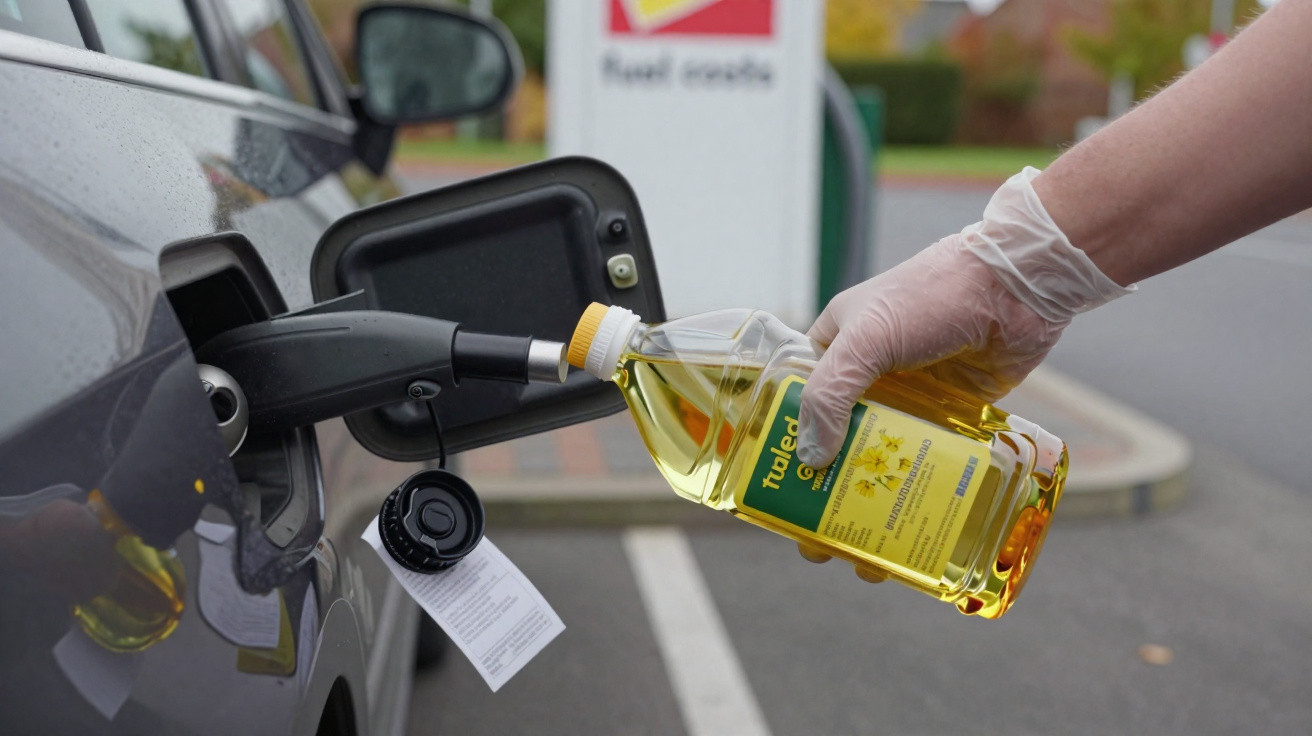
- Carrying fuel unsafely. Use only approved containers, secure them upright and follow the rules of the country you are in.
Pay safely at an overseas pump
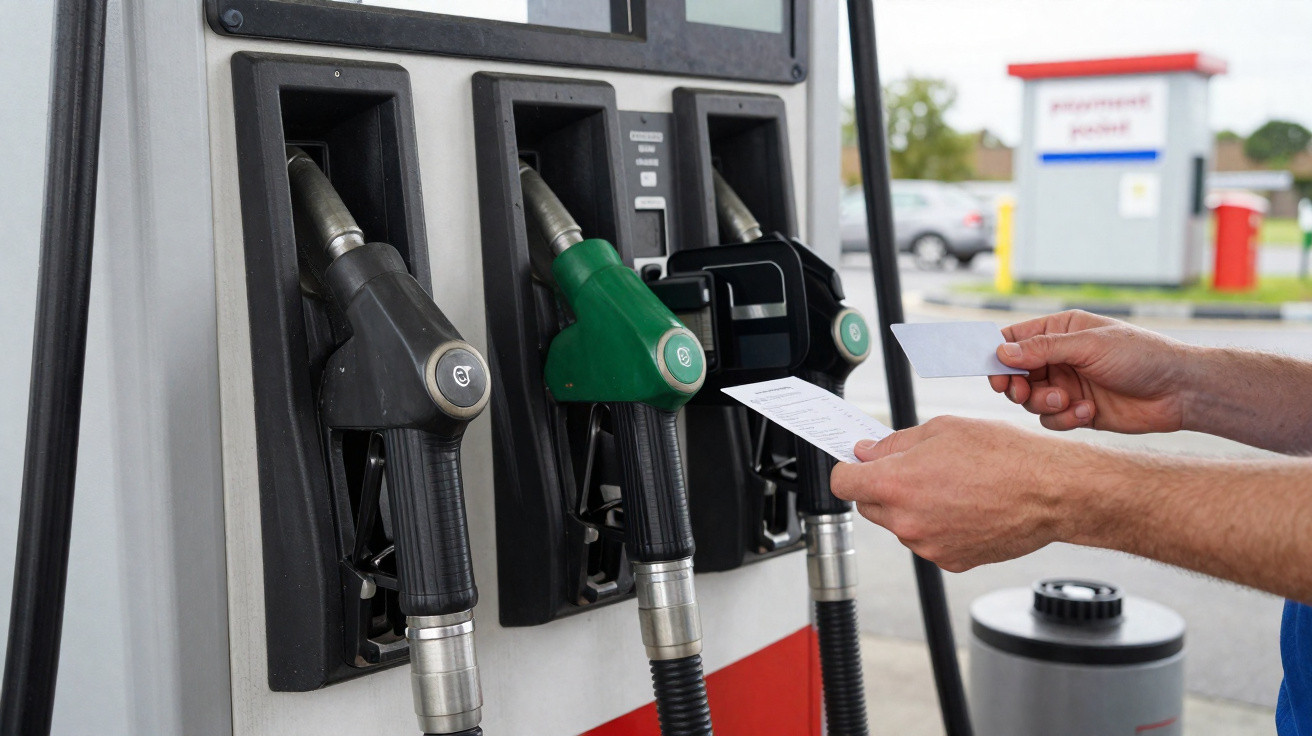
Unattended pumps may place a temporary pre-authorisation hold on your card for more than the final fuel bill. The unused amount is normally released by the card provider, but the timing can vary. Make sure your available balance can accommodate it.
If the payment terminal offers to charge you in pounds, this is usually dynamic currency conversion. Paying in the local currency will generally let your own card provider set the exchange rate, though you should still check the card’s terms.
Keep the receipt until the final transaction has settled. If the amount is wrong or a temporary hold remains for longer than expected, contact your card provider.
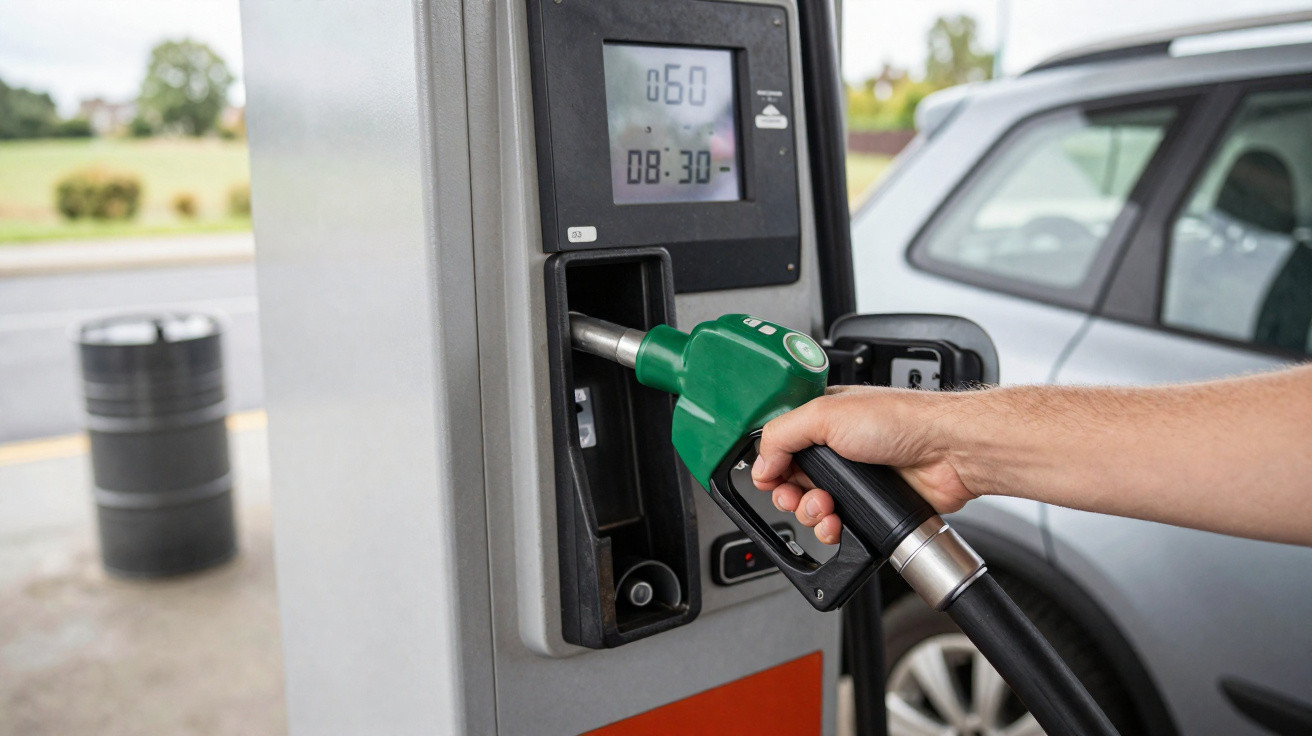
Do not smoke, use an open flame or leave the nozzle unattended. If fuel spills, stop fuelling, alert forecourt staff and avoid starting the vehicle until it is safe to do so.
Make small savings without making a costly journey
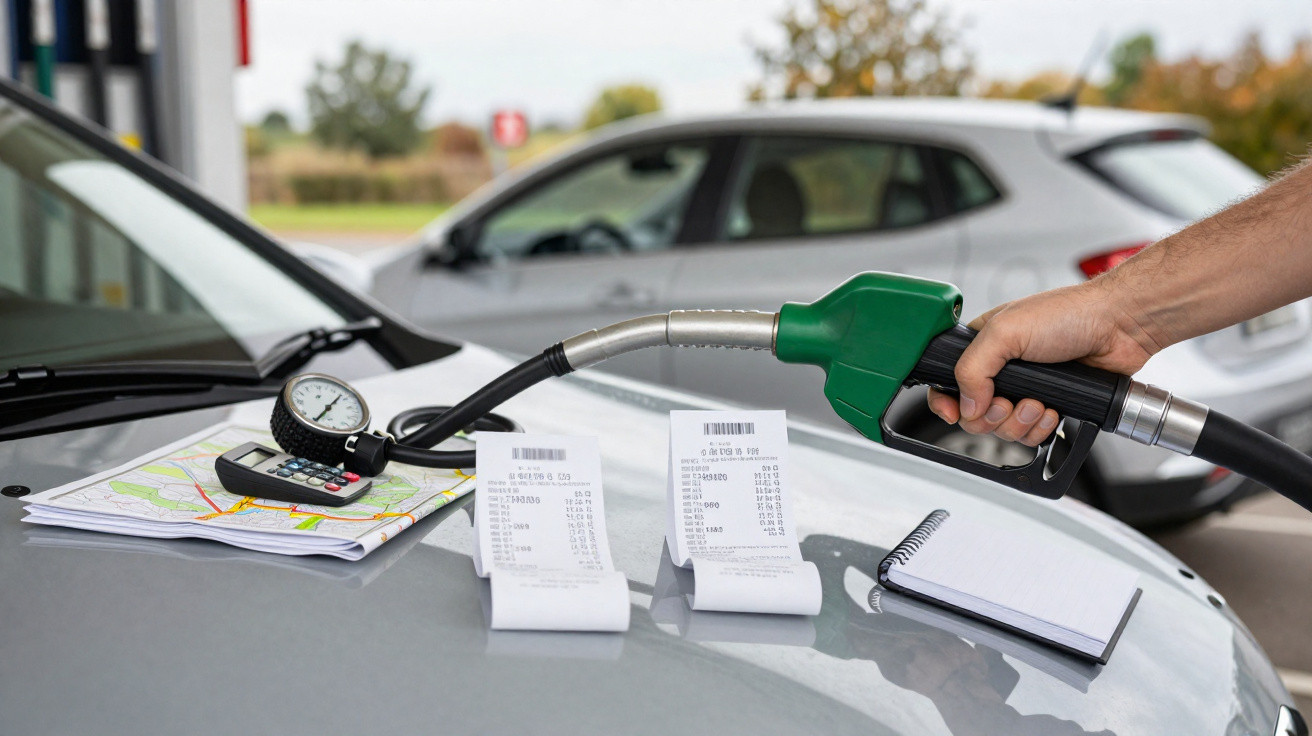
Before a trip, note your tank capacity, usual fuel economy and permitted fuel grades. Check prices close to your existing route, convert any foreign price into pounds and decide whether the difference is meaningful for the litres you genuinely need.
For UK-only journeys, the same approach works well: compare nearby stations, fill up during trips you already need to make and prioritise safe, suitable fuel over a few pence per litre. The best saving is one that does not create an unnecessary detour, risk or expense.



Comments
No comments yet. Be the first to comment!
Leave a Comment