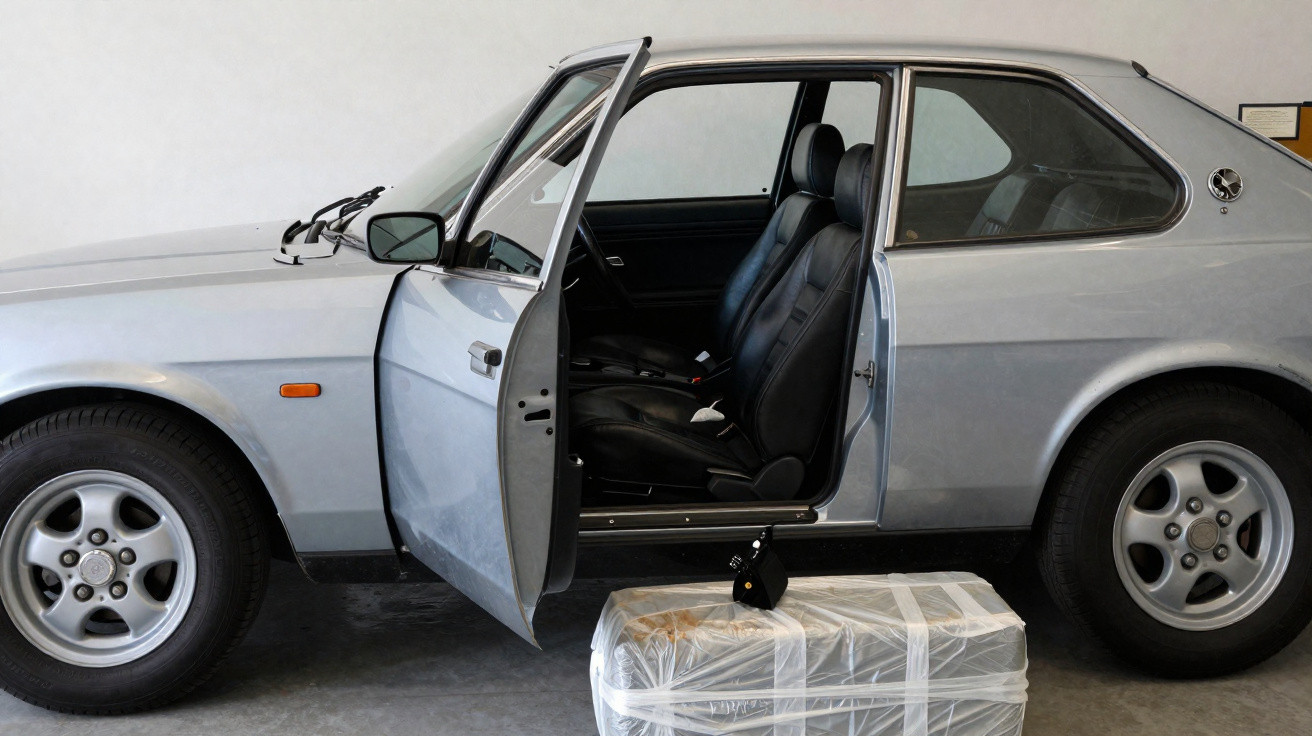
A car with just 20 km showing on the odometer may sound like a collector’s ideal purchase, but such a figure brings a different set of questions. Has it been carefully preserved, or simply left standing long enough for seals, fluids, tyres and fuel-system components to deteriorate?
HSV VL SS Group A Walkinshaw chassis #082 is reported to have covered only 20 km since new in 1988. Its exceptional mileage is the headline, yet its real appeal - and risk - lies in the detail: documented ownership, stored original parts and the work needed to make a decades-old car safe without compromising its originality.
Why this Walkinshaw matters
The VL SS Group A Walkinshaw was built by HSV in Australia as a homologation model connected with Holden’s Group A touring-car programme. It used a fuel-injected 5.0-litre V8, five-speed manual gearbox and rear-wheel drive.
Period specifications commonly quote 180 kW and 380 Nm, equivalent to about 241 PS and 280 lb ft. Figures from different eras are not always directly comparable, but the Walkinshaw’s importance has never depended solely on outright performance. Its dramatic appearance, limited production and motorsport connection have made it one of the most recognisable Australian performance cars of the 1980s.
This example is described as chassis #082 of 749 built. Sales information states that it was completed on 11 July 1988, allocated to Canowindra Motors and sold to its first owner in March 1991. It is said to have remained in that family since.
The low indicated mileage, ownership history and accompanying paperwork are all important. They should nevertheless be independently verified before a buyer treats the car as a preservation-grade survivor.
A 20 km odometer reading is remarkable, but it does not make a 38-year-old car mechanically new.
The unfitted bodykit is part of the story
The VL Walkinshaw is best known for its extensive aerodynamic package, which gave it the memorable nickname “plastic pig”. The add-on pieces included a front splitter, side skirts and rear aerodynamic trim.
In the case of chassis #082, the seller says the bodykit was not fitted during its early life and remains wrapped separately. That makes the car unusual: it is reportedly a genuine Walkinshaw, but it does not present externally in the way most people expect.
A future owner would have three broad options:
- preserve the car exactly as it is, with the kit stored separately;
- fit the original components to recreate its intended dealer-prepared appearance;
- display the vehicle and its wrapped parts together as a time-capsule collection piece.
There is no automatic right answer. Leaving the kit unfitted preserves an unusual aspect of its history, while fitting it may make visual sense to some enthusiasts. Before any decision, every part should be photographed, labelled and compared with period parts information. Ageing plastics, clips and adhesives can be fragile, so removal from old packaging should be left to a specialist familiar with original automotive trim.
Low mileage does not mean low maintenance
The vehicle is said to retain its original components apart from a replacement battery, with the original battery reportedly included separately. That claim is useful for provenance, but an old battery should be treated as a potentially hazardous object rather than a usable spare: it may leak acid or have an unstable casing.
The sales description also says the engine was occasionally started and allowed to warm up, and was later turned over by hand. Fresh fuel has reportedly been added as part of recommissioning. These details provide context, but they are not evidence that the car is ready to drive.
Long-term storage can affect almost every system, regardless of odometer mileage. An inspection should consider:
- fuel tank contamination, fuel hoses, injectors and seals;
- tyres, including sidewall cracking, flat spots and date codes;
- brake fluid, flexible hoses, caliper seals and master cylinder condition;
- clutch hydraulics and gearbox seals;
- coolant hoses, belts, water pump and radiator condition;
- suspension bushes, engine mounts and steering components;
- wiring, earth connections, corrosion and rodent damage.
Old fuel and brake fluid should be handled as workshop waste, not poured down drains or used in improvised cleaning methods. Work on fuel, brakes, batteries or a vehicle raised on a lift should be carried out by a competent professional.
Paperwork is as valuable as the odometer
The reported sale file includes an HSV factory release form, dealership inspection report, original dealership registration certificate, New South Wales number plates and the original sales contract.
The paperwork is more useful than a simple claim that the first owner paid A$36,000 in cash in 1991. It may help establish a continuous history, connect the car to its chassis identity and explain why it saw so little use.
Checks to complete before making an offer
Verify identity numbers. An HSV specialist should compare chassis stamps, identification plates, engine identifiers and the documents supplied. Any discrepancy needs a clear explanation.
Support the mileage claim. Check service paperwork, registration records, inspection history and instrument-cluster condition. Confirm that there is no evidence of a replacement odometer or dashboard.
Inspect the car underneath. Photographs are not enough. Look for corrosion, degraded underseal, leaking seals, fuel staining and damage from storage or vermin.
Catalogue the loose components. Record part numbers, labels, packaging and condition before anything is moved. Confirm that the bodykit and interior items belong to this chassis and model specification.
Commission a proper mechanical assessment. A cold-start observation and short idle do not prove roadworthiness. A specialist should prepare a staged recommissioning plan before any serious driving.
Check whether the car is still available
Adelaide specialist Richmonds had invited expressions of interest, with offers requested by noon on 30 September 2026. That deadline has passed. Anyone interested should contact the seller directly to establish whether chassis #082 remains available, has been sold or is being offered privately through another channel.
No public guide price was stated in the information provided. Reported previous Walkinshaw sales can offer context, but they should not be used as a valuation shortcut. A car with exceptionally low mileage may command a premium, while its unusual unfitted bodykit, storage condition and recommissioning needs may affect what an informed buyer is prepared to pay.
Rarity attracts attention; verified provenance, sound condition and careful recommissioning determine lasting value.
What a UK buyer needs to consider
Bringing an Australian-market classic to the UK involves more than arranging shipping. A car of this age may be eligible for historic-vehicle treatment, but registration, vehicle-tax and MOT requirements depend on the individual vehicle and current rules. Confirm the position with DVLA, HMRC and an import specialist before committing funds.
Budget for:
- an independent inspection in Australia;
- enclosed transport, marine insurance and shipping charges;
- customs declarations, import VAT, duty and any relief that may apply;
- port fees, transport from the UK port and registration paperwork;
- headlamp beam pattern, rear fog lamp provision and speedometer requirements where applicable;
- specialist insurance and a thorough UK inspection after arrival.
Avoid making irreversible changes merely to make the car easier to use. If safety work requires replacement components, retain the originals, label them clearly and keep a photographic record. Reversible modifications are generally the sensible route for a historically intact car.
Common mistakes with ultra-low-mileage classics
The biggest errors happen when preservation is mistaken for readiness.
- Driving the car hard immediately. Old tyres, perished hoses and degraded brake fluid can make this unsafe.
- Replacing original items without records. Safety parts may need replacement, but removed components, labels and packaging should be retained.
- Fitting the bodykit before documenting it. Its unfitted condition is central to this particular car’s story.
- Relying on glossy photographs. Paint, stale-fuel damage, underside corrosion and rubber deterioration need a hands-on inspection.
- Underestimating the landed cost. The purchase price is only one part of a UK buyer’s total outlay.
Never mix cleaning chemicals, and never use bleach or acidic products around metalwork, wiring, fuel components or old trim. A conservation-minded specialist can advise on safe cleaning and storage methods.
A survivor that deserves patience
Chassis #082 is compelling because it combines Australian touring-car heritage with an unusually well-preserved ownership story. Its Panorama Silver finish, V8 manual drivetrain, original documentation and separately stored aerodynamic parts make it much more interesting than an ordinary low-use classic.
If it remains for sale, the careful approach is straightforward: inspect it independently, verify every part of the history, price the recommissioning properly and decide whether the car’s originality justifies the total cost. The 20 km reading will draw attention, but patient stewardship will matter far more than the number on the odometer.






Comments
No comments yet. Be the first to comment!
Leave a Comment