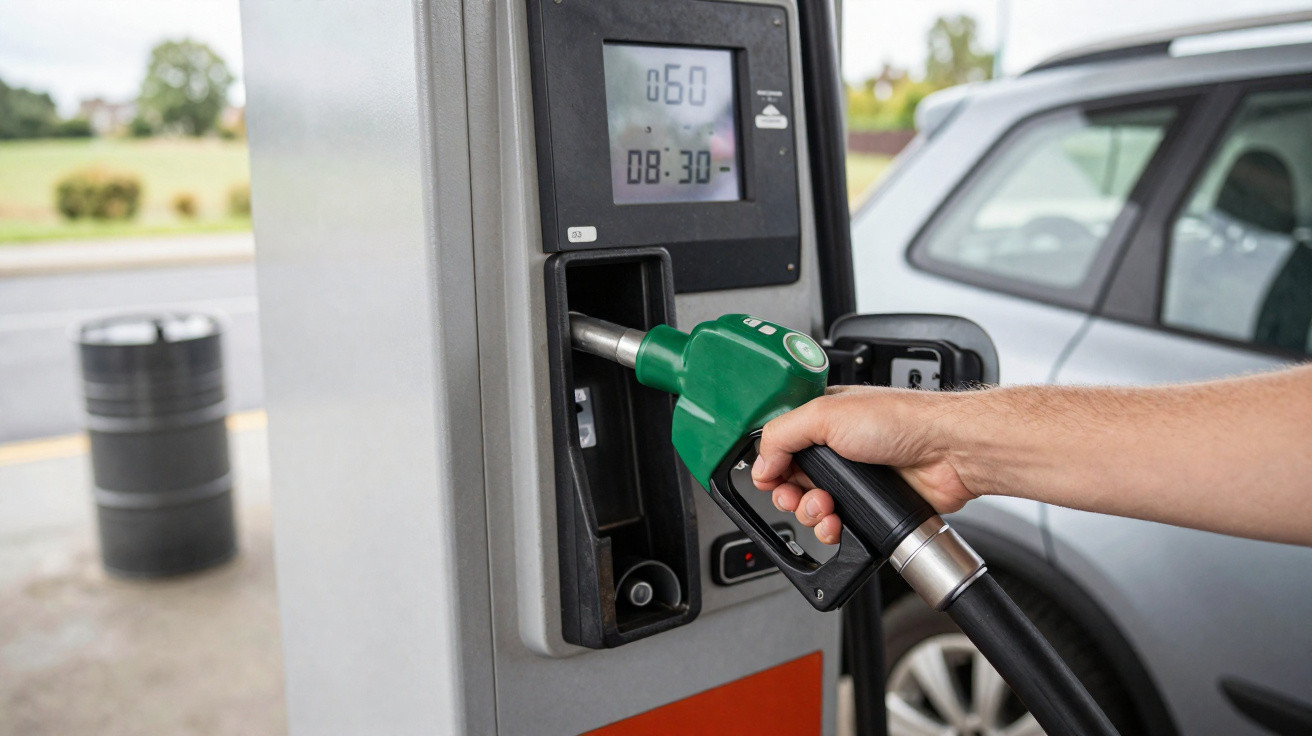
Rising fuel prices hit quickly: a weekly commute, school run or delivery route suddenly costs more, while most people cannot simply stop driving. News of strategic oil-stock releases can sound like an immediate answer, but the realistic benefit is more modest. Extra supply may ease pressure on wholesale markets; it does not guarantee a cheaper fill-up at every UK forecourt the following day.
That distinction matters. Pump prices reflect much more than the price of crude oil, including refinery capacity, transport costs, fuel duty, VAT, the pound’s value against the US dollar and local competition. Any claim about a stock release should therefore be treated as a possible easing measure, rather than a promise of a fixed saving per litre.
What strategic oil stocks are for
Strategic stocks are emergency oil reserves maintained by countries participating in the International Energy Agency (IEA) system. IEA members are expected to hold emergency reserves equivalent to at least 90 days of net oil imports, although the arrangements vary between countries.
These stocks can include crude oil and refined products such as diesel, petrol or aviation fuel. In the UK, much of the obligation is met through commercial stocks held within the wider supply system, rather than by a single, publicly visible national warehouse.
Releasing stocks is intended to deal with a serious supply disruption or a sharp short-term shortage. It can put additional barrels into the market and reassure buyers that supply is available.
A strategic-stock release can reduce immediate pressure, but it is not a permanent replacement for lost oil production, shipping capacity or refinery output.
The IEA can coordinate collective action by member countries, but individual governments decide how to implement their commitments. Reports of a release should be checked against announcements from the IEA, the UK Government or the relevant national authority rather than relying on rumours or headline figures alone.
Why the type of fuel matters
A barrel of crude oil is not the same as a tank of diesel. Crude needs to be processed in a refinery before it can become petrol, diesel, jet fuel, heating oil and other products.
That means a release of refined diesel may affect diesel availability more quickly than a release made entirely of crude. But the eventual effect still depends on where that diesel is stored, where it is needed and how easily it can be transported through terminals, pipelines and road-tanker networks.
Diesel is especially important to the wider economy because it is widely used in freight, agriculture, construction and some public transport. Higher diesel costs can feed into delivery and operating costs, although they are only one part of the final price of goods and services.
Several factors determine whether extra supply reaches UK motorists:
- whether the reserve contains crude oil, diesel or other refined products;
- refinery capacity and the products refineries are configured to make;
- disruption at ports, pipelines, shipping routes or export terminals;
- tanker availability and insurance costs;
- global demand for diesel and other middle-distillate fuels; and
- the sterling-to-dollar exchange rate.
Oil is commonly priced in US dollars. If sterling weakens, any fall in the dollar oil price may provide less relief for UK buyers.
Why pump prices can take time to move
A drop in oil or wholesale fuel prices does not automatically appear on forecourt signs overnight. Fuel already in storage, tankers and station tanks may have been bought under earlier contracts or at a higher wholesale price.
There is also no single national pump price. A busy supermarket forecourt, an independent village station and a motorway service area can have very different costs and levels of local competition.
Fuel duty and VAT are also significant parts of the price paid at the pump. A strategic-stock release may influence the underlying fuel cost, but it does not change taxation.
How to read a fuel-price headline
- See it as an indication, not a guarantee. More supply can calm a market, but other pressures may outweigh it.
- Look at local pump prices over several days or weeks. Wholesale changes take time to work through the supply chain.
- Compare like with like. Check the price for the correct fuel grade, and include the cost of making an extra journey.
- Do not focus only on crude oil. Diesel and petrol wholesale prices can move differently from crude, particularly when refinery capacity is tight.
The disruption behind the price still counts
Emergency reserves work best as a bridge through a temporary disruption. They are less able to solve a prolonged loss of production, a damaged refinery, restricted exports or repeated disruption to a major sea route.
Fuel markets also react to uncertainty. Even when physical supply is available, traders may price in the risk of future shortages, delayed cargoes or higher shipping costs. That can keep wholesale prices volatile.
It is therefore possible for a release to improve market confidence without producing a dramatic fall in prices at the pump. Equally, a local forecourt may cut prices because of competition even when national averages remain high.
More available fuel can help cool an overheated market. It cannot, by itself, repair infrastructure or remove geopolitical risk.
Practical ways to spend less at the forecourt
Drivers cannot control international oil markets, but they can avoid unnecessary fuel use and avoid paying the highest nearby price.
Before your next fill-up
- Check nearby prices before setting off. Use a reputable fuel-price comparison service, retailer app or the UK Government’s fuel-price information where available.
- Buy on a normal journey. Driving out of your way for a marginally cheaper price can wipe out the saving.
- Do not run habitually close to empty. This is particularly important in rural areas, where the nearest station may be some distance away.
- Set tyre pressures when the tyres are cold. Use the vehicle manufacturer’s recommended pressures, found in the handbook or often on a door-frame label.
- Remove unused roof bars and roof boxes. They can increase aerodynamic drag, especially at motorway speeds.
- Drive smoothly and look ahead. Gentle acceleration, sensible spacing and earlier lifting-off can reduce fuel use without impeding other road users.
For diesel vehicles, use the fuel grade specified by the manufacturer. Do not add aftermarket products unless they are approved for the vehicle; unsuitable additives can cause expensive faults.
Common mistakes when fuel prices rise
High prices and shortage rumours can lead to poor decisions. Avoid these common traps:
- Panic-buying fuel or storing it at home unnecessarily. Petrol and diesel are fire and spill hazards. Only use suitable approved containers where necessary, and follow fire-safety guidance.
- Expecting a stock release to create an instant discount. The effect, if any, takes time and depends on the supply chain.
- Driving miles to save a penny per litre. Calculate the full cost of the detour, including fuel, time and wear.
- Following social-media claims about miracle fuel savers. Products promising dramatic gains are often not supported by the vehicle manufacturer’s guidance.
- Under-inflating tyres. This can increase tyre wear and fuel consumption, while adversely affecting handling.
- Ignoring forecourt safety rules. Switch off the engine, do not smoke, keep ignition sources away and follow instructions displayed at the site.
What motorists should expect next
A coordinated use of emergency stocks can be useful when supply is under acute pressure, particularly if refined products are made available where they are needed. It may support wholesale prices and improve confidence in supply.
No one can responsibly predict an exact reduction at the UK pump from a headline alone. The outcome depends on the scale and composition of any release, continuing disruption, refinery output, currency movements and competition between retailers.
The sensible response is practical rather than speculative: keep enough fuel for ordinary journeys, compare nearby prices, maintain the car properly and avoid panic buying. If wholesale conditions improve, competitive forecourts are more likely to pass some of that relief on over time.
















Comments
No comments yet. Be the first to comment!
Leave a Comment