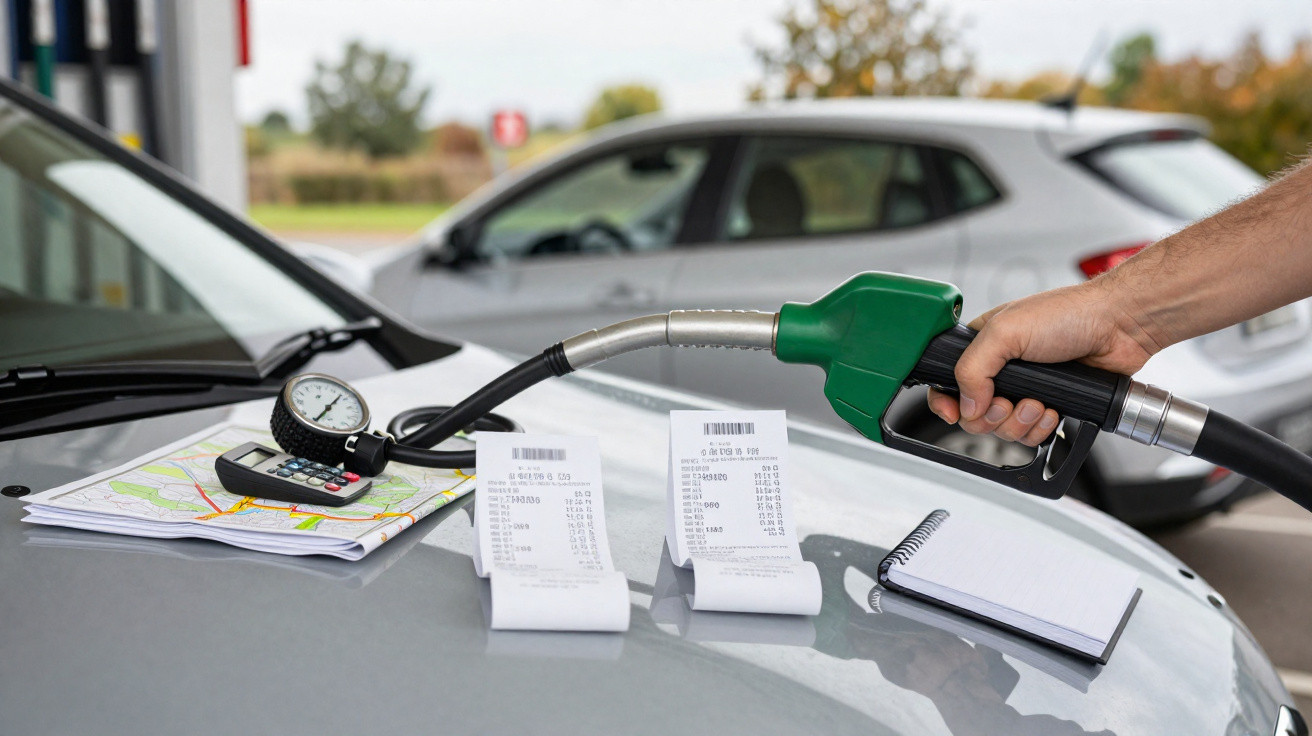
Fuel costs can turn an ordinary week of school runs, commuting and family visits into an unwelcome expense. The useful response to headlines about very high pump prices is not to panic-fill the car or stockpile fuel: it is to understand what your vehicle actually costs to run, cut avoidable consumption and buy fuel sensibly.
Michel-Édouard Leclerc’s comments concern the French market, not a forecast for UK forecourts. A figure of €2.40 per litre cannot simply be converted into pounds and treated as a prediction for Britain. But the wider point stands: prices can change quickly, so a modest plan is more useful than reacting to every alarming headline.
What a €2.40-per-litre warning means for UK drivers
Fuel prices in the UK and France are shaped by different tax arrangements, supply chains, retailer competition and currencies. Oil is commonly traded in US dollars, so the pound’s value can affect UK wholesale costs as well as changes in crude oil prices.
Other factors can include:
- disruption to shipping routes or refinery output;
- transport and distribution costs;
- local competition between filling stations;
- fuel duty and VAT;
- demand at busy times of year, including school holidays.
A change in oil prices does not always appear at the pump immediately. Equally, a fall in wholesale costs may take time to work through the supply chain. Rather than trying to guess the perfect day to fill up, focus on the costs you can control.
The best preparation is not panic-buying fuel. It is using less of it, keeping the car in good order and paying a fair local price when you genuinely need to refill.
Do not convert the headline into a UK pump price
It is tempting to convert €2.40 per litre into sterling and assume UK petrol or diesel will reach the same level. That comparison is unreliable.
Exchange rates move daily, while taxes and retailer margins differ from country to country. Prices also vary within the UK. A remote rural filling station may face higher delivery costs and less nearby competition than a supermarket forecourt or a busy station on a main route.
Treat major price headlines as a prompt to review your monthly motoring budget, not as a reason to fill every container you own. Petrol and diesel must be handled and stored with care. Only use approved fuel containers, follow the supplier’s instructions and keep fuel away from homes, drains, heat sources and naked flames.
Check what your car really costs to run
Many drivers remember the total from the last fill-up but do not know their average fuel use or cost per mile. Keeping a simple record over a few tanks can make decisions clearer.
1. Record each fill-up consistently
For two or three tanks, note:
- the date and odometer reading;
- litres bought;
- price per litre;
- total spent;
- whether most driving was urban, motorway or mixed.
For the clearest comparison, fill to a similar level each time. Filling the tank fully is usually the simplest approach, provided this is done normally and safely rather than repeatedly topping up after the nozzle has clicked off.
2. Calculate mpg and cost per mile
To estimate miles per gallon, divide miles travelled by litres used, then multiply the answer by 4.546. To find cost per mile, divide the amount spent by the miles travelled.
You do not need laboratory-level accuracy. The aim is to spot trends. A sudden worsening in fuel economy may be linked to low tyre pressures, more short winter journeys, heavy traffic, roof equipment or a fault that needs checking.
3. Set a realistic monthly allowance
Use your usual mileage as a starting point and include a modest buffer for diversions, poor weather and essential extra trips. Reviewing the figure once a month is more helpful than worrying about one costly visit to the forecourt.
Buy fuel sensibly, not compulsively
Price comparison services, retailer apps and forecourt signs can be useful, but a cheaper price is not always a saving if it requires a special journey. Extra miles, time and fuel can quickly cancel out a small difference per litre.
Choose two or three convenient filling stations on routes you already use. Compare prices when the tank is approaching the level at which you would normally refuel. Check when an app’s price was last updated before relying on it.
The Competition and Markets Authority has called for clearer fuel-price information for motorists. Availability and accuracy of station-level price data can vary, so use it as a guide rather than a guarantee.
Use the fuel grade specified in your vehicle handbook. If the manufacturer sets a minimum octane rating or requires a particular fuel, follow that instruction. Equally, paying extra for a premium grade will not necessarily reduce your overall costs if it is not recommended for your vehicle.
Make every litre go further
Fuel economy is often decided by ordinary habits rather than a single long journey. The aim is smooth, legal and unhurried driving, while remaining alert to road conditions.
1. Check tyre pressures when cold
Tyres lose pressure gradually over time. Check them at least monthly and before a long journey, using the settings shown in the handbook, fuel flap or door-frame label. Use the correct pressure for the load you are carrying.
Under-inflated tyres can affect handling and increase rolling resistance. Over-inflation can reduce grip and make the ride less comfortable. The maximum pressure moulded on the tyre sidewall is not normally the correct everyday setting.
2. Remove unnecessary weight and drag
Clear out heavy items that have been left permanently in the boot but are no longer needed. Remove roof bars and roof boxes when they are not in use, especially if you regularly drive at motorway speeds, as they increase aerodynamic drag.
Do not remove equipment needed for a safe journey, seasonal conditions or your vehicle’s recovery arrangements.
3. Drive smoothly and look ahead
Sharp acceleration followed by hard braking wastes momentum. Leave a safe gap, look well ahead and ease off early when traffic begins to slow. On longer journeys, select the highest suitable gear without making the engine labour.
Air conditioning, heated screens and demisters use energy, but visibility comes first. Clear misted or iced windows properly before setting off; never compromise safety to save a small amount of fuel.
Correct tyre pressures, a clear windscreen and a calm driving style will do more than any supposed miracle fuel-saving gadget.
Keep maintenance from becoming a fuel bill
If fuel use has increased without an obvious reason, do not assume the pump price is solely to blame. Routine maintenance helps protect efficiency and reliability.
Look out for:
- engine or emissions warning lights;
- brakes that appear to bind;
- uneven tyre wear;
- poor starting, misfiring or reduced power;
- a strong smell of fuel or any visible leak;
- servicing or oil changes that are overdue.
Arrange an inspection with a reputable garage if something seems wrong. Never ignore a suspected fuel leak. Park safely, switch off the engine, keep away from flames or sparks and seek professional help rather than attempting a roadside repair.
Common mistakes when prices rise
Acting quickly can sometimes cost more or create unnecessary risk.
- Chasing a cheap pump: calculate the extra distance before making a special trip for a few pence per litre.
- Stockpiling fuel: avoid keeping more fuel than you need, and never use unsuitable containers or store fuel indoors.
- Using the wrong fuel: if petrol goes into a diesel vehicle, do not start the engine. Tell the forecourt staff and arrange recovery.
- Skipping tyre checks: a tyre-pressure warning light is not a substitute for regular checks with a reliable gauge.
- Trusting dramatic savings claims: be wary of additives and devices that promise major improvements without clear evidence or manufacturer approval.
- Idling to warm up: modern cars generally warm up more effectively when driven gently after the usual safety checks. Never leave an engine running in a garage or enclosed area because of carbon monoxide risk.
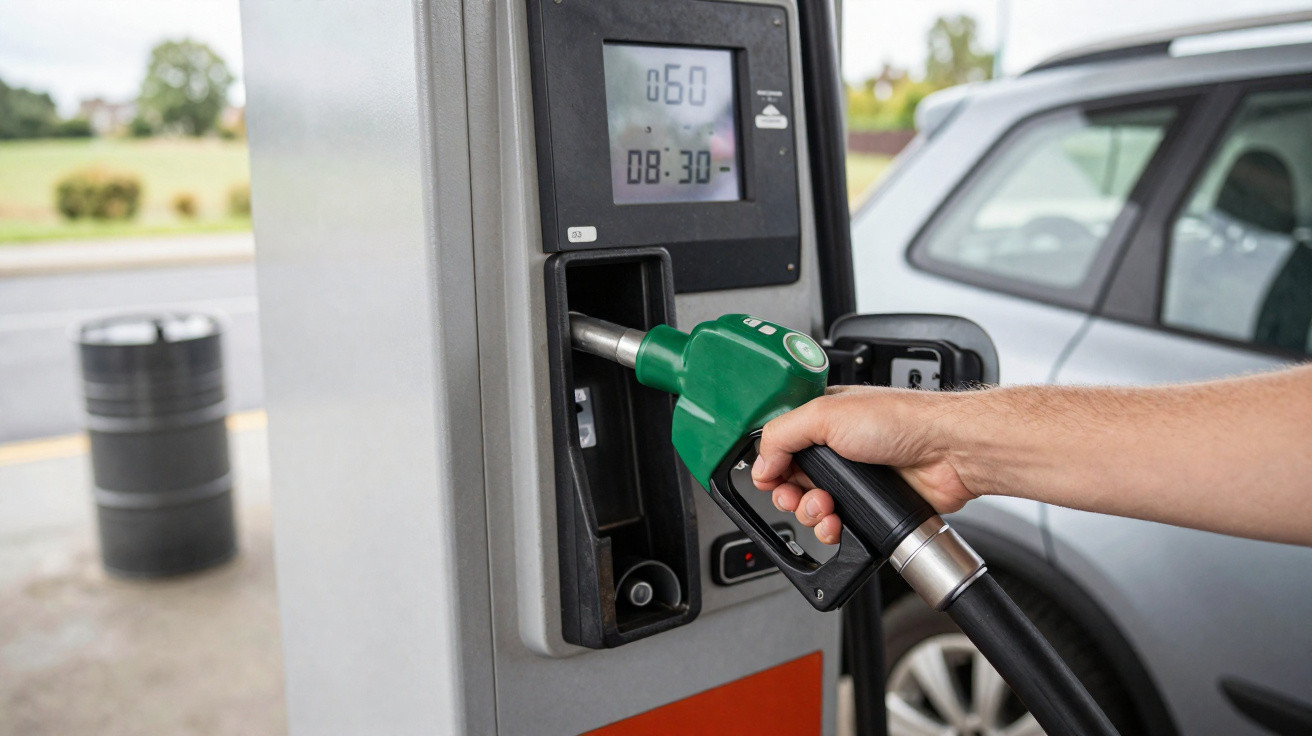
- Refuelling unsafely: switch off the engine, do not smoke and do not use a naked flame near the pump. Never mix cleaning chemicals around a fuel spill; follow the forecourt’s instructions and alert staff.
A practical plan for the next tank
High fuel prices are frustrating, but no driver can control oil markets, currencies or global disruption. You can, however, make the next tank go further. Record one or two fill-ups accurately, check your tyre pressures, remove unused roof equipment and choose a competitively priced forecourt that fits into a journey you already need to make.
Review the results after a month. If your cost per mile has risen sharply, consider whether your journeys have changed or whether the vehicle needs attention. A measured routine is more effective than reacting to a single headline, whatever price fuel eventually reaches.











Comments
No comments yet. Be the first to comment!
Leave a Comment