
Saving fuel is a constant concern for many drivers, who look for every possible way to cut consumption. Some of these tips genuinely work, while others are simply myths passed down from one generation to the next, with nobody stopping to ask whether they really make any difference.
One of the most widespread pieces of advice concerns tyres, specifically their pressure. The theory is straightforward: can inflating tyres above the pressure recommended by the manufacturer help a car use less fuel?
We have covered this and other tips in this article, but tyre pressure warrants a separate explanation. The short answer is yes: it may reduce consumption slightly, but that does not make it a sensible idea.
Why does tyre pressure affect fuel consumption?
Tyres account for a significant proportion of the energy lost by a vehicle. As they roll along the road surface, they flex and generate rolling resistance, meaning the engine must use more energy to keep the car moving.
Tyre pressure directly affects this resistance. The lower the pressure, the more the tyre generally deforms and, consequently, the greater the rolling resistance becomes. This is also why driving with under-inflated tyres increases fuel consumption.
This is where the idea comes from that raising the pressure lowers resistance and saves fuel. In strictly physical terms, there is some truth in it. However, fuel consumption is not the only factor involved.
Why you should not increase tyre pressure
Although efficiency matters, the pressure specified by the manufacturer was not selected solely to minimise fuel use. It represents a balance between several considerations, including grip, handling, braking, comfort and tyre wear.
Excessive pressure changes both the tyre’s contact patch with the road and the way it operates. Wear may become more concentrated in the centre of the tread, while grip can be affected, particularly on wet roads.
In other words, you might slightly reduce rolling resistance, but you would do so at the expense of characteristics that may matter more than a small drop in fuel consumption.
There is another important point: the pressure shown on the tyre sidewall is not the pressure you should use day to day. To find the correct tyre pressure, check the information supplied by the car manufacturer, usually on a sticker inside the driver’s door, on the fuel filler flap or in the handbook.
It is also normal for the recommended values to differ between the front and rear axles, as well as according to the vehicle’s load.
What is the correct tyre pressure?
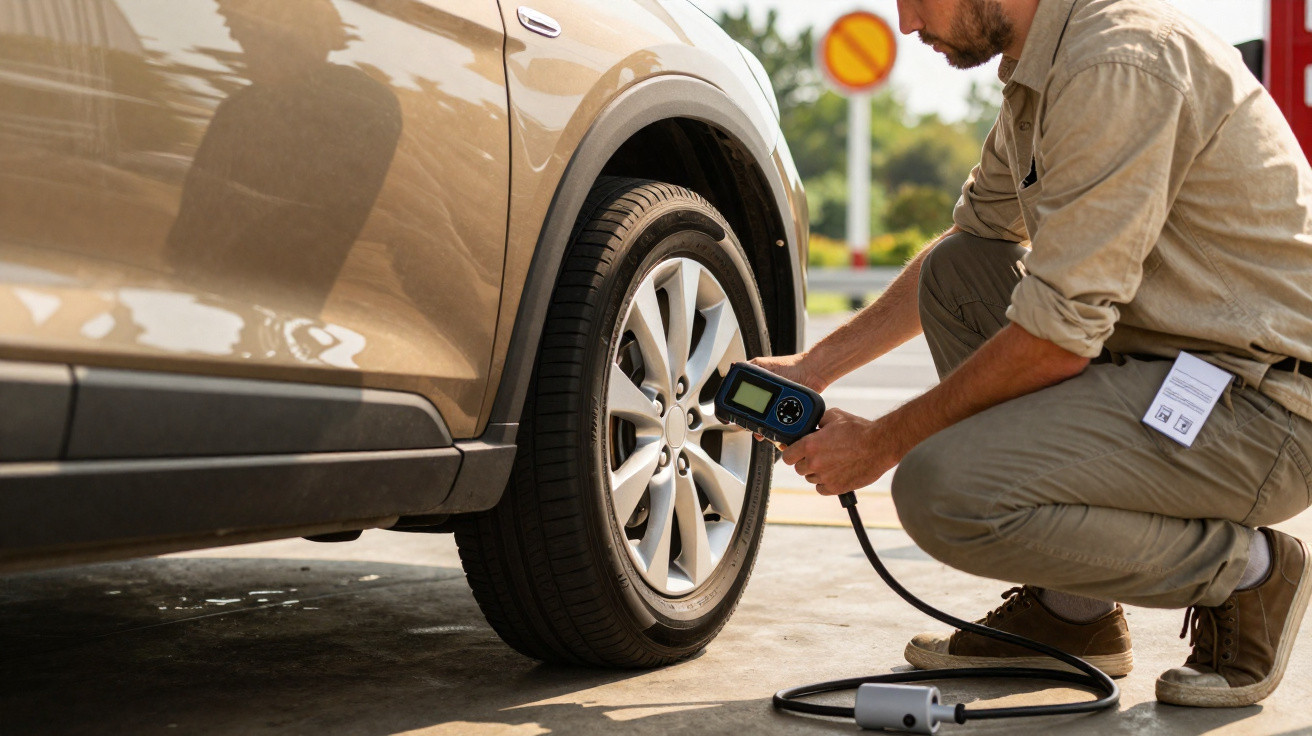
If your aim is to use less fuel, there is no need to experiment. Keeping tyres at the recommended pressure already helps prevent the unnecessarily high rolling resistance caused by under-inflation.
It is worth checking tyre pressure at least once a month and before long journeys, preferably when the tyres are cold. Tyres heat up while driving and their pressure rises, so a reading taken after several kilometres can be misleading.












Comments
No comments yet. Be the first to comment!
Leave a Comment