A necessary update, but one approached with great care. After all, “if it isn’t broken…”
Updating a model such as the Peugeot e-2008 is anything but straightforward. On one hand, the brand wants every model to benefit from its latest developments. On the other, the Peugeot 2008 is its best-selling model in several markets, including ours, leaving little room for more “risky” decisions.
In other words, the Peugeot e-2008 is not radically different from the model it is about to replace. In fact, its biggest changes are the ones we cannot see, as we will explain later.
Refreshed styling
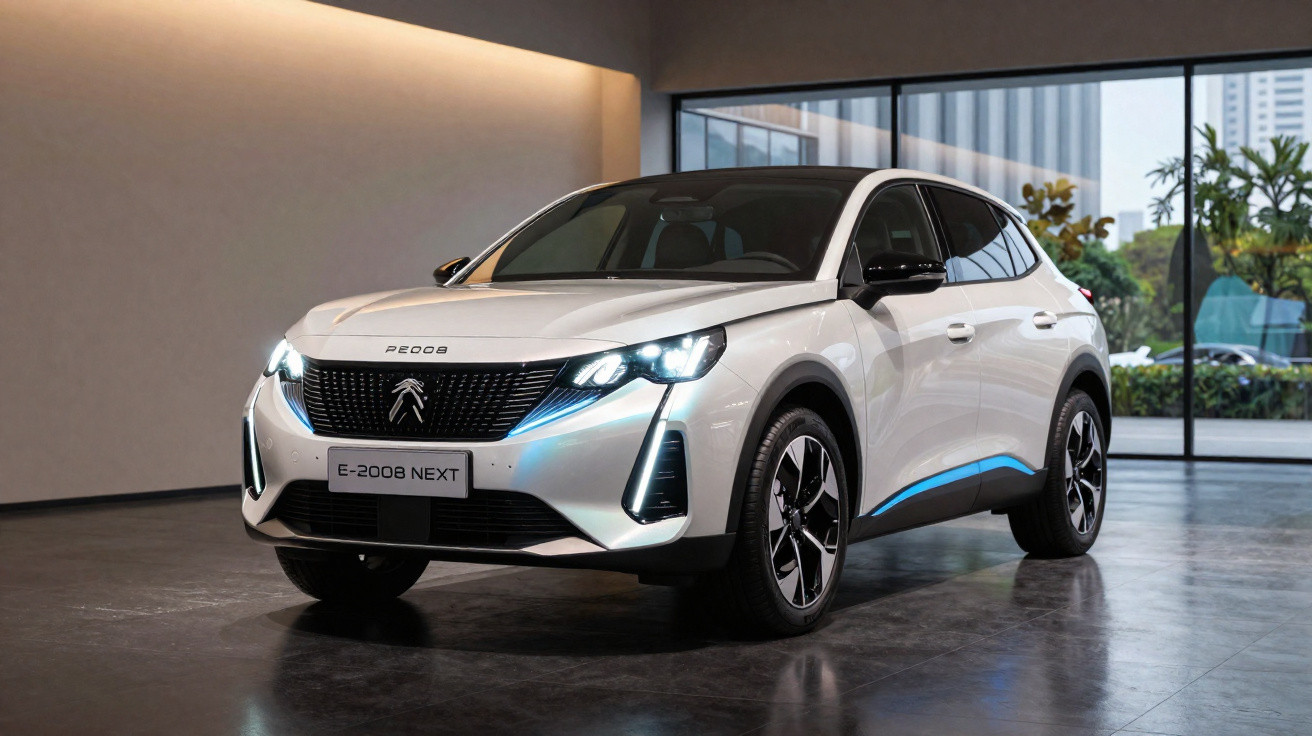
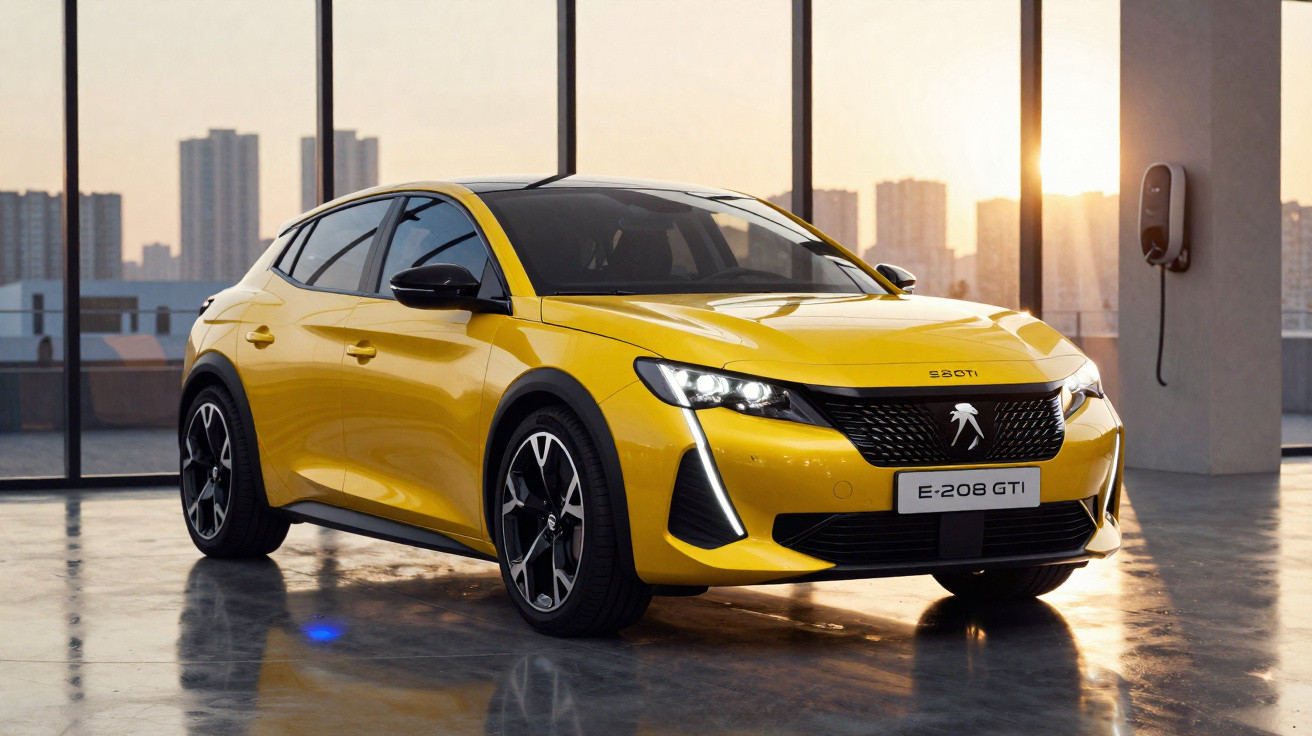
Visually, the “new” Peugeot e-2008 can be recognised by its redesigned front grille and bumper, revised light clusters and new front lighting signature.
On the GT version we drove, the grille now features more vertical lines, finished in the same colour as the bodywork. The 2008 badge has also been modernised and moved from the bonnet to the top of the front grille.
On the current model, the three vertical bars sit inside the headlights and represent the lion’s claw. They have now been moved down to the bumper, replacing the former single line that the brand associated with the animal’s fangs. Within the headlights, the design has been updated with a horizontal line that contributes to a sportier appearance.
At the rear of the Peugeot e-2008, the changes are less noticeable. The lion emblem has been removed, leaving that area blank, while the “Peugeot” lettering is wider and more prominent. The same applies to the model designation.
The internals of the rear lights have changed, although they retain the same three elements on each side. These are now arranged horizontally rather than in the current vertical “claw” layout.
Finally, along the sides, the updated Peugeot e-2008 is identified only by the brand’s new logo at the centre of the wheels and the redesigned lower-case “e” that denotes the fully electric version.
Which Peugeot e-2008 is this?
That appears to be the challenge the brand sets as soon as we step into the cabin. Here, we almost need a crib sheet to spot the differences. The only clearly new feature is the gear control, which is now a selector rather than the previous lever.
The i-Cockpit remains a feature of every Peugeot and has not changed. The steering wheel is still very compact and far from circular in shape, although this GT version gains a sportier grip.
Ahead of it, the three-dimensional instrument panel remains in the GT version, as does the 10-inch central display. This setup is now fitted to every 2008 version, replacing the previous 7-inch screen offered on some trims. The display also now has a higher resolution. The piano-style buttons beneath it have been retained.
To finish with the gadgets, the parking cameras now offer improved resolution, there are more USB sockets on board, and the wireless smartphone charger is more powerful.
For it to be perfect, however, it could also be cooled, as it sits in a compartment that can be closed, preventing the phone from getting quite so hot. Just a suggestion, Peugeot.
One area where the Peugeot e-2008 has not changed - and thankfully so - is the space available inside. It remains generously roomy, even for rear-seat passengers. Further back, the boot still offers the same 405 litres of capacity, enough for most needs.
Improvements you cannot see, but can feel
After a few kilometres behind the wheel of the Peugeot e-2008, we began to realise there were more changes beyond those visible at first glance, as mentioned above.
The suspension feels far more composed and precise, even when the road surface is less than ideal. The body movements, chassis responses and even the noises experienced inside all suggested that this was one of the areas in which the e-2008 has evolved the most.
The calmness felt in the cabin, largely thanks to the silence of this fully electric version, together with the traffic we encountered around Marbella, Spain, led us to adopt a more relaxed driving style.
As a result, despite a few stretches on mountain roads, we reached our destination with an average consumption of 14.6 kWh/100 km after covering 236 km.
At this point, the responsiveness of the Peugeot e-2008’s new 115 kW (156 hp) motor deserves a mention. It delivers a good level of performance while also allowing for a more relaxed and economical driving style.
This more powerful option also comes with a 54 kWh battery, rather than the 50 kWh unit fitted to the 100 kW (136 hp) version, enabling a maximum combined-cycle range of more than 400 km.
Available to order now
The “new” Peugeot e-2008 with the more powerful motor can already be ordered on the domestic market, with prices starting at €40,690 for the Active version. The GT trim we tested has a starting price of €44,440.
The first units are expected to begin arriving in Portugal next August.
The existing version, fitted with the 100 kW (136 hp) electric motor, also receives the range’s new styling and is offered in the same Active, Allure and GT trim levels.
In pricing terms, it sits exactly €1,000 below the more powerful option, regardless of trim level.
A lot for a little?
Although the list of upgrades on this new Peugeot e-2008 may not initially seem extensive, it is in fact quite long. As this is one of the market’s most sought-after models, anything that makes it even better will always be welcome.
During our drive, we were left with the impression that the new e-2008 is more refined, and that Peugeot has spent considerable time “smoothing out the rough edges” of the model it is now replacing.
Adding a new, more powerful motor and a battery offering greater range for a price difference of €1,000 seems an irresistible proposition.




Comments
No comments yet. Be the first to comment!
Leave a Comment