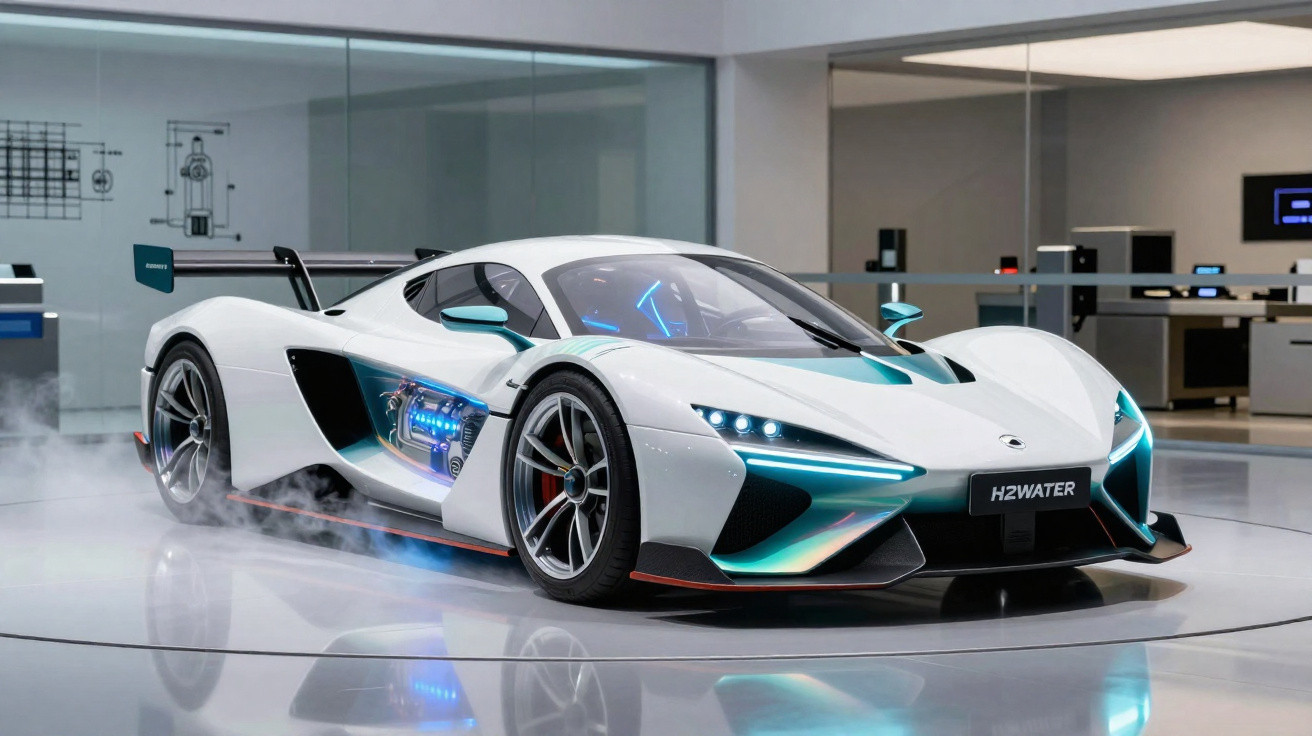
A motorsport supplier has unveiled an internal-combustion engine that runs predominantly on hydrogen while deliberately injecting water into the combustion chamber. The concept is intended to deliver strong performance while operating almost climate-neutrally. It raises a contentious question across the industry: could car makers have committed too soon to battery-electric vehicles alone?
What the “water-powered engine” really is
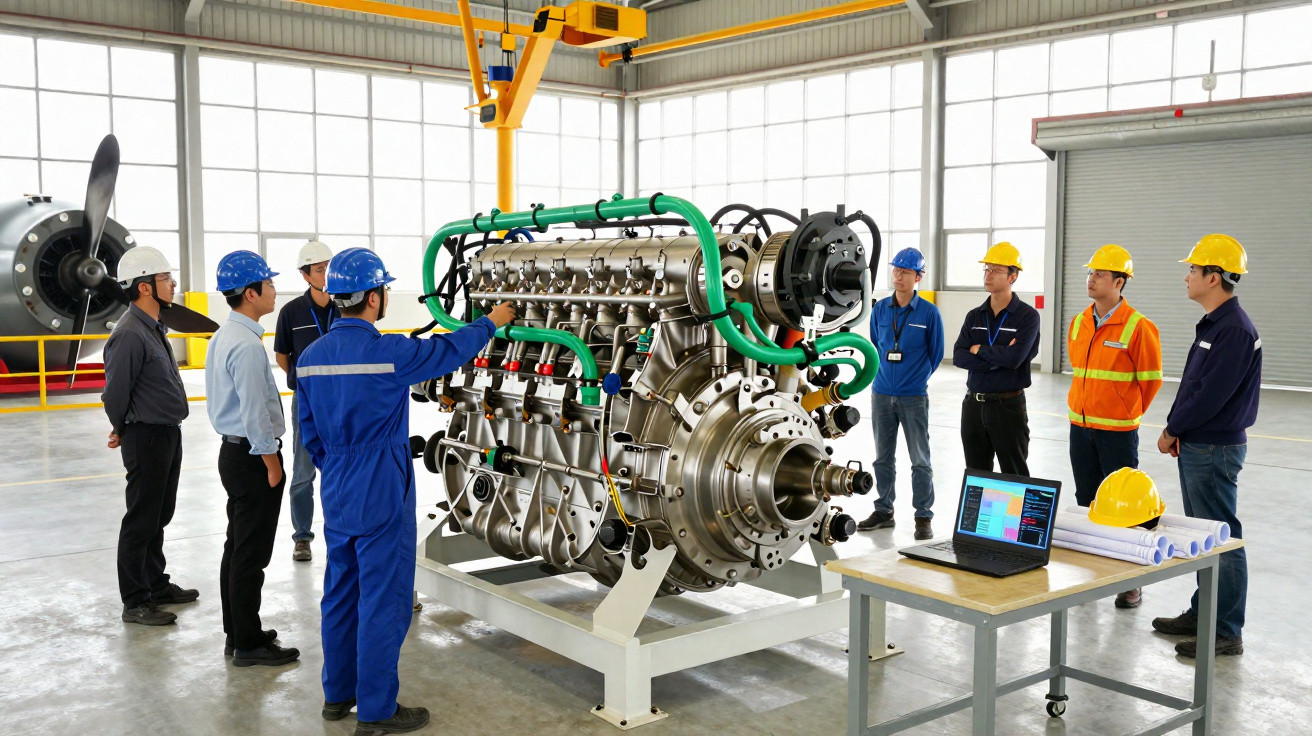
Although many headlines describe a “water-powered engine”, that is not strictly accurate: it is a hydrogen internal-combustion engine that uses water as an auxiliary medium. It has been developed by AVL Racetech, the motorsport-focused division of Austrian powertrain group AVL.
Producing around 400 PS and revving to 6,500 rpm, the engine matches the output of powerful petrol units used in sports cars and executive vehicles, but burns neither petrol nor diesel.
The engine uses hydrogen as its fuel and introduces hot water to moderate combustion and improve efficiency.
As in a conventional combustion engine, hydrogen enters the cylinders and mixes with air. The system also injects heated water. Together, these measures are designed to address several technical issues that have so far held back purely hydrogen-fuelled engines.
How AVL Racetech water injection works
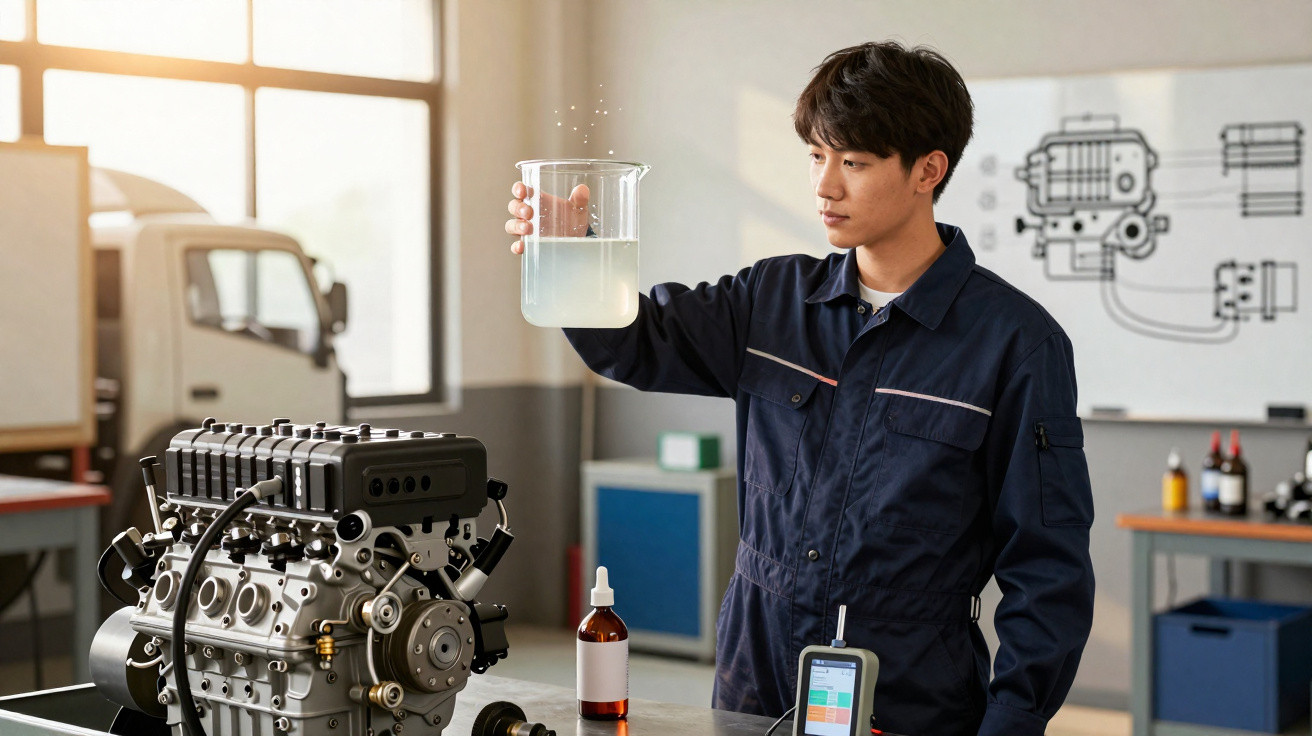
Water inside an engine may sound like a recipe for engine damage. In AVL’s engine, however, the reverse is intended: engineers introduce carefully controlled, small quantities of heated water, atomised finely into the combustion chamber.
Greater control over combustion
Hydrogen ignites readily and is susceptible to pre-ignition and knocking. Water injection acts as a temperature control mechanism within the cylinder:
- Lower temperatures: As the water evaporates, it absorbs heat and slightly cools the combustion chamber.
- More even combustion: Flame propagation becomes more controlled, with a gentler increase in pressure.
- Protection against knocking: This can largely suppress uncontrolled auto-ignition, known as “knocking”.
- Higher compression: The engine can operate at higher pressures, improving efficiency.
The aim is a hydrogen engine that remains stable and efficient at high loads and engine speeds, without requiring complex, exceptionally expensive specialist alloys or severe restrictions on output.
The role of the turbopump
At the centre of the system is an advanced turbopump. It is intended to supply water and hydrogen at precisely metered quantities and pressures. Its design draws on aerospace and motorsport technology, while being engineered for continuous automotive use.
The turbopump turns the hydrogen engine into a precisely controlled high-performance power unit rather than a fragile laboratory experiment.
According to AVL, the engine fits into familiar powertrain layouts: transmissions, prop shafts and drive shafts can remain much the same as in combustion-powered vehicles, making installation in existing vehicle platforms easier.
Why this could be awkward for the car industry
For years, most investment has gone into battery-electric vehicles and electric motors. Hydrogen has generally been viewed as a niche option or as a fuel for fuel-cell lorries. A high-output hydrogen internal-combustion engine with usable efficiency challenges that assumption.
An opportunity for manufacturers with combustion-engine expertise
Established manufacturers with extensive engine expertise could particularly benefit from such a concept. Many components, production lines and the accumulated knowledge surrounding pistons, crankshafts and cylinder heads could continue to be used; only the fuel would change.
This could mean:
- lower conversion costs than a complete move to dedicated electric platforms;
- continued use of existing supply chains;
- shorter development times for new models.
Hydrogen engines are especially well suited to segments requiring sustained high output, including heavy SUVs, vans, pick-ups and sports cars, where battery weight and charging times can quickly become limiting factors.
Is it a threat to battery-electric cars?
Whether battery-electric cars could genuinely lose market share depends on several factors that cannot yet be judged conclusively:
| Aspect | Hydrogen engine | Battery-electric car |
|---|---|---|
| Energy efficiency (well-to-wheel) | generally lower, due to losses during electrolysis and transport | very high, with electricity fed directly into the battery |
| Range / refuelling | long range, rapid refuelling | limited range, with charging time dependent on infrastructure |
| Infrastructure | few filling stations, costly to establish | charging network expanding rapidly, with home charging possible |
| Raw materials | less battery material required, but hydrogen production facilities are needed | high demand for lithium, nickel and cobalt depending on cell type |
Even if the engine proves technically convincing, one question remains: where will the hydrogen come from, and how clean will it actually be? Only so-called “green” hydrogen, made using renewable electricity, delivers genuine climate benefits. Supply remains insufficient at present.
Historical predecessors and what has changed
The idea of burning hydrogen is not new. During the 2000s, manufacturers such as BMW developed engines capable of using either petrol or liquid hydrogen. Those projects disappeared because the tanks were complex, consumption was high and infrastructure was virtually non-existent.
The new approach differs chiefly in three areas:
- Water injection: This improves efficiency and permits higher loads without damaging the engine.
- Focus on sport and racing applications: In these uses, output and quick refuelling matter more than maximum efficiency.
- New climate regulations: Governments are urgently seeking additional routes to CO₂ reduction, rather than relying solely on batteries.
This makes a scenario more plausible in which hydrogen engines shine primarily in specialist roles: motorsport, heavy vehicles and perhaps long-distance fleets. For the typical small urban car, a battery-electric vehicle is still likely to be the better choice.
What AVL still needs to test
AVL itself stresses that the engine remains at the development and testing stage. Laboratory figures and dynamometer charts may be impressive, but they reveal little about real-world durability and costs.
Only long-term road testing and demanding racing use will show whether the hydrogen engine is more than an exciting prototype.
Among the unanswered questions are:
- How long will the turbopump and injection system last in real operating conditions?
- How expensive will the complete package be compared with modern turbocharged petrol engines and electric powertrains?
- How safely can hydrogen tanks be integrated into mass-market vehicles?
- Who will invest at the same time in a dense network of hydrogen filling stations?
Without infrastructure, even the best engine has limited value. Creating a filling-station network would require billions in investment and clear political frameworks.
Key terms and context: hydrogen, efficiency and CO₂
At first glance, hydrogen can appear to be a miracle solution: when it is burned or used in a fuel cell, the ideal output is simply water. Its climate impact, however, depends entirely on how it is produced.
Broadly, there are three types:
- Grey hydrogen: produced from natural gas, generating large amounts of CO₂ during production.
- Blue hydrogen: also made from natural gas, but with some of the CO₂ captured and stored.
- Green hydrogen: created through electrolysis using power from wind, solar or water; climate-friendly, but expensive.
Only if the new engine runs on green hydrogen will it substantially cut emissions. Otherwise, the problem is merely shifted from the vehicle to the production plant.
There is another consideration: every energy conversion reduces efficiency. Electricity converted into hydrogen, then transported, compressed and burned loses percentage points at every stage. A battery-electric car uses electricity more directly and is therefore clearly more efficient on paper. The hydrogen engine, however, offers advantages in range, refuelling time and the continued use of existing technology.
How drivers could benefit from a hydrogen engine
For motorists, a production-ready hydrogen engine might initially feel unremarkable - and that would be its appeal. The driving experience would resemble that of a powerful petrol car: engine sound, gear changes or an automatic transmission, quick refuelling stops and familiar controls. Only the fuel would be different.
Potential benefits could include:
- long journeys with refuelling breaks lasting only a few minutes;
- virtually no local pollutant emissions and, with green hydrogen, very little CO₂;
- no winter range anxiety caused by battery chemistry becoming cold;
- appeal for people who still find fully electric propulsion difficult to embrace.
On the other hand, there are higher energy losses throughout the chain and the question of whether sufficient green hydrogen will be available for transport, industry and heating. Many sectors are competing for a limited resource.
What may prove especially interesting is how manufacturers incorporate the concept into their strategies. A future propulsion landscape with three pillars is possible: battery-electric cars for short and medium journeys, hydrogen for lorries and high-load passenger vehicles, and synthetic fuels for the existing fleet. The new engine demonstrates that the traditional piston engine is not yet out of the race - although the fuel in its tank may change permanently.






Comments
No comments yet. Be the first to comment!
Leave a Comment