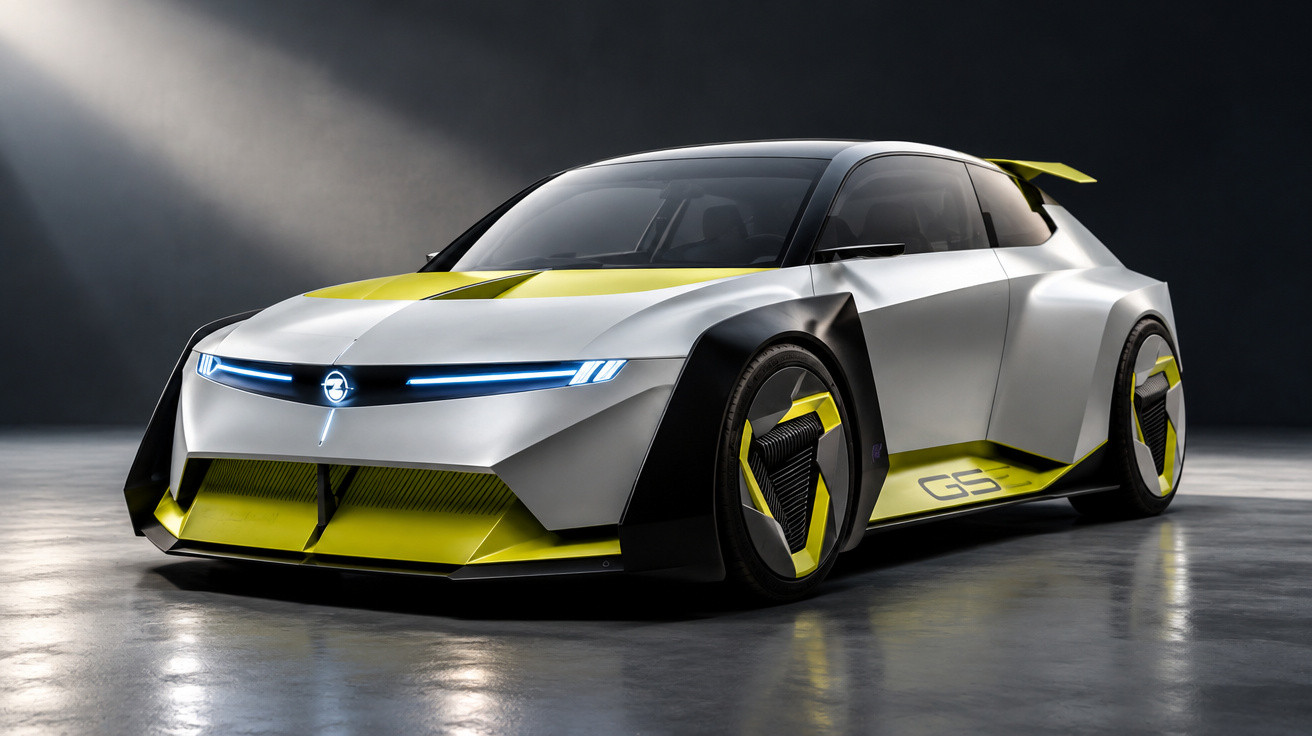
By our count, 35 Vision Gran Turismo concepts have appeared since the first arrived in GT6 in 2013. Most have been gloriously extrovert, but a Vauxhall Vision GT was never among them – and the prospect of one wearing a Corsa badge would have seemed particularly unlikely.
Yet here it is, in all its magnificently unhinged glory. Two electric motors produce a combined 800bhp and 800Nm of torque, with four-wheel drive helping it deliver a frankly wild 0-100km/h time of two seconds and a 320km/h maximum speed. Surely a minor simulator adjustment could have pushed that figure to 322km/h, though?
Vauxhall Corsa GSE Vision Gran Turismo performance and platform
Due to arrive in GT7 this autumn, the Corsa GSE Vision Gran Turismo is more than an extravagant digital-only fantasy. The GSE element of its title points to the broader ambition: Vauxhall is continuing to reshape its performance sub-brand for the electric age. Despite its cartoonishly muscular appearance, it is based on the group’s new global STLA BEV platform, so a close look reveals clues to the next production Corsa.
For the most part, however, the GSE concept draws on Eighties Group B World Rally Championship energy, combined with the expected Gran Turismo technological assault. It also takes a pleasingly liberal approach to Vauxhall and Opel’s ‘bold and pure’ design language. Clearly, somebody enjoyed creating it, although its surfaces retain a carefully earned crispness and precision. Like Hyundai’s N Vision 74, it has an extremely high ‘want one’ quotient.
TopGear.com saw it in a studio and can confirm that this compact beast looks spot-on in person. Its interlocking shapes are a standout, with yellow sections slicing boldly across the pearl-white bodywork. Most notably, the front end cleverly reinvents the car’s shape with a shovel-like nose that exploits the lack of an engine; the battery pack sits beneath the floor. The visor-style nose is not new, but it reaches its zenith here in several senses. The illuminated Griffin badge occupies the middle of a new design device called the ‘Compass’, which spreads outwards to form the car’s visual structure.
Bold aerodynamic details and Nova-inspired wheels
That ‘Compass’ theme is repeated at the rear through the Vauxhall emblem and brake lamp. It may not be the first thing you see, though, given the enormous yellow diffuser and rear wing demanding attention. The aerodynamic elements are active, varying the available downforce to suit conditions, while the spoiler also serves as an airbrake.
There is also a generous use of triangular detailing, including wheel designs that recall the alloy wheels of the Eighties Nova SRi. They are aerodynamic wheels, though not completely covered because that could compromise braking performance. The front pair measure 53.3cm and wear black and yellow finishes, while the 55.9cm rear wheels are white over yellow.
The swollen wheelarches are another original Nova/Corsa reference, and help smooth turbulent airflow. They use a material supplied by composites specialist Bcomp. Although it is laid up in a similar fashion to carbon fibre, it uses flax and is 40 per cent more sustainable.
“You could lift the white piece off and still drive the car. There’s a sharp chassis sitting beneath the more sculpted elements,” long-standing design chief Mark Adams explains. “We didn’t want to go completely over the top with the video game stuff. We wanted to blend the technical with beauty, and keep some softer shapes and forms, not get too brutal. It’s about finding sharp, meaningful transitions between the surfaces.”
Corsa GSE Vision Gran Turismo interior and boost mode
The cabin is just as forceful in character and makes no apology for its racing focus. You step over broad sills and sink into a seat with its upper section attached to the roll cage, before looking through the rectangular steering wheel towards the head-up display. Deliberate minimalism is the theme: as the seat cannot move, the pedals are adjustable instead. Further information is projected on to the illuminated fabrics covering the dashboard and door inserts. Its designers call this ‘Painting with light’, although the exposed screw heads are equally appealing.
Visible structural components run through the interior, reflecting the exterior treatment. A boost function supplies an extra 80bhp for up to four seconds, and can be replenished in four 20-second intervals. The battery has an 82kWh capacity, while the entire car weighs only 1,170kg.
“We threw it open to the design team, really encouraged them to express themselves,” Adams says of the design process. “That was about 12 months ago. Then we narrowed it down to five or six and let them build CAD models, which is a really fast process these days. This isn’t just about the next Corsa, we’re hinting at other things in the future portfolio. We’ll bring some of the surfacing you can see on this car and the graphic elements into future models.
"There are lots of things we can do, but I’ll leave that to your imagination.”
An 800bhp, 320km/h electric Corsa is enough for the moment.



Comments
No comments yet. Be the first to comment!
Leave a Comment