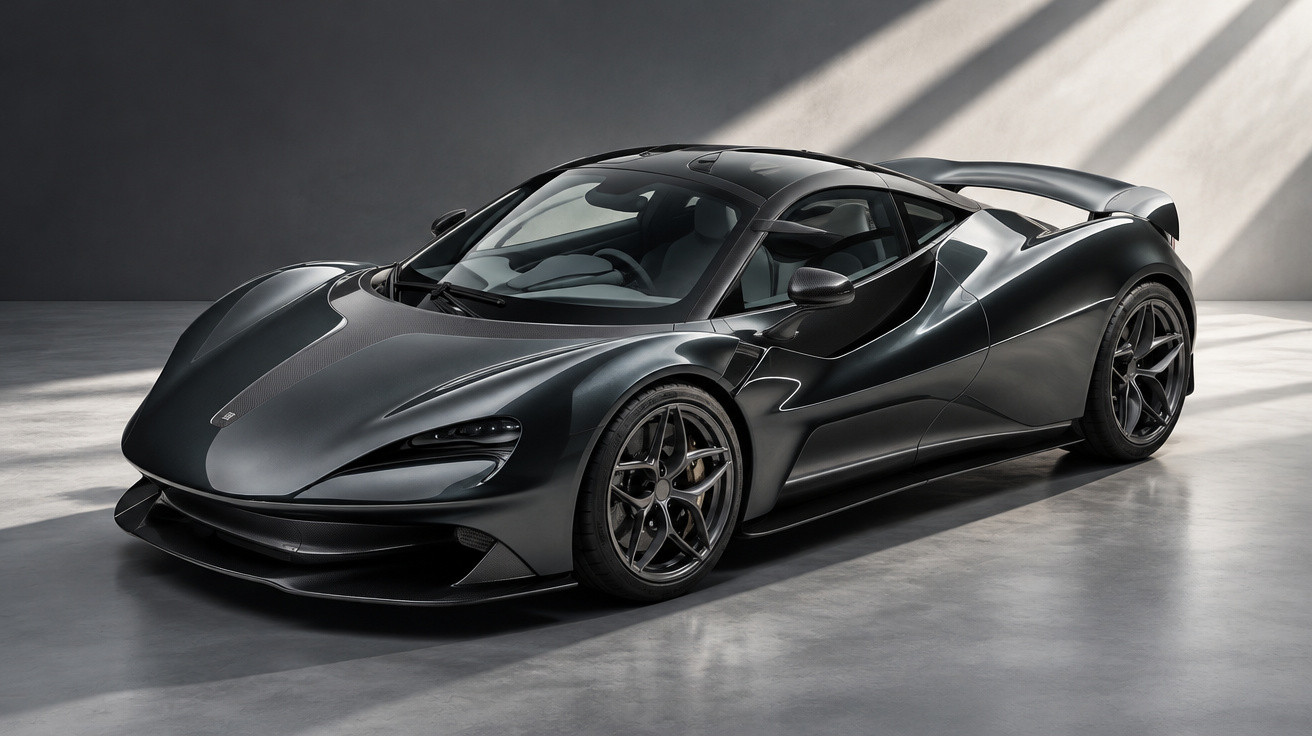
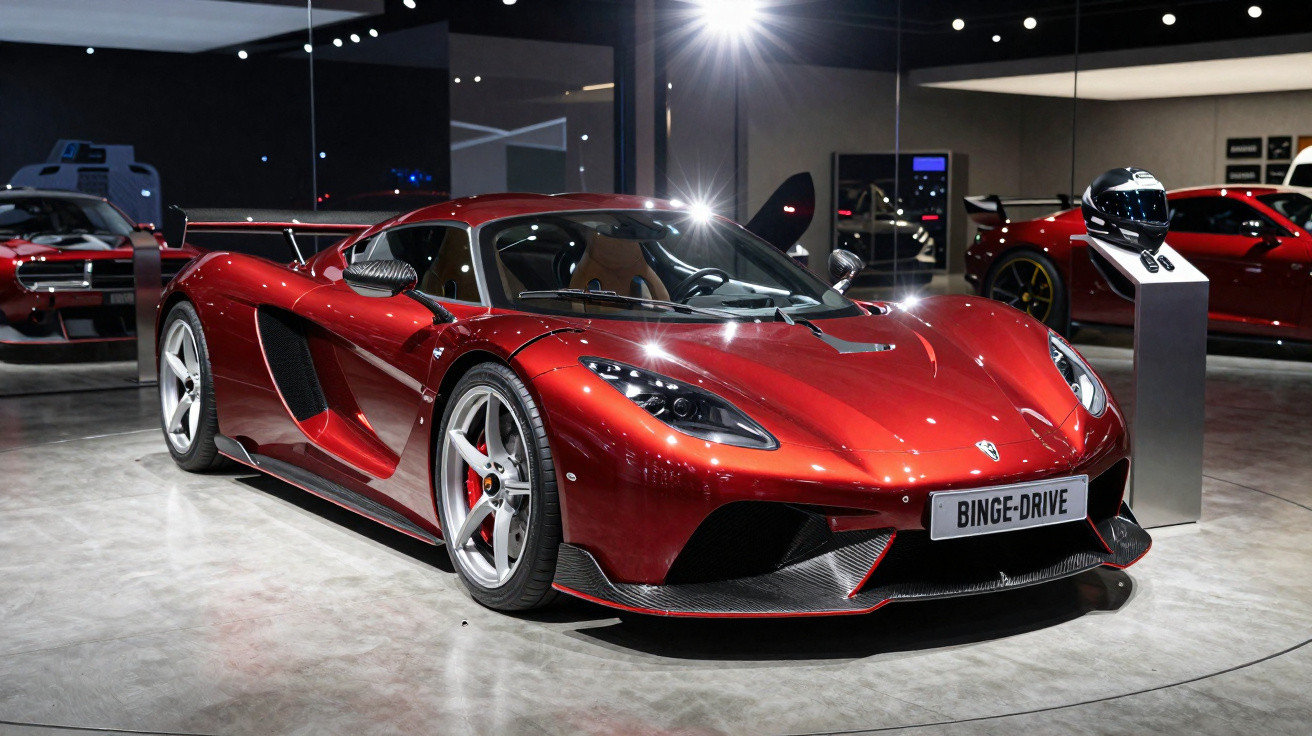
Lanzante’s 95-59 is a lightweight V8 supercar created and constructed to do two things: a) mark the company’s Le Mans victory 30 years ago and, more significantly, b) leave you euphoric because its driving position is right in the middle.
Lanzante 95-59 three-seat layout
Yes, this is a three-seater, following the format of the original McLaren F1, the GMA T.50 and the McLaren Speedtail. Beyond those cars, there is very little else that offers a comparable arrangement. On the subject of McLaren, Lanzante has based the 95-59 on a reworked version of a “current McLaren platform”.
Its visual lineage is immediately recognisable, although more on that shortly. Power comes first. Beneath the 95-59’s ‘Ueno Grey’ exterior is a mildly revised version of McLaren’s well-known, durable and seriously lively 4.0-litre twin-turbo V8. In this application, it develops more than 850bhp and 881Nm.
Mounted amidships alongside that engine is a seven-speed dual-clutch ‘SSG’ transmission, which delivers all 850bhp and 881Nm to the rear wheels.
Lanzante has not released performance figures yet, but the 95-59 is targeting a kerb weight of only 1,250kg. The Goodwood-bound “styling concept” shown here features the ‘LM30’ package, comprising forged aluminium wheels, Inconel exhaust manifolds, titanium pipework and body fixings, plus F1-style gold-plated heat shielding. It removes another 20kg. In brief: this lightweight machine should be very quick.
Carbon-fibre design and aerodynamics
That should be aided by the all-carbon-fibre body, styled by Paul Howse. As the designer behind the McLaren P1 and 720S, he is clearly familiar with Woking’s approach. Every element naturally stemmed from the three-seat layout and aerodynamic requirements, the latter addressed through a “two-layered” exterior treatment.
According to Lanzante, the “lower, visual carbon fibre surfaces” convey the “aerodynamic story, creating downforce and ejecting high pressure from the front wheel well”, while the “aerodynamically efficient surfaces are then tightly wrapped over the top”.
The result is an undeniably sleek, fluid and striking shape. Its sculpted rear deck adds an extra dose of aggression, complete with a huge diffuser and centrally positioned exhaust, inspired by “the brutalist organic forms of the fifth generation F22 fighter jet”.
A driver-centred Lanzante 95-59 cockpit
Dihedral doors reveal the three-seat cabin, whose literal centrepiece is apparent from the moment you climb in. The driver is positioned low down, ahead of a repositioned steering column and wheel, while two passenger seats sit slightly lower and are integrated into the chassis.
Glass roof sections bring more daylight into the cabin, which has a “clean design” and functional switch packs moved to make getting in and out easier. Like a fighter jet, it also has switches in the roof pod. Very cool. Lanzante has not yet shared any images of the interior, so you will have to take our word for it.
As for the name, Lanzante won the 1995 Le Mans 24 Hours with a #59 McLaren F1. According to company boss Dean Lanzante, that victory was the starting point for the new 95-59. “The original brief of ‘Project 95-59’ was to create something accessible and useable, for drivers,” he said.
“Three seats, luggage space, enhanced range; something drivers could, and wanted, to use. We wanted to deliver the same enjoyment and passion of buying and owning a classic car but in a contemporary way. Full focus on what the driver needs and wants, with a blend of modern technologies but pared back to maintain driver focus.”
It will certainly be exclusive: Lanzante plans to build only 59 examples, each priced at £1,020,000 plus tax. That means around £1.2 million to leave you euphoric.



Comments
No comments yet. Be the first to comment!
Leave a Comment