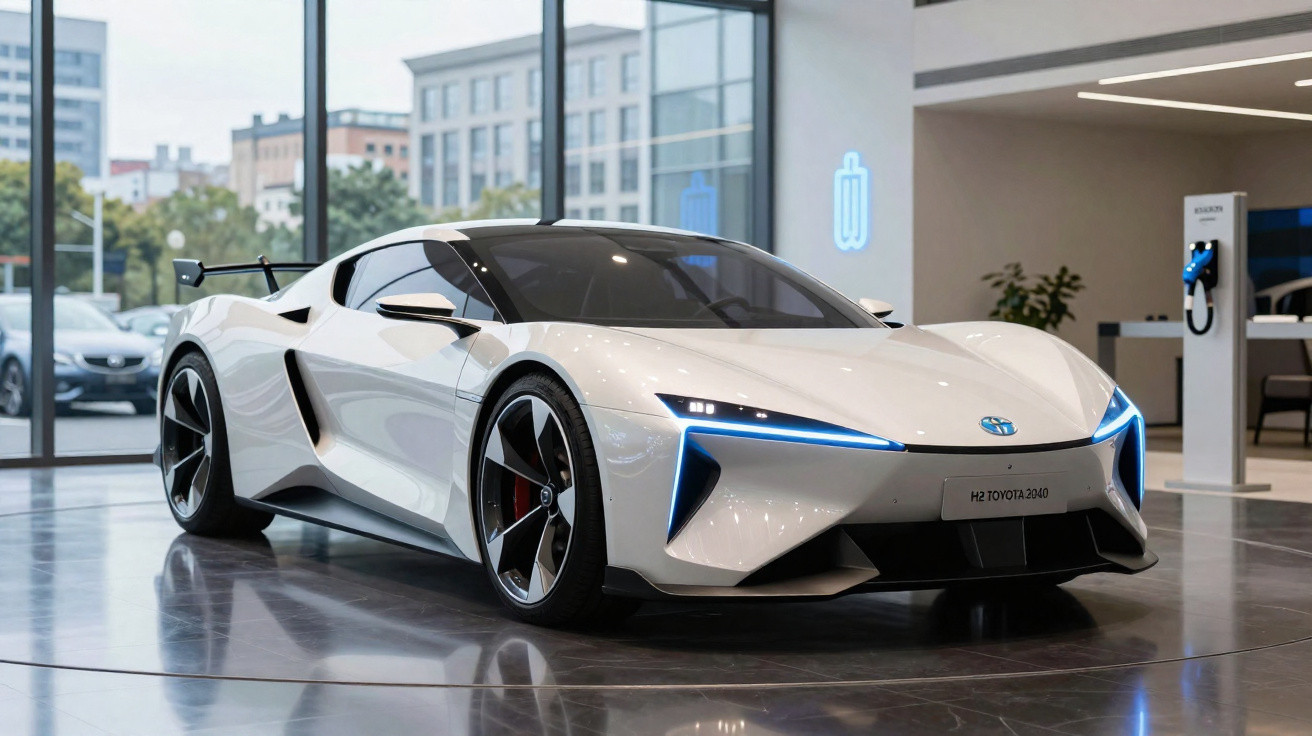
Toyota has a clear target: to become carbon-neutral in Europe by 2040, a decade ahead of the objective set by the European Union (EU).
Battery-electric cars will not be its sole route to meeting that target. The company will also rely on other technologies, notably hydrogen. This does not refer to hydrogen as an alternative means of powering combustion engines - an option the Japanese brand is still developing, as we have covered in several articles.
Instead, it refers to a “Hydrogen Factory”, the name Toyota has given to a new European production facility dedicated entirely to Fuel Cell technology.
A Hydrogen Factory from end to end
Toyota is planning for a future in which cars, heavy-duty vehicles, buses and even ships can make use of this technology.
For that reason, the brand wants to speed up fuel-cell production through a new factory in Europe. Its purpose is not only to satisfy demand, but also to reduce the cost of this solution.
Toyota Motor Europe has yet to reveal the location of this new hydrogen factory. Portugal could, however, be among the countries under consideration.
On the one hand, Portugal is one of the countries with the highest share of renewable energy in its energy production. On the other, the hydrogen buses produced by the CaetanoBus/Toyota consortium are manufactured in Portugal.
The refuelling network challenge
In this area, the European market is expected to be the first to attempt widespread adoption of hydrogen as a clean energy source. The Green Deal, approved by the European Commission, provides for €45 billion of investment to decarbonise the European economy by 2027.
Of that investment, €284 million has been assigned to building a European corridor of hydrogen refuelling stations.
Under the TEN-T (trans-European Transport Network) plan, this corridor should initially provide refuelling stations every 200 km, with coverage set to expand progressively until 2050.
Hydrogen in Portugal
Announcements aside, the development of Portugal’s refuelling network is behind schedule. The Hydrogen Roadmap and Action Plan has yet to move beyond the planning stage. Nevertheless, its targets are ambitious.
One of the established goals calls for between 10 and 25 hydrogen refuelling stations in Portugal by 2025. By then, the target set by the current Government is for the country’s roads to have between 400 and 500 hydrogen passenger cars in circulation, alongside 50 to 100 heavy-duty vehicles.
The ultimate objective is for Portugal’s fleet of hydrogen electric vehicles to exceed 25,000 units by 2050, with more than 15,000 heavy-duty vehicles using the same technology.
Toyota is not alone in backing this technology, particularly for transport and logistics applications. Renault is one such brand, having announced substantial investment in its commercial-vehicle division, which continues its rapid electrification process.





Comments
No comments yet. Be the first to comment!
Leave a Comment