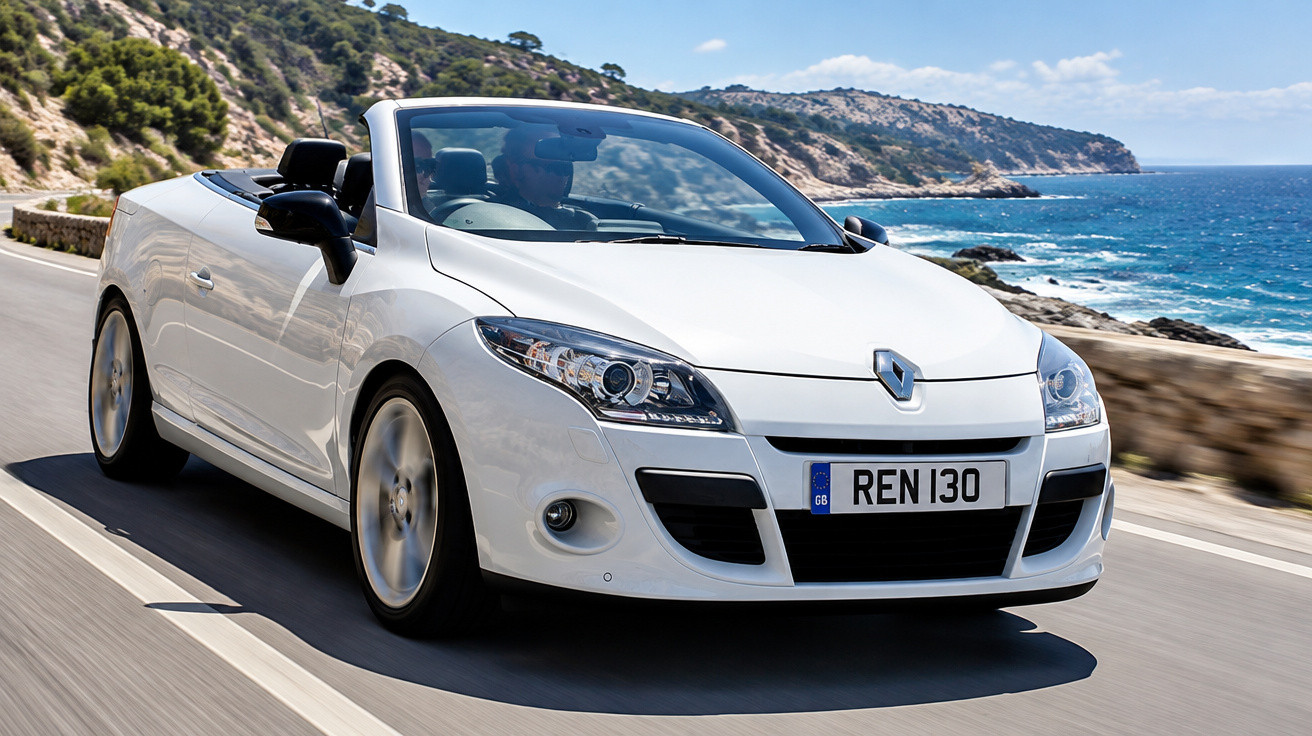
Renault Megane Coupe Cabriolet styling
The new Renault Megane Coupe Cabriolet is the final model in the range to receive the pinched, sculpted and Botoxed new front end. To the pleasure of the self-tan brigade, it also arrives with a folding glass roof.
Its bug-eyed face and generously proportioned rear are more attractive than those of the frumpy car it replaces. It also outshines competitors such as the Focus CC and 308 CC, both of which look like trolls living beneath the fixed-roof bridge.
That matters greatly for one simple reason: it is not especially enjoyable to drive. To compensate for the roof removal and the extra 160kg it brings, Renault has added considerable reinforcement to the Megane CC hatch. Front and rear spring rates have risen by 13 and 17 per cent respectively, while the dampers, anti-roll bar and rear axle beam have also been stiffened. Yet none of this eliminates its loose body control.
Handling with the roof up and down
With the roof lowered, taking the CC along narrow country roads predictably exposes scuttle shake, along with a substantial helping of understeer. On turn-in, the front tyres gain grip slowly and progressively, but ask too much of them and the car runs wide. It never becomes seriously wayward, although it is short of finesse.
Raise the roof and the Megane CC delivers respectable grip, feeling solid, quiet and stable, but its precision remains lacking. Once more, understeer and a touch of body roll signal that you have reached the limit.
Keep engine speeds low and it becomes an agreeable cruiser with a comfortable ride. The steering is indistinct around the straight-ahead position, and lacks both smoothness and progression through bends. Combined with the ride, this creates a rather detached experience.
Engines, transmission and cabin comfort
The engine range includes a 130bhp 1.4-litre petrol unit, 1.4- and 1.6-litre diesels, and - the best choice - a 2.0-litre diesel producing 160bhp. It has sufficient torque to potter about in a single gear for most of the day.
Choose the 2.0-litre 140bhp petrol and Renault's new EDC automatic comes as standard. This dual-clutch transmission, similar in principle to Volkswagen's DSG, has been developed for rapid shifts. However, it is far removed from the excellent DSG. Use the gear lever to change up or down - there are no steering-wheel paddles - and the gearbox pauses to consider matters before selecting the ratio. That is frustrating when driving briskly, though it will not trouble the intended buyers, who favour relaxed cruising.
That is the mindset in which to enjoy the Megane CC. The interior offers ample room, comfortable seats and a small amount of rear space for children. An integrated TomTom system is fitted as standard and, with the roof down, wind buffeting remains limited at speeds of up to 60mph, leaving the cabin calm.
Therefore, regardless of Renault's claims about firmer springs and precise handling, the result is a reassuring, soft and - most importantly - very attractive convertible.




Comments
No comments yet. Be the first to comment!
Leave a Comment