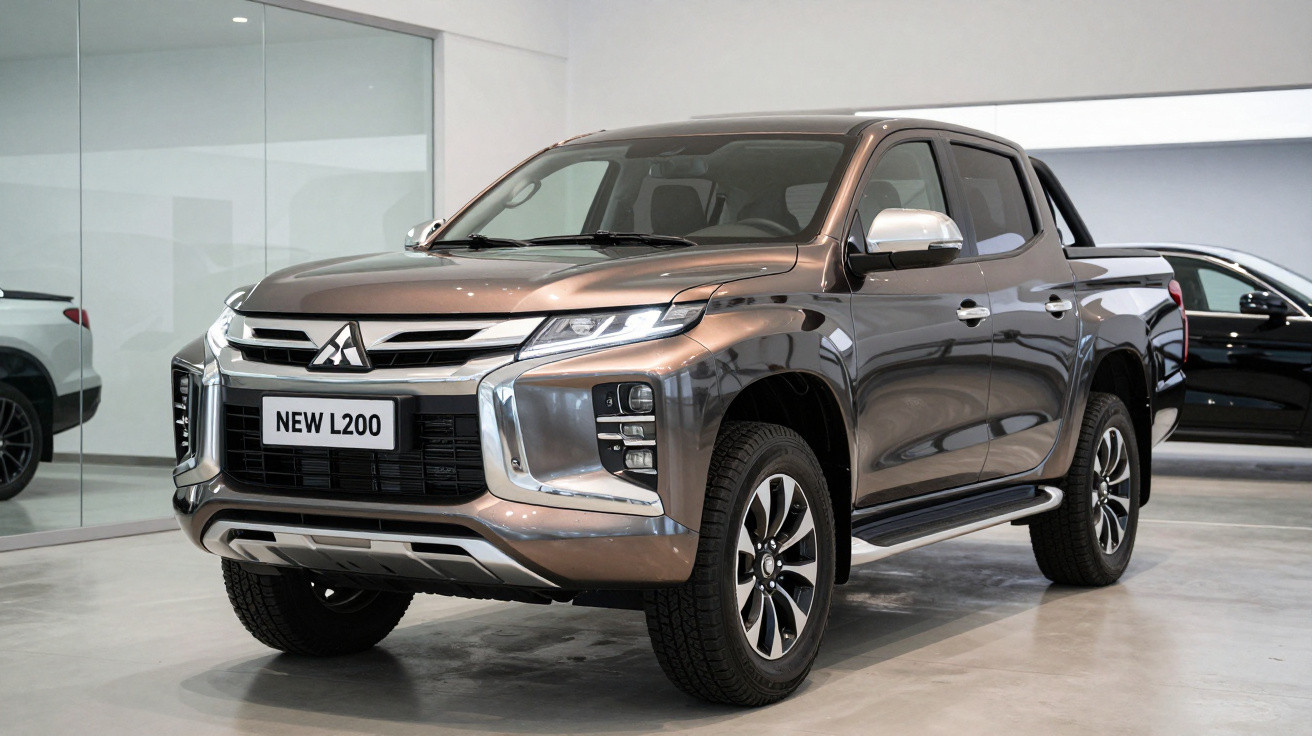
In Portugal, the Mitsubishi L200’s run has already come to an end. Elsewhere, however, the well-known Japanese pick-up is still going strong and has now gained a new generation.
Featuring an entirely refreshed look, a redesigned ladder-frame chassis and a new Diesel engine, the latest L200 - called the Triton in certain markets - will be offered with three different body styles: double cab, single cab and Club Cab.
Among the most notable exterior revisions is the load bed, which has been altered to reduce its height from the ground. This is intended to make loading items into the rear easier. There is also an additional step integrated into the rear bumper, making it easier to climb in and out.
Although it has not provided detailed figures, the three-diamond brand says the new L200 is slightly larger than its predecessor while weighing less overall. This has been achieved through the use of high-strength, low-alloy steel in both the chassis structure and bodywork.
Diesel and nothing but Diesel
So far, Mitsubishi has revealed just one engine for the new L200. It is a new 2.4-litre turbocharged Diesel unit, available in three outputs: 150 hp and 330 Nm, 184 hp and 430 Nm, and 204 hp and 470 Nm.
According to the version selected, the engine can be paired with either a six-speed manual gearbox or a six-speed automatic transmission. In the latter configuration, the L200 also receives a Sport mode.
For four-wheel drive, buyers will be able to choose between Mitsubishi’s Super Select 4WD-II and Easy Select 4WD systems. The latter features a limited-slip differential capable of sending 40% of the power to the front axle, with the remainder delivered to the rear wheels.
This is the more sophisticated of the two systems, allowing drivers to select 2H mode (rear-wheel drive), 4H (4×4), 4HLc (with the centre differential locked) and 4LLc (with low-range gearing and the centre differential locked).
There are also seven driving modes available: Normal, Eco, Gravel, Snow, Mud, Sand and Rock.
Mitsubishi L200 suspension redesigned
The suspension has been comprehensively reworked as well. It now uses a double-wishbone arrangement at the front while retaining the straightforward yet tough leaf springs at the rear, improving cornering behaviour without sacrificing comfort.
Super Select 4WD-II versions will also be equipped with Active Yaw Control, which enhances cornering performance by applying light braking to the inside front wheel.
A revolution inside and out
The new-generation L200’s styling arguably marks the model’s greatest transformation in its 45-year history, during which it has sold approximately 5.6 million units worldwide.
That change is immediately apparent at the front, where it adopts the latest interpretation of the Dynamic Shield design language and a completely new light signature.
On higher-specification versions, the grille is even finished in the body colour, which can include details painted in a darker shade.
Inside, the main focus is almost entirely on the technological upgrades received by this pick-up, although it retains analogue instruments and separate physical controls for the climate system.
It is not coming to Portugal
While Europe and Portugal have recently welcomed the new generations of the Ford Ranger, Europe’s number one, and its Volkswagen Amarok sibling, Japanese pick-ups - once market leaders - are becoming increasingly absent.
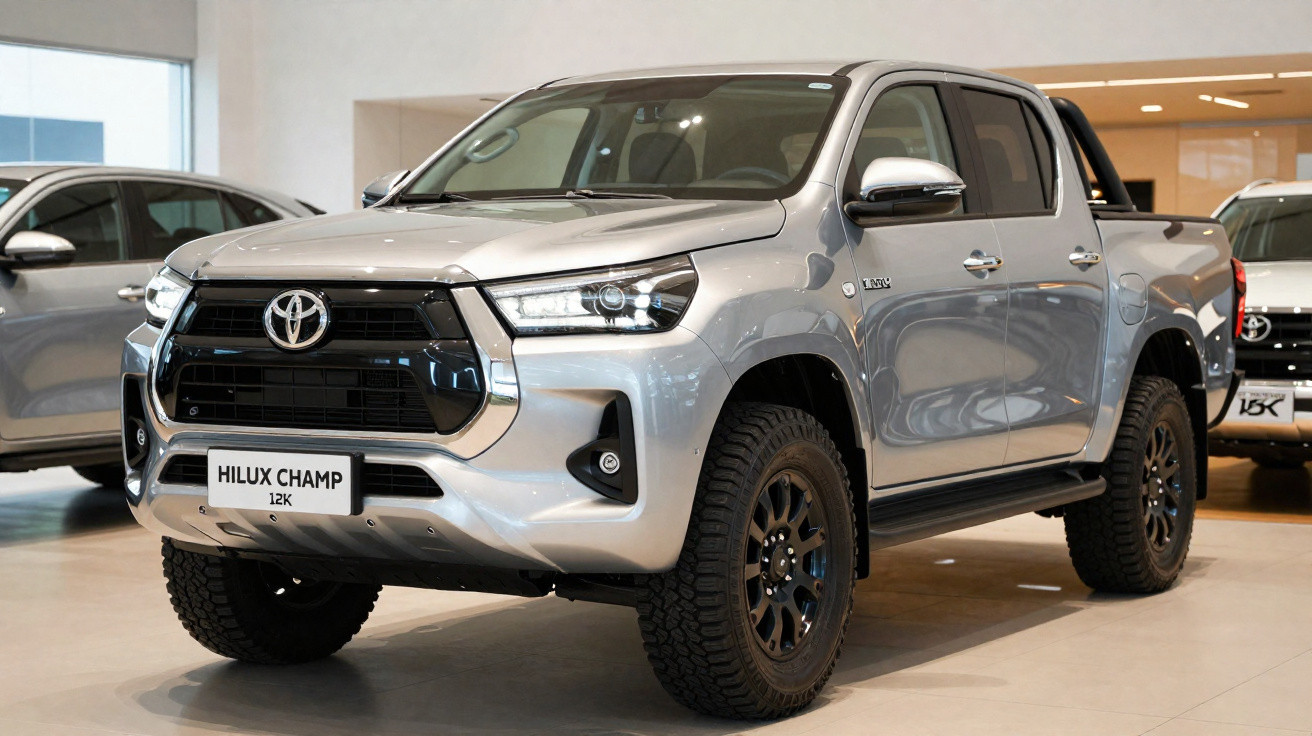
The Nissan Navara was withdrawn from sale last year, while the Mitsubishi L200 ceased to be marketed during its current generation. Only the Toyota Hilux and Isuzu D-Max remain.
The new Mitsubishi L200 generation will primarily target South-East Asian markets, including Thailand, where it is already available, before soon reaching Japan as well.
As mentioned above, it will not come to Portugal, and there are no plans to sell it in any European market.



Comments
No comments yet. Be the first to comment!
Leave a Comment