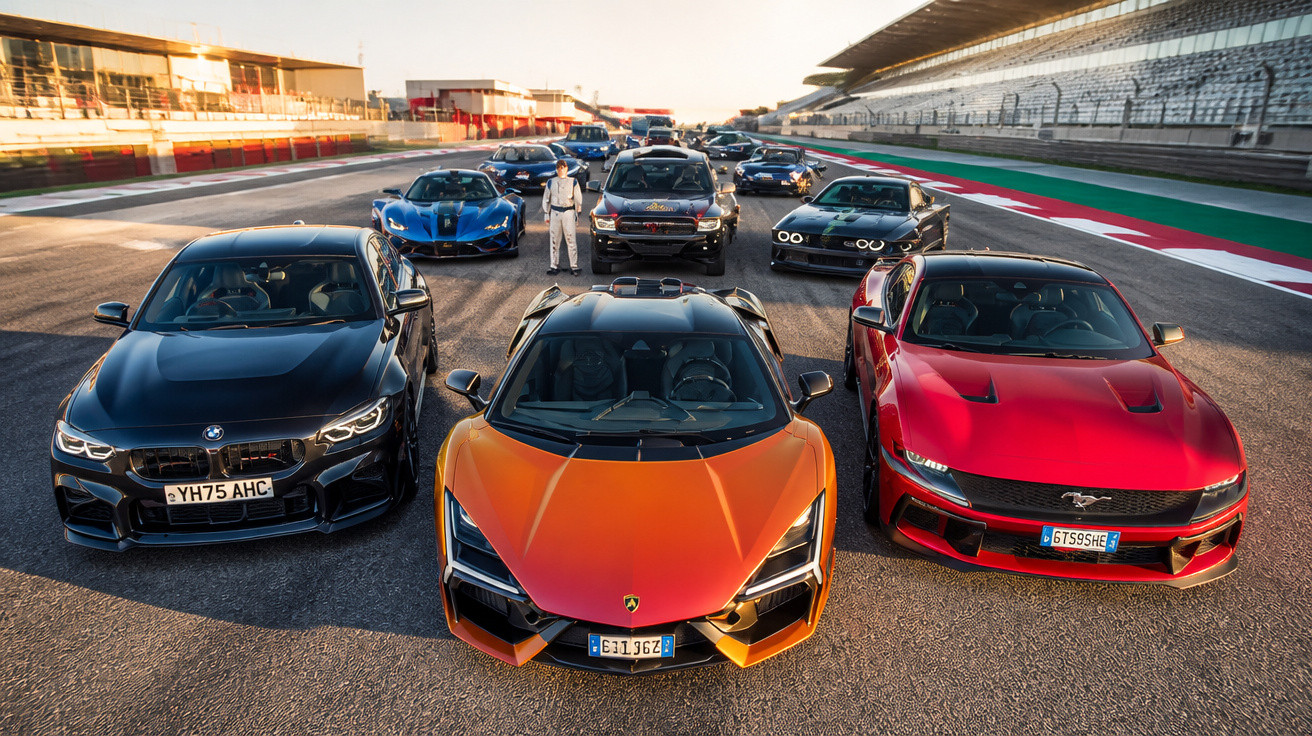
For some time, we have been discussing it, but the divide is now becoming clearer. EVs look set to provide the all-purpose answer for daily driving: travelling from A to B, family journeys and everything in between. Meanwhile, combustion-engined cars seem destined to become the domain of enthusiasts willing to absorb increasing fuel prices and taxes.
Complete separation has not happened yet, naturally. There are still many brilliant petrol and diesel – remember diesel? – cars available, alongside a small number of EVs designed for speed addicts. Even so, there is a growing acceptance that this is the direction in which the future is heading.
Performance Car of the Year highlights the divide
Our Performance Car of the Year test, together with the recent Munich motor show, brought that shift into sharp focus. At Munich, 98 per cent of the new cars unveiled were EVs, with the spirited petrol-powered manual Renault Clio standing as the sole exception. While gathering the contenders for PCOTY, we unsuccessfully searched for something small, affordable and equipped with only a modest power advantage. This is usually the territory where the unassuming petrol hot hatch excels, yet that corner of the market currently resembles a deserted landscape.
Of the 12 cars we assembled, therefore, just one was electric: the Ioniq 6 N. That says plenty about Hyundai, which is currently the only manufacturer producing a performance EV that comes close to the excitement of a combustion engine. Every other contender consumed petrol, demonstrating that controlled explosions still have plenty of life in them – as well as showing the extraordinary creativity available at the upper end of the market.
V12 engines, manual gearboxes and driver engagement
For all our gloom, the V12 survives – and does so triumphantly. Naturally aspirated engines and manual gearboxes are alive too. These are technologies supposedly abandoned long ago in the pursuit of power, efficiency and speed, but they now form a key part of manufacturers’ efforts to restore driver engagement to the top of the agenda.
The consequence is that performance is not inexpensive unless you are prepared to buy used. A £70k Hyundai EV counted as the ‘bargain’, while a £90k BMW M2 was the cheapest combustion-powered option. The least powerful car – though also the loudest – was a full-fat Dakar truck, with a 911 GT3 next up. The era of learning the ropes in a front-wheel-drive car with a friendly 250bhp has disappeared: it is now all or nothing. We are not complaining, mind you.
Read the full Performance Car of the Year story
To discover the complete story behind this year’s Performance Car of the Year test, and to learn which car won overall, pick up a copy of Top Gear magazine now. You do not even have to leave the sofa: click this link and a copy can be delivered straight to your door. Alternatively, for even more from Top Gear magazine, click here to begin a subscription. It currently costs only £5 for your first five issues, followed by six issues for just £23.50. Bargain.




Comments
No comments yet. Be the first to comment!
Leave a Comment