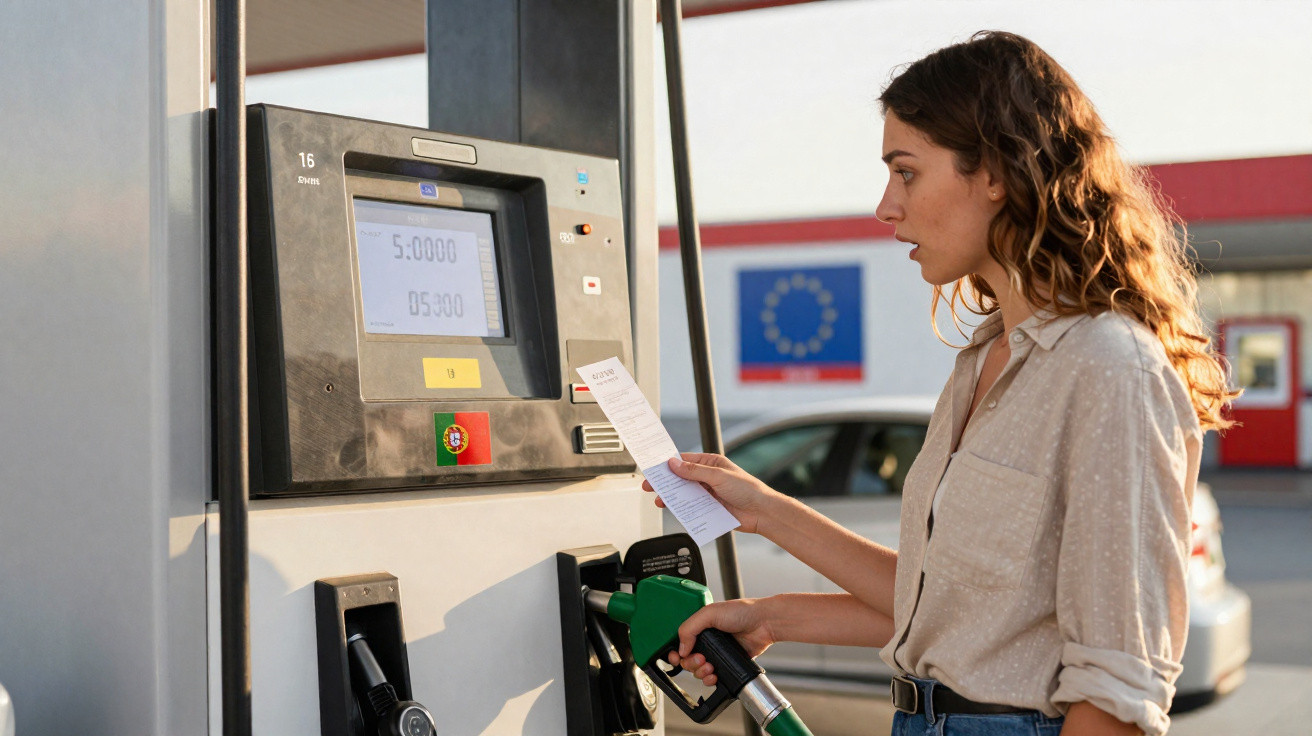
While many European governments are still deliberating, Portugal is moving ahead with a dedicated tax mechanism. The government in Lisbon is directly linking energy taxes to fuel-price movements, promising that the state will not take in extra revenue simply because oil and petrol become more expensive.
How the automatic tax discount at the petrol pump works
The underlying principle appears straightforward, although it is politically highly sensitive: if petrol or diesel prices at filling stations rise by a set amount, the government reduces its own tax charge.
“If fuel prices rise by ten cents per litre compared with the start of March, Portugal triggers an automatic tax cut.”
The administration led by Prime Minister Luís Montenegro has introduced a form of “price protection” for this purpose:
- Fuel prices at the beginning of March serve as the reference point.
- The mechanism applies once those prices are exceeded by ten cents per litre.
- The state then lowers the tax on mineral oil products sufficiently to offset the additional VAT receipts.
Through this approach, the government aims to ensure that the finance minister does not benefit from higher oil prices while motorists and haulage firms are forced to pay ever more. In effect, it offsets the extra VAT revenue that automatically rises with every cent added to the price.
Diesel already affected, petrol close to the threshold
For diesel drivers, the exceptional measure is already in force. Diesel has passed the ten-cent threshold, meaning the protection mechanism has begun operating.
Haulage businesses and high-mileage drivers in particular are breathing more easily. Without state intervention, diesel prices could have risen by as much as 25 cents per litre. The emergency tax adjustment makes the increase considerably less severe. For many logistics firms, this is a matter of survival, as fuel accounts for a substantial share of their running costs.
Petrol is now nearing the same trigger point. At the start of the week, retailers had already added about seven cents per litre:
- Diesel: the price threshold has been exceeded and the tax reduction is already under way.
- Petrol: a price rise of about seven cents per litre.
- Mechanism activation: once roughly four more cents have been reached.
As soon as petrol reaches that level, the same automatic process takes effect. Taxes fall, and the price displayed at the petrol pump is lower than it would have been without government action. This does not create a structural hole in the public finances, as the government is merely giving up additional revenue that it had never budgeted for because of the jump in oil prices.
Why Lisbon is intervening so assertively
The political context is plain: oil has broken through the US$100-per-barrel mark. This psychologically significant threshold is causing concern among governments and businesses worldwide. Portugal fears a fresh wave of protests at petrol stations, similar to those seen in earlier crises.
“The government wants to demonstrate that it is not quietly profiting when crises and conflicts force motorists to pay more.”
Officially, the Finance Ministry presents the mechanism solely as a crisis measure. Its reasoning is that tensions in the Middle East are pushing up crude-oil prices, making an exceptional and temporary response necessary. Portugal is therefore clearly positioning itself alongside consumers, while also seeking to demonstrate fiscal responsibility.
A clash with Brussels? The dispute over state aid
This is precisely where tensions with the EU level begin. In Brussels, competition authorities closely scrutinise support measures for the energy sector by member states. Their concern is that subsidised fuel prices could distort competition in the European single market.
Portugal’s Finance Minister Joaquim Miranda Sarmento has so far remained unmoved. In his view, this is not a conventional subsidy, but a flexible tax reduction that merely offsets unexpected additional receipts. The key message to the Eurogroup is that the state is waiving extra profits rather than injecting new money into the market.
| Aspect | Portuguese position | Brussels position |
|---|---|---|
| Nature of the measure | Temporary crisis response | Possible market distortion |
| Financial effect | Forgoing additional tax revenue | Effective relief for one sector |
| Political message | Protecting citizens from price shocks | Risk of competitive imbalances |
By referring to the war in the Middle East, Portugal is seeking to portray the measure as an absolute exception. This link to a clearly defined external crisis is intended to deter Brussels from launching formal proceedings.
Pressure grows on other EU countries
Portugal’s initiative is creating a dilemma across the EU. If oil remains close to US$100 or rises further, other member states will also face growing political pressure to act.
“The longer high oil prices persist, the more likely a wave of similar tax measures becomes in several EU capitals.”
Calls are already growing in many countries for fuel discounts, commuter allowances or direct energy vouchers. Should prices continue upwards, governments may struggle to explain why they are not adopting the support tools used by neighbouring countries.
Examples of possible responses in other countries
- Temporary reductions in energy taxes on petrol and diesel.
- Direct grants for commuters and logistics companies.
- Postponement of planned tax increases on fossil fuels.
- Caps on certain margins in the refining and filling-station sectors.
Each option carries risks of its own: either budget targets come under threat, or disputes arise over climate goals and EU competition rules.
Dependence on cars remains the underlying problem
Behind all the urgent rescue measures lies a structural issue: Europe’s transport system still depends heavily on the internal-combustion engine. Anyone who drives to work each day or earns their living with a lorry feels every change in petrol-station prices directly in their wallet.
The current situation illustrates just how vulnerable this model is. Geopolitical tensions are passed on to household budgets without delay. Every conflict in an oil-producing region, every blockage of important sea routes and every new flashpoint is eventually reflected on filling-station price boards.
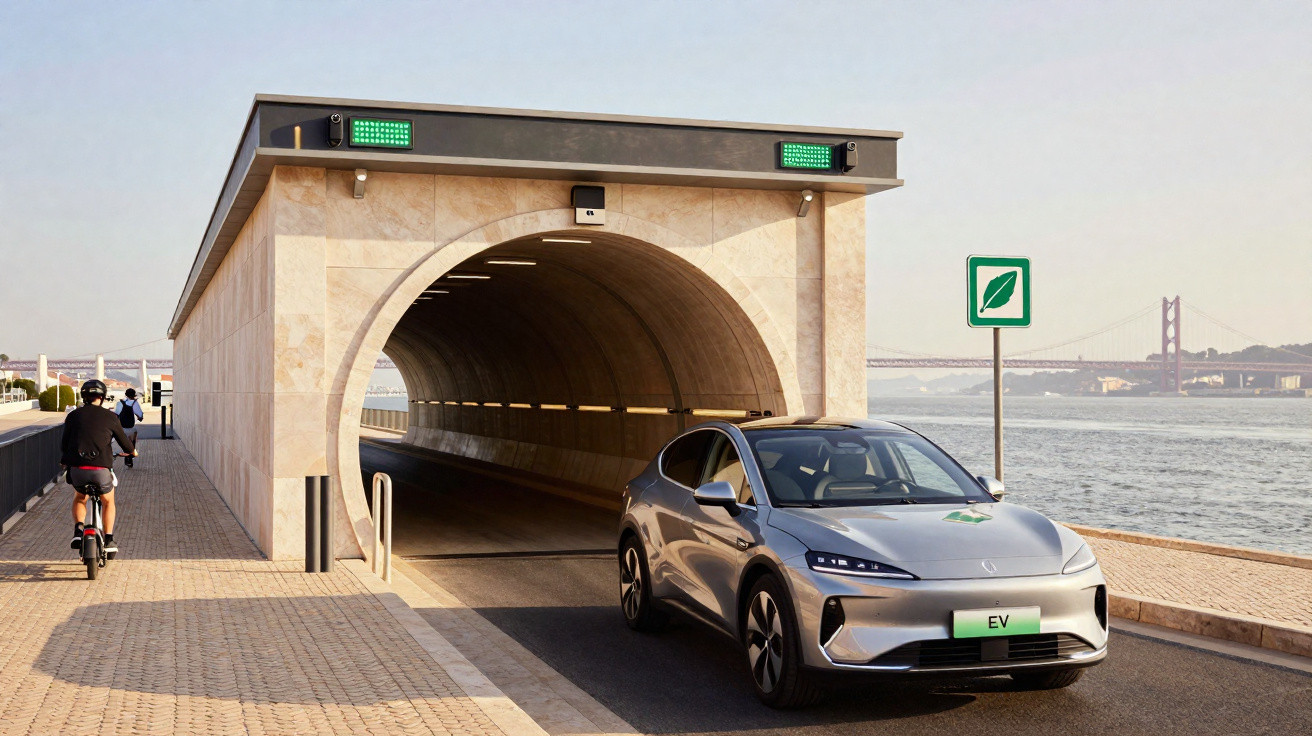
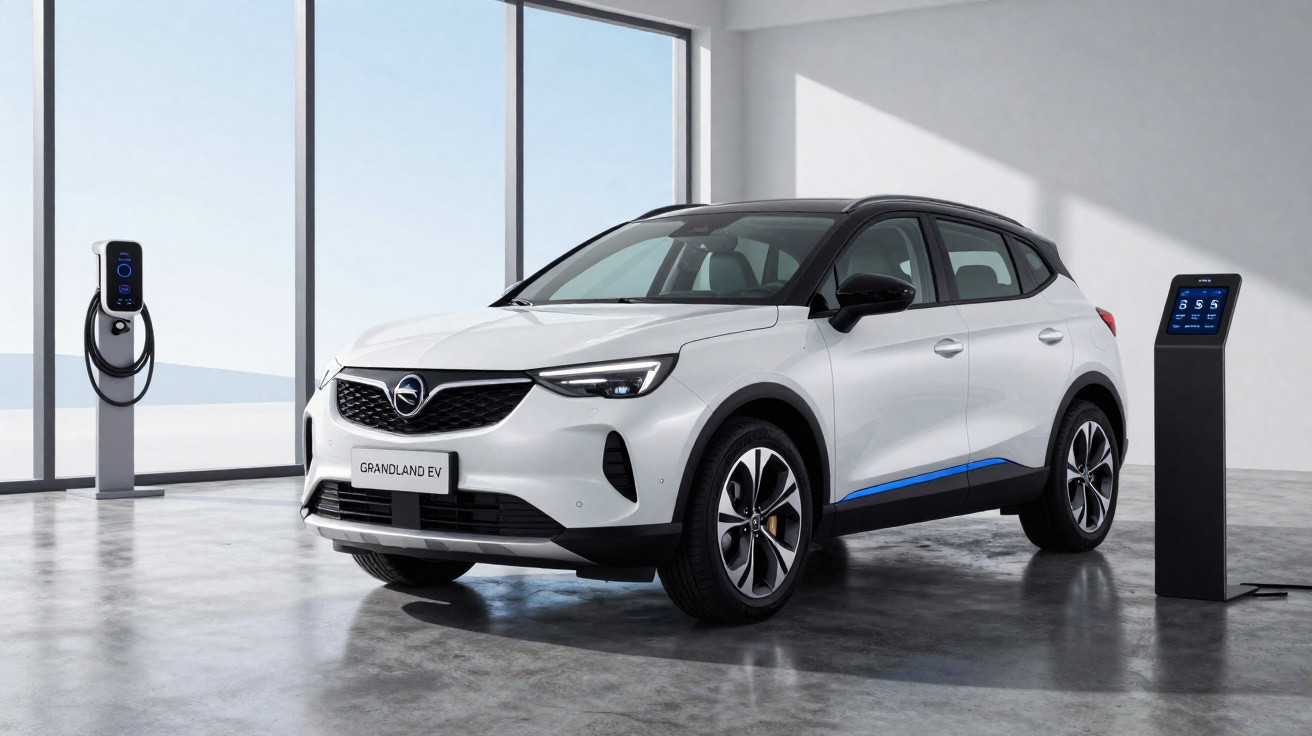
Over the longer term, electric mobility, improved local public transport and more rail freight are expected to reduce this dependency. However, the transition is uneven: while metropolitan areas have car-sharing schemes, electric buses and dense transport networks, many people in rural areas have no option but to use their own car.
What Portugal’s move means for consumers
For motorists in Portugal, the new mechanism primarily offers greater predictability in chaotic times. They know that the government will not pass on the full increase from international markets on a one-for-one basis.
Fuel will nevertheless become more expensive when oil prices rise, just not by quite as much. This type of policy can soften financial hardship, but it cannot replace a fundamental transport transition. People who commute long distances every day will notice the difference in their bank balance, yet their monthly fuel bill will remain a burden.
For Germany and other German-speaking countries, the Portuguese model is a test case: can a flexible tax reduction be implemented cleanly from a technical perspective? How will markets and EU authorities respond? And how widely will the public accept it when the state gives up revenue but prices still rise noticeably?
The coming months will show whether Lisbon is following a unique path, or whether the automatic tax discount at the petrol pump becomes a model for a new generation of European crisis instruments.






Comments
No comments yet. Be the first to comment!
Leave a Comment