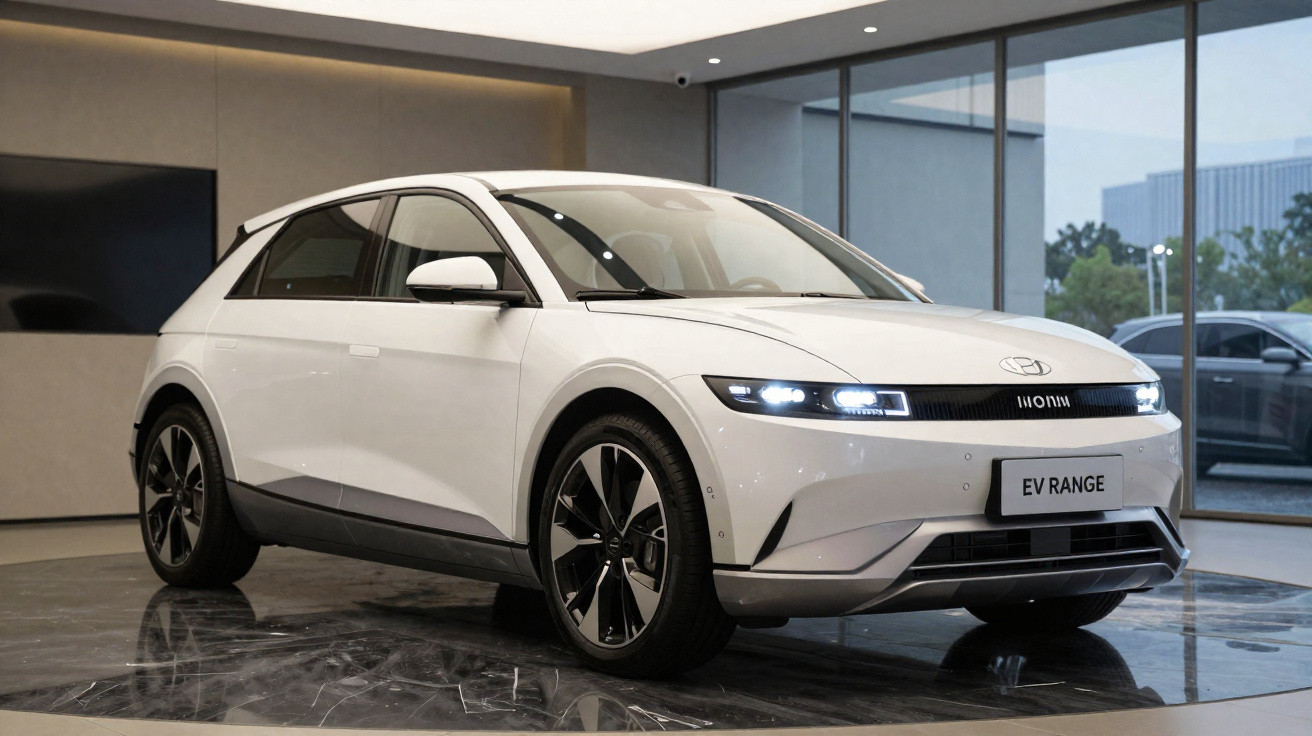
A large-scale analysis of used electric vehicles puts concerns about battery wear into perspective, while also highlighting major differences between models.
An electric car battery will inevitably lose some of its capacity over time. The key issue is how significant that reduction becomes after several years and many kilometres. A study drawing on 500,000 checks carried out worldwide provides practical reference points for motorists, particularly those considering the used market.
An electric car battery often retains most of its range
The research is based on battery diagnostics performed between 2022 and 2026 on 20 widely available electric models. The vehicles assessed were driven in Europe, North America, South America, Asia and Australia.
Its findings use battery state of health as the benchmark. This measure compares the capacity genuinely available with the capacity provided when the battery was new. A car showing 95% therefore retains roughly 95% of its original fully charged range under comparable conditions.
“After nearly 160,000 kilometres, most of the vehicles studied retain between 90% and 94% of their usable capacity.”
This is encouraging evidence. Unlike the perception sometimes created by phones and laptops, an electric car does not suddenly lose half of its range after just a few years. Deterioration does occur, but it is generally gradual.
At 50,000 kilometres, every model in the study remained above a median capacity of 90%. Apart from a few small cars with more modest battery packs, most were still at 94% or above.
Hyundai Ioniq 5 leads at several mileage points
At 50,000 kilometres, the Hyundai Ioniq 5 tops the group. Its battery retained just over 97% of its original capacity at the median point, placing it ahead of the Mercedes EQA, which recorded 96.56%.
The South Korean model also performs particularly strongly beyond 100,000 kilometres, retaining more than 95% of its capacity. Several competitors are close behind:
- the Mercedes EQA, at around 95%;
- the Hyundai Kona Electric, at 94.3%;
- the BMW i4, at 94.3%;
- the Ford Mustang Mach-E, at 93.45%.
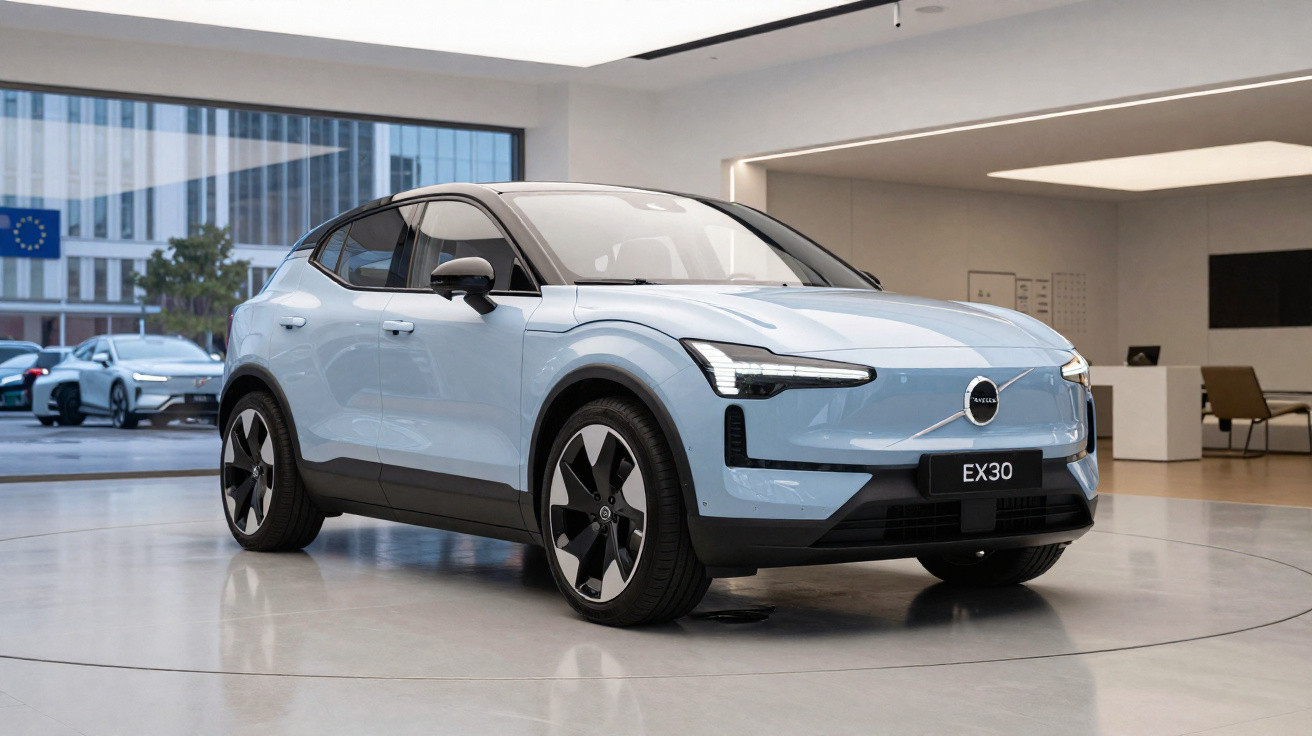
By 150,000 kilometres, the differences are narrower. The Mercedes EQA records 93.97%, ahead of the Hyundai Ioniq 5 at 93.79%. The BMW i4 follows with 93.62%, while the Hyundai Kona Electric reaches 92.95%. The Volvo XC40 Recharge stands at 92.79%.
These figures do not suggest that the cars have suffered no wear. Instead, they indicate that a range reduction of around 6% to 10% after high mileage is a realistic expectation for many recent models.
Smaller batteries face more charging cycles
The results are less favourable for certain cars fitted with smaller batteries. The Renault Zoe shows a median capacity of 87.33% after 150,000 kilometres. The Nissan Leaf falls to 86.67%, while the Mini Cooper SE reaches 87.11%.
This gap is partly linked to the number of charging cycles. A smaller battery must be recharged more frequently to cover the same distance. Each full cycle, even when managed carefully, gradually contributes to cell ageing.
“A small battery is not necessarily fragile, but it works harder over the kilometres than a larger battery used for the same journey.”
Tesla models remain robust without taking the top spot
The two Tesla models included in the analysis are not among the highest-ranked cars at high mileage. The Tesla Model Y retains a median capacity of 90.3% at the mileage point examined, while the Tesla Model 3 reaches 88.94%.
These are still far from poor results. A Model Y that has lost around 10% of its capacity retains nine-tenths of its original potential. For a driver who could travel 400 kilometres in favourable conditions on a full charge, that could mean a theoretical range of roughly 360 kilometres, depending on the weather, road type and speed.
The ranking primarily shows that a manufacturer’s reputation for electric cars does not, on its own, guarantee the best measured battery ageing. Pack size, cooling, cell chemistry and the maker’s calibration all matter greatly.
Identical cars can age very differently
The median result does not tell the whole story. Considerable variations can sometimes be seen between examples of the same model. For Tesla Model Y vehicles at around 150,000 kilometres, the observed capacity range extends from 82.9% to 94.9%.
| Model | Observed state-of-health range |
|---|---|
| Tesla Model Y | 82.9% to 94.9% |
| BMW i4 | 87.5% to 96.9% |
| Ford Mustang Mach-E | 85.3% to 96.1% |
| Tesla Model 3 | 80.28% to 94.53% |
This spread reflects how each car has actually been used. High temperatures speed up chemical ageing. Frequent rapid charging can also have a long-term effect, especially when it becomes part of the daily routine. Regularly leaving a vehicle at 100% charge for many hours is not helpful either.
Useful habits for reducing battery wear
Drivers cannot control every factor, but they can avoid some unnecessary strain. For everyday use, many manufacturers recommend setting a charging limit below 100% where the required range allows it. A full charge remains useful before a long journey, ideally completed shortly before departure.
- Choose slow or faster home charging when it is available.
- Keep rapid charging for journeys that genuinely require it.
- Avoid leaving the car fully charged for long periods in high heat.
- Check the battery diagnostic before buying a used electric vehicle.
For buyers, the mileage shown on the odometer is therefore not enough. A car that has covered many kilometres, been charged carefully and kept in a temperate climate may have a healthier battery than a lower-mileage example exposed daily to heat and rapid charging.
A state-of-health certificate consequently becomes as useful as the service history. It offers a tangible indication of the range still available and can prevent an electric car from being judged too quickly on its age or mileage alone.






Comments
No comments yet. Be the first to comment!
Leave a Comment