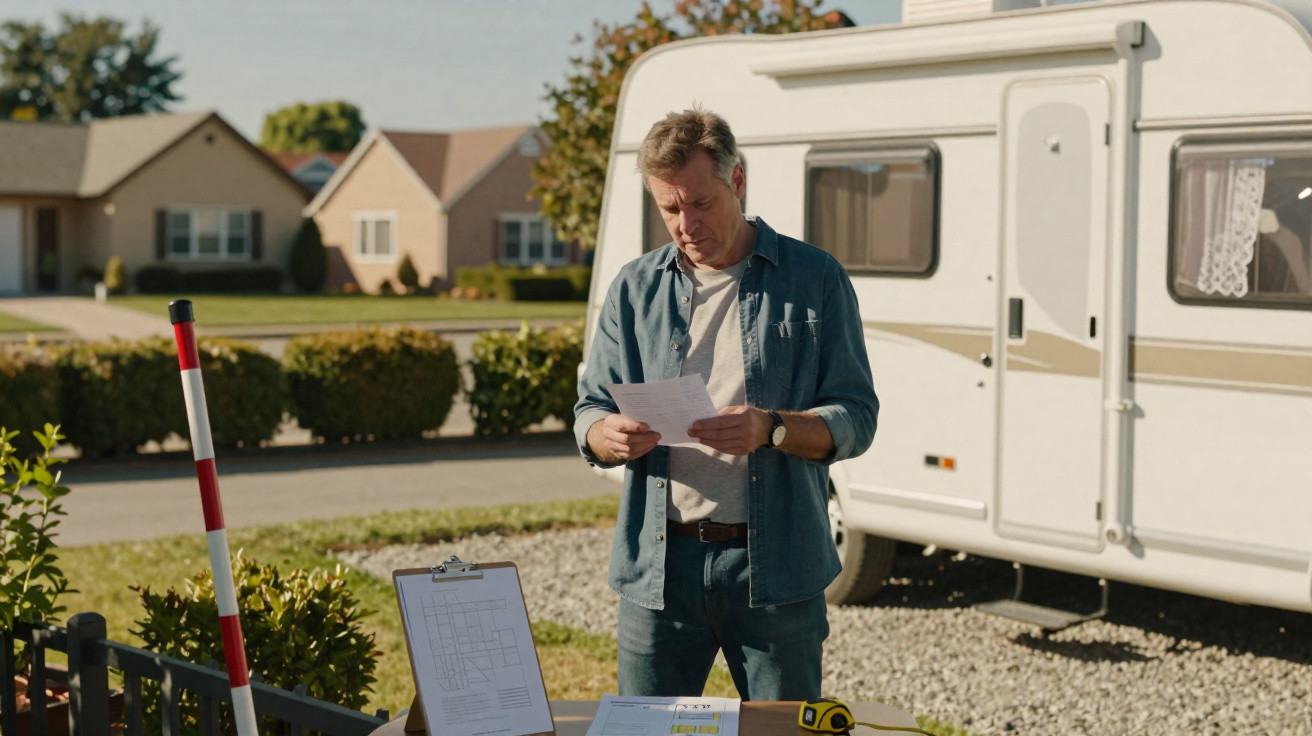
By late autumn, Laurent thought he had found an almost perfect solution. For 6,500 euros, he had bought a small plot on the edge of his village: an unremarkable grassy field, lined by a hedge and large enough to keep his motorhome there through the cold months. No more storage fees of 70 or 90 euros a month, no more journeys back and forth, and no more odd feeling of paying simply not to use his own vehicle. Every Sunday, he would come by to inspect the cover, start the engine and make sure everything was holding up. Then, one November morning, an envelope from the town hall was waiting in his letterbox. The letter referred to the “prolonged parking of a leisure vehicle” and requested that the situation be regularised. Laurent reads the same sentence three times. The land belongs to him. So what, precisely, is he being criticised for?
A plot bought to save money can quickly become an administrative headache
In many villages, the plan appears straightforward: buy a piece of land that costs less than a garage or secure storage space, then park the motorhome there out of season. Laurent had not built a shed, poured a concrete slab or fitted an electricity connection. His vehicle stood on the grass, its wheels chocked and doors locked, much like a slightly larger car. Yet the authorities do not always assess matters through that very practical lens. The plot’s cadastral classification, the local development plan and the length of time it has been parked can all alter the position. Private land is not necessarily a place where anything goes.
The letter Laurent received does not automatically mean he has already been penalised. Often, the town hall begins by seeking clarification: how long has the motorhome been there, is anyone living in it, and does it have utility connections or get moved regularly? In his case, a neighbour had reported the vehicle, which had been visible from a public footpath for almost a year. That detail alone was enough to prompt an inspection. Let us be honest: hardly anyone reads the planning rules before buying a 6,500-euro plot. People look at the price, access and available space. The rest sometimes comes later.
The complication is that a motorhome is both a vehicle and a form of accommodation. Parked occasionally on private property, it raises different issues from a vehicle left permanently in place, fitted with an awning, fixed chocks or a water supply. Rules are often tighter on agricultural or natural land, even when the owner never spends a night there. The town hall may consider that long-term parking changes how the land is used or harms the local landscape. The word “prolonged” is often what changes the course of the case.
Before replying to the town hall, Laurent would be wise to check three specific points
The most useful first step is to gather the paperwork calmly rather than reply in haste. Laurent should consult any planning certificate he holds, his municipality’s local development plan and the plot’s exact zoning designation. The same road can separate a buildable area from agricultural land, with very different consequences. The town hall’s planning department can explain the applicable rules, but a written reply is preferable when the situation is unclear. Recording the purchase date, the parking dates and any occasions when the vehicle was moved also helps establish the facts in the right order.
A common mistake is to assume that moving the motorhome two metres every six months makes the issue disappear. Officials chiefly consider the reality of its use: does the vehicle genuinely travel, does it go away on trips, or is it functioning as permanent storage? Laurent had kept his insurance and roadworthiness test up to date, which helps his case, but his motorhome had not left the plot for eleven months. One neighbour had even seen it under a green cover throughout the winter. That is not a moral failing, far from it. It is simply the sort of detail that makes the explanation less persuasive.
A measured response may prevent the case from becoming unnecessarily confrontational. Laurent could ask for a meeting, make clear that nobody lives in the vehicle, and suggest a realistic option: removing it temporarily, using an authorised space or finding land that complies with the local development plan. Early dialogue often costs less than a stand-off.
“I thought I was buying peace of mind. I discovered that land has an intended use, even when it appears to serve no purpose,” says Laurent, still surprised by the letter.
- Check the plot’s zoning designation and the applicable local rules;
- Read the town hall’s request carefully, including any deadline for replying;
- Gather evidence showing that the motorhome remains a vehicle fit to be driven;
- Avoid any permanent installation until a clear answer has been obtained;
- Seek advice from a planning-law professional if a formal notice is received.
The motorhome, a symbol of freedom, can sometimes clash with neighbourhood rules
Laurent’s story will resonate with many motorhome owners. Once the purchase cost, insurance, maintenance and fuel have been paid for, storage charges can feel like an expense people would gladly remove. Finding a small plot then becomes an almost emotional solution: the vehicle is imagined safely nearby, ready to set off again when the warmer weather returns. But municipalities must also deal with neglected land, disguised installations and neighbourly disputes. Between the right to enjoy one’s property and protecting the landscape, the boundary is never as clear-cut as it may seem.
A letter from the town hall can therefore feel intrusive, even though it may sometimes open a useful discussion. Some municipalities tolerate parking subject to conditions, others require authorisation, while certain zones barely permit it at all. Every case depends on local rules, the immediate surroundings and how the vehicle is actually used. Buying before checking remains the most expensive trap. Prospective buyers would do well to put the question in writing before signing with the notary, even if that seems excessive for “just a motorhome”.
Laurent is now considering renting a space from a neighbouring farmer, in an area already designated for vehicle storage. He will lose some of the savings he expected, but will probably gain more peaceful nights. His experience is a very down-to-earth reminder: owning land does not automatically give someone the right to change how it is used. And while a motorhome represents the road, the unexpected and spontaneous departures, its winter storage often begins with a far less romantic question: what exactly do the municipality’s rules say?
| Key point | Detail | Value for the reader |
|---|---|---|
| Nature of the plot | Zoning under the local development plan may restrict prolonged parking, particularly on agricultural or natural land. | Avoid buying land that cannot be used for winter motorhome storage. |
| Actual parking period | A motorhome left immobile for several months may, depending on the circumstances, be treated as a permanent installation. | Understand the factors considered by the town hall. |
| Replying to the letter | A written request, a meeting and a proposed solution can help defuse the situation. | Respond without making matters worse or incurring unnecessary costs. |

















Comments
No comments yet. Be the first to comment!
Leave a Comment