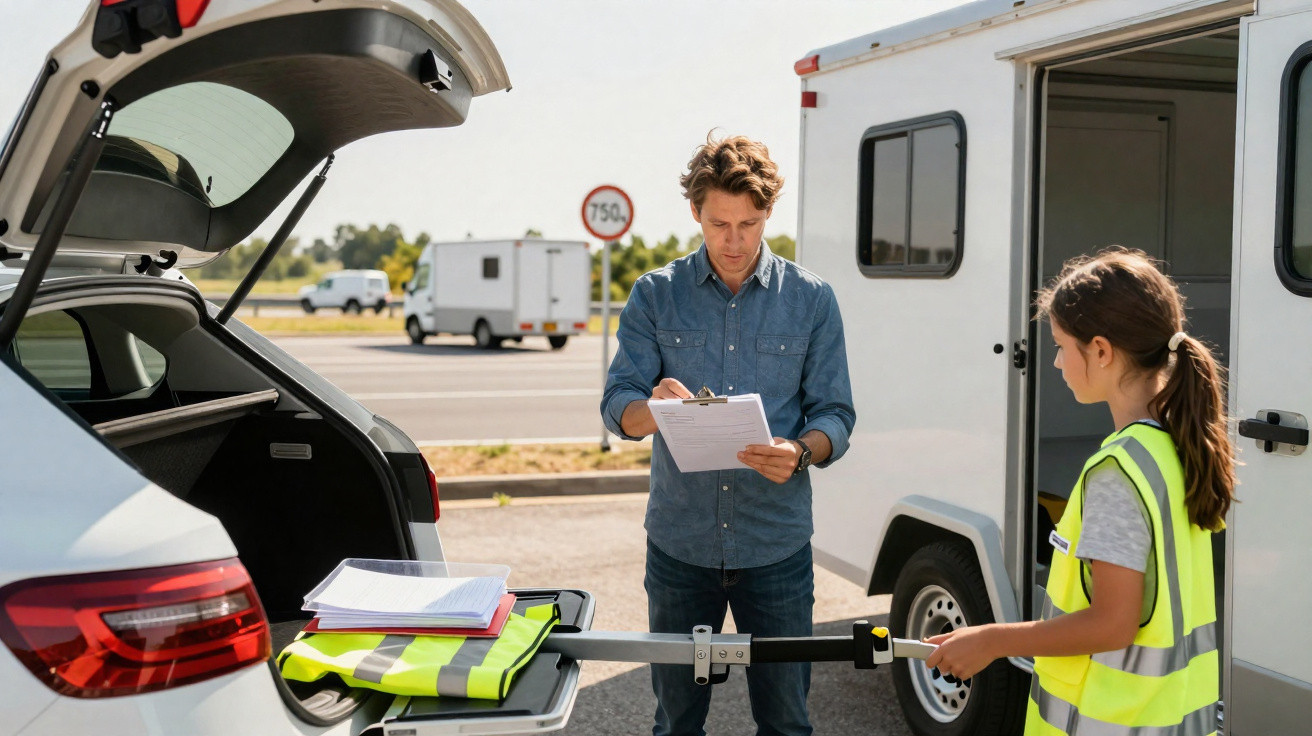
Towing a trailer involves more than coupling it up, connecting a plug and setting off. Weight limits, paperwork and insurance all matter.
For carrying garden waste, DIY equipment, a motorbike or a small car, a trailer is an especially useful piece of equipment. However, the rules can change quickly according to its authorised gross vehicle weight (GVW). Grand Est Trailers outlines the main thresholds to understand before driving, particularly those concerning registration, braking and driving licences.
The 500 kg threshold changes the paperwork
The first figure to check is shown on the vehicle documents: the authorised gross vehicle weight (GVW). This is the maximum weight the trailer may reach when loaded, rather than its unladen weight.
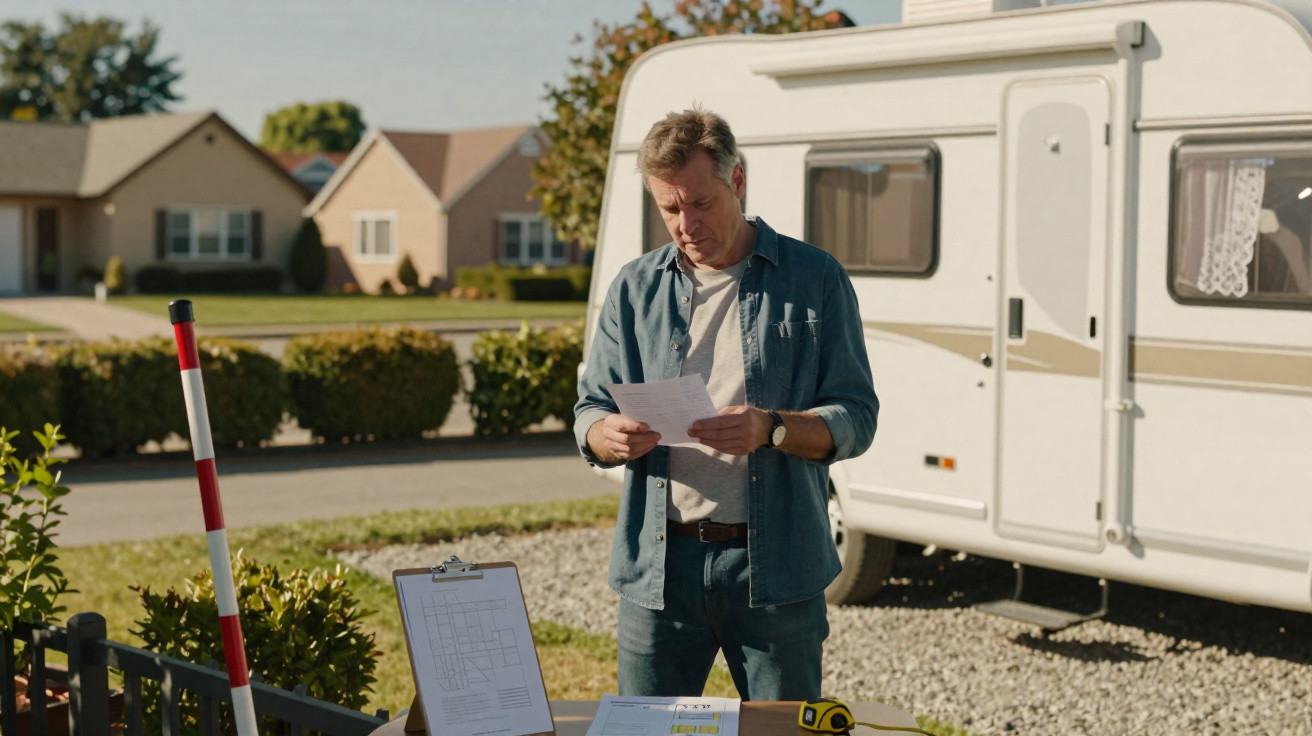
For trailers with a GVW of up to 500 kg, no separate registration is required. The rear must display a plate showing the registration number of the towing vehicle. Owners should keep the certificate of conformity supplied at purchase, as it may be requested during administrative procedures or a roadside check.
From a GVW of 501 kg, further requirements apply. The trailer must have its own registration certificate and dedicated registration plate. It can therefore no longer travel solely under the registration number of the towing vehicle.
A trailer with a GVW of 501 kg must have its own documents, its own registration plate and insurance declared in line with the cover set out in the policy.
Documents needed for a registered trailer
When applying for registration, the certificate of conformity is the key document. Private individuals must also provide a recent proof of address and valid identification. A business will generally need to submit a recent extract confirming its entry in the commercial register.
- The trailer's certificate of conformity;
- The appropriate registration application;
- Proof of address dated within the last six months for a private individual;
- Valid identification;
- Proof that the business exists for a professional user.
Once the registration number has been issued, the plate must be fitted before the trailer is used on a public road. A provisional certificate will usually allow driving while the final document is awaited.
At 751 kg, braking becomes a safety issue
Trailers exceeding a GVW of 750 kg must be fitted with a braking system. The most common arrangement is an overrun brake: when the towing vehicle slows down, the trailer's force activates its own brakes.
This is not simply a matter of convenience. A loaded trailer can push hard against the towing vehicle when braking, particularly downhill, in wet conditions or when approaching a roundabout. Poorly distributed loads can also cause snaking movements, sometimes described as “jack-knifing” when the combination becomes difficult to control.
For an unbraked trailer, the towing vehicle must meet a weight requirement. Its unladen weight must be at least twice the trailer's GVW. This rule is intended to prevent a light vehicle from towing equipment that is too heavy for it.
Before loading, check the trailer's GVW, the vehicle's towing capacity and the gross train weight stated on its registration certificate.
Category B licence, additional training or a BE licence
The required licence is not based solely on the trailer's weight. The GVWs of the towing vehicle and trailer must be added together. This distinction often surprises motorists: even a relatively light trailer may require a different licence category when coupled to an already heavy vehicle.
| Configuration | Licence generally required |
|---|---|
| Trailer with a GVW of up to 750 kg | Category B licence |
| Vehicle and trailer combination up to 3,500 kg | Category B licence |
| Combination between 3,501 and 4,250 kg | B96 training |
| Combination above 4,250 kg, within the permitted limits | BE licence |
B96 training is intended for Category B licence holders whose combination exceeds the 3,500 kg threshold without going beyond 4,250 kg. It consists of seven hours of training, split between theory and driving. There is usually no final test, but the driving school provides a certificate enabling the licence to be updated.
The BE licence applies to heavier combinations. It involves more structured training and a practical test. Depending on the driver's circumstances and the date on which they obtained their Category B licence, their theory test may also need to be checked. Costs differ considerably between driving schools.
The F3 figure can prevent you from setting off
Even with the correct licence, a towing combination may still be prohibited. The towing vehicle's registration certificate states an authorised gross train weight, identified by field F3. This figure sets the maximum weight of the complete moving combination.
For example, a vehicle has a GVW of 2,100 kg and the trailer has a GVW of 1,300 kg. The combination totals a GVW of 3,400 kg, so a Category B licence may be sufficient. However, if the vehicle's F3 field limits the combination to 3,200 kg, this does not make the setup legal. The manufacturer has imposed a lower limit.
Insurance does not always cover the items being carried
Telling your insurer when you buy a trailer helps avoid unwelcome surprises. For smaller models, the motor policy may include third-party liability cover. A registered trailer will often require dedicated cover.
Three levels of cover commonly appear in policies:
- Third-party cover pays for damage caused to others;
- Extended cover may insure damage to the trailer, potentially subject to an excess;
- Carried items often need separate cover.
An electric bicycle, lawnmower, professional tools or a motorbike are not automatically compensated following theft or an accident. Policyholders need to read the exclusions, compensation limits and parking conditions specified in the contract.
Checks to make before taking a trailer on the road
A quick inspection before every journey reduces risk. The load must be evenly distributed, secured and within the trailer's payload limit. Too much weight towards the rear encourages instability and oscillation. Conversely, an excessive load concentrated on the drawbar places weight on the rear of the vehicle and may affect its steering.
- Check the tyre pressures and condition;
- Test the lights, indicators and brake lights;
- Check that the coupling is locked and the safety cable is fitted;
- Secure every item being transported firmly;
- Adjust speed, braking distances and manoeuvres.
These rules apply to driving in France and to light vehicles. When crossing a border, speed limits, mandatory equipment and administrative requirements may differ. Above all, a properly prepared towing combination is one for which the actual weights, documents and insurance cover have been checked before departure.




Comments
No comments yet. Be the first to comment!
Leave a Comment