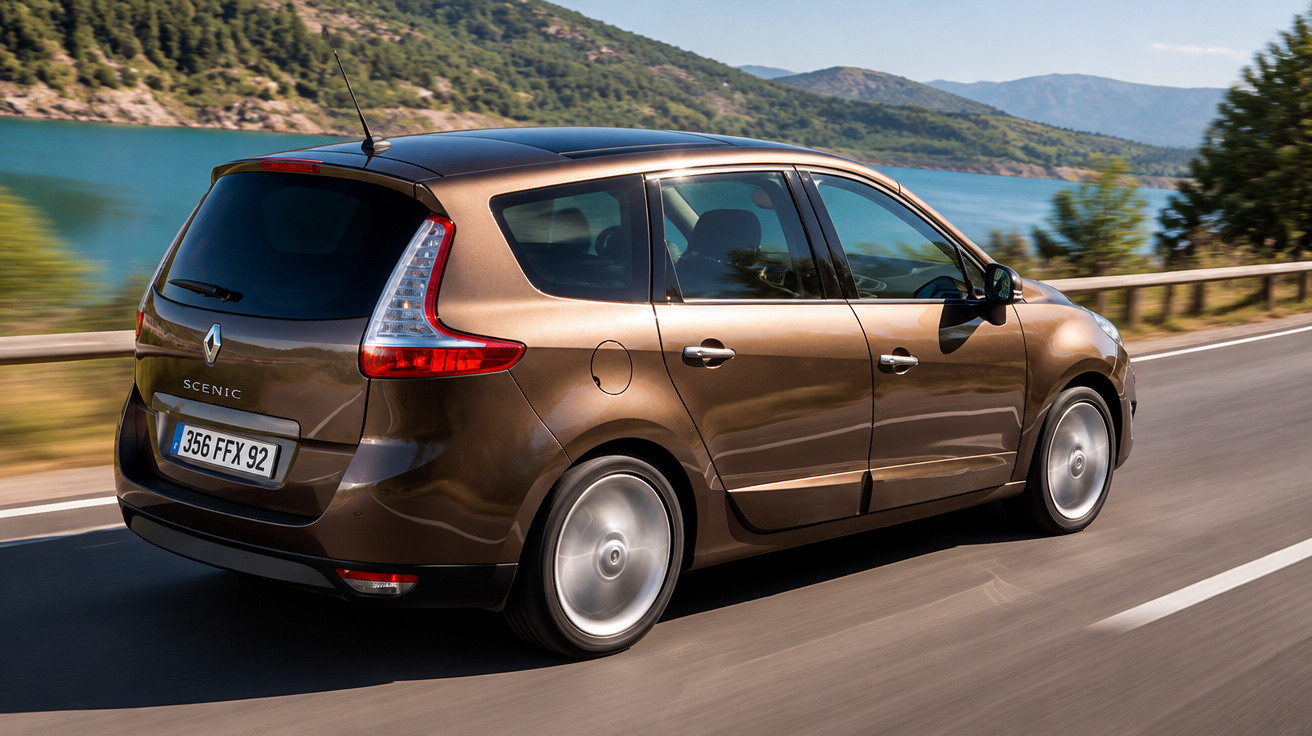
Renault is carrying a hefty burden of expectation. It created the mini-MPV class with the first Scenic, so the new Grand Scenic - the seven-seat model, while the standard Scenic seats five - must uphold the excellent standing of its predecessor. That car offered warehouse-like storage and enough seating arrangements to recreate the entire Kama Sutra inside. Fortunately, this replacement remains spacious and useful, with the same clear sense of purpose as before.
Renault Grand Scenic seating and space
Begin with the seating. It still has seven seats across three rows. Every seat in the centre row can be slid independently backwards or forwards, tilted ahead, or removed altogether to free up additional room. The two third-row seats sit beneath the boot floor and can be raised or stowed by pulling a red strap. It is easy to tug with one hand, leaving the other available to hold a child.
The car is 70mm longer than its predecessor, providing more legroom in both the second and third rows than any of its direct competitors. In reality, though, the rearmost row is suitable only for infants.
The dashboard design and cabin materials come from the Megane, lending the interior an air of quality. However, press firmly on them and they feel somewhat inexpensive, which may prove less able to withstand the demands of family use over time.
There is no shortage of room for family belongings, however. The Grand Scenic has 40 storage compartments, while its largest luggage capacity, with every seat removed, is 2,063 litres - an increase from 1,920 litres in the previous model.
On-road comfort and refinement
Although the cabin has become larger, the Grand Scenic does not feel bigger when driven. Compared with the old model, it behaves more like a conventional car than a minibus, helped by a raised floor and a steering wheel positioned at a greater angle towards the driver. Its chassis is three times more torsionally rigid than the previous car's, and improved damping together with hydroelastic suspension mounts - effectively soft blocks that reduce vibration - deliver a better ride.
As a result, it is a calm car to drive. A new felt-backed floor improves acoustics, helping to insulate the cabin from the Big Bad World, while the new 1.4-litre turbocharged engine is quiet enough that you may need to check it is running. That should also help children sleep undisturbed in the rear.
Renault has also set the pricing well. The entry-level version costs £14,995, rising to £22,495 for the highest specification. This matters in a sector filled with imitators eager to take its sales; the S-Max is its nearest rival, but cannot equal the Renault's practicality.
The Grand Scenic therefore maintains its reputation without radically altering the recipe. That is just as well, because changing it too much could have spoiled an already Good Thing.



Comments
No comments yet. Be the first to comment!
Leave a Comment