If you have only just climbed back into your chair after falling off it at the news that a Chinese hypercar has achieved a verified 293mph, prepare to be knocked to the floor by disbelief once more.
Yesterday, online discussion went into overdrive after footage showed the decidedly generic-looking Yangwang reaching 472kph (293mph). That makes it the world’s fastest road-legal EV and places it among the three quickest road cars of any kind.
What struck me most was not its speed, but where it achieved it.
Yangwang U9 at Papenburg’s high-speed oval
There are not many places on Earth where a car can safely be taken towards 300mph. Germany’s Ehra-Lessien test track is the obvious venue, but Volkswagen, which owns it, is hardly likely to hand a Chinese challenger the keys to its own territory.
Even Bugatti is excluded, despite no longer being fully within Volkswagen’s inner circle following its merger with Rimac. So, when it sought to set an open-roof vmax record with the Mistral last November, it had to head for ATP Papenburg in north-west Germany.
The alternatives are limited. Italy’s Nardò high-speed bowl is one endless bend and is too rough for speeds this extreme. Millbrook in the UK? No chance; it may as well be the Monaco Grand Prix circuit. Nor can road cars deploy their power effectively on the Bonneville salt flats.
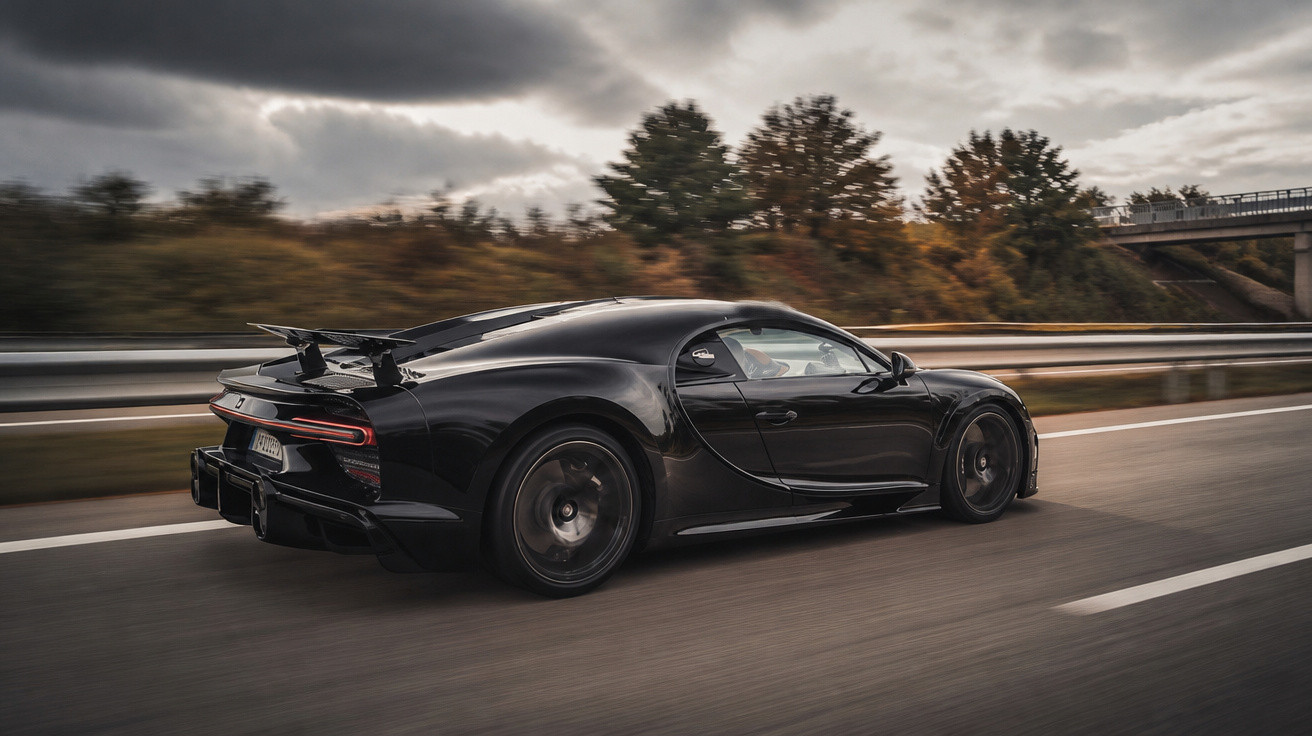
That leaves Papenburg’s high-speed oval as the premier proving ground for speed records. The Bugatti Mistral recorded 282mph there in light rain.
I was permitted to accompany that record bid and later drove the same €11m car on the same day, after its tyres had been changed. I managed a comparatively modest 245mph before the Mistral hit a speed limiter; that restriction had been removed for Andy Wallace’s Guinness-verified attempt.
Why the Yangwang U9’s 293mph is so startling
The first surprise is that Papenburg is small. High-speed circuits are not all created equal. It is five lanes across, while its 45-degree banking supports a recommended cornering speed of 155mph. Both the Bugatti and Yangwang exited that banking at close to 190mph…
Yet Papenburg’s straights are tiny beside the fabled Ehra-Lessien stretch, which seems to vanish over the Earth’s curve. Its recognised ‘straight’ extends for more than 5 miles. At Papenburg, you have, at best, 2.7 miles before needing to brake extremely hard for the tight, unforgiving turns.
Nevertheless, an electric hypercar calmly reached 293mph - 12mph quicker than a 1,600hp Bugatti. At such velocities, each additional 1mph is a Herculean accomplishment. It did look alarmingly unsettled when its driver lifted off, mind.
3 minutes 5 seconds
Watch the footage above and the Chinese car appears still to be accelerating when it runs out of space. It demolished that circuit while seemingly retaining more in reserve. As far as we know, this was Yangwang’s first attempt, too. Fellow Chinese manufacturer Xiaomi, meanwhile, has claimed eighty-six Nürburgring records.
Could the Yangwang U9 reach 300mph?
That leads to frightening fact number two: Yangwang will surely return. First, 300mph. Then perhaps the full-fat Chiron Super Sport’s 304.77mph record. After that, who can say? 311mph (500kph)? 320mph? Poor John Hennessey must be weeping into his elephant-heart-sized turbochargers.
Yesterday’s news astonished some people. Others were unmoved because it is an EV from a marque without cachet. For me, the remarkable point was the amount of speed it found in so little distance. Having been to Papenburg and experienced one of the planet’s fastest cars using every last bit of that straight, it is mind-boggling to imagine this U9 gliding past almost silently, apparently barely trying.
Give it more room and every blue-blooded, household-name hypercar could be at its mercy. Gulp.


Comments
No comments yet. Be the first to comment!
Leave a Comment