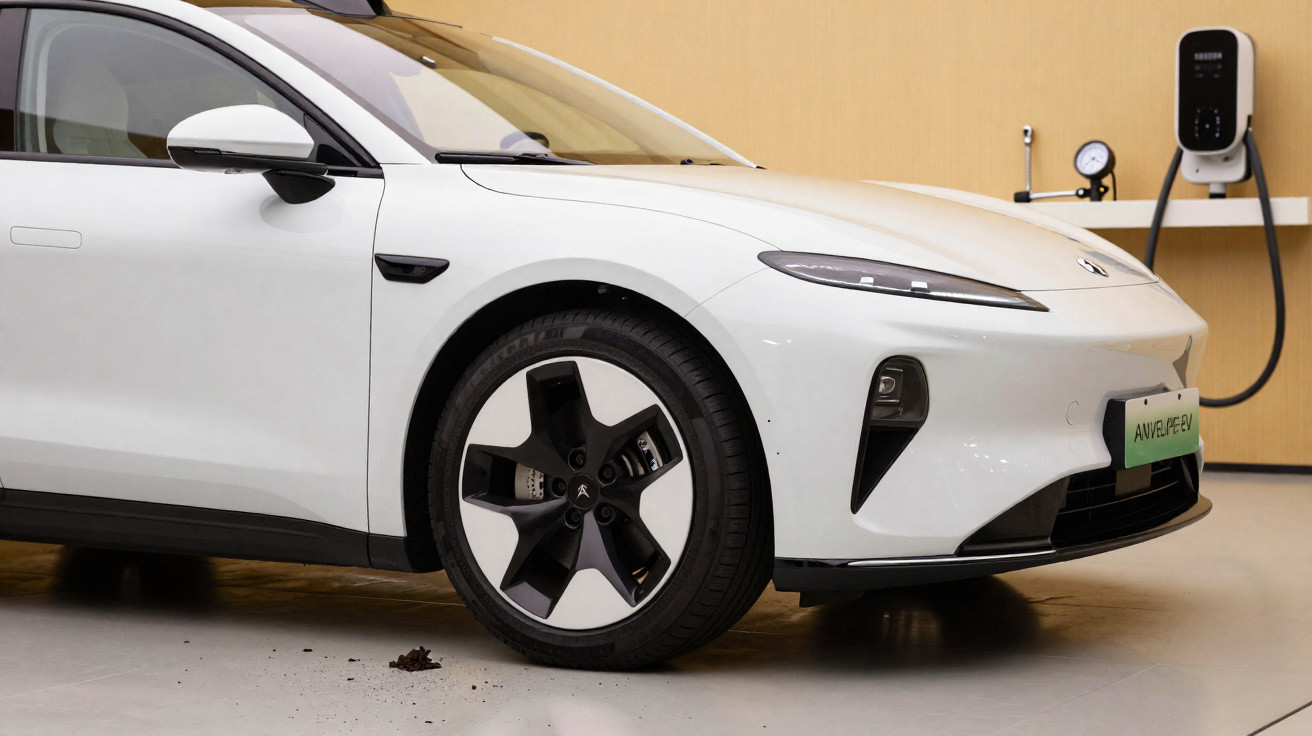
Many new EV owners are pleased to see fuel costs disappear and servicing intervals become less demanding, only to face an unwelcome shock at the tyre dealer a few years on. The hushed, immediate performance that makes electric driving so appealing places exceptional strain on tyres – and the resulting cost is beginning to exceed the price of charging.
The silent punch of electric power
Electric cars differ sharply from petrol and diesel vehicles in two key ways: they are almost silent and deliver torque instantly. While this makes them comfortable and quick, it is considerably more demanding on tyre rubber than many buyers expect.
An electric motor produces its maximum torque as soon as the accelerator is pressed. On most models, every rapid pull-away from traffic lights sends a sudden surge of force through the front tyres. Repeatedly applying this load wears away the tread more quickly than in a conventional engine car, where power arrives progressively.
Weight is another important factor. Battery packs are heavy, and a compact electric hatchback may weigh 200 to 400 kg more than an equivalent petrol model. That added mass bears down on the tyres at all times and increases wear during heavy braking, sharp bends and stop-start urban driving.
EV tyres are often being replaced thousands of miles sooner than on comparable petrol or diesel cars, largely due to weight and instant torque.
Fleet figures from several countries indicate the same pattern: EV tyres generally cover noticeably fewer miles than tyres on combustion-powered cars, occasionally lasting only 18,000 miles rather than roughly 25,000. The difference may be greater still for powerful models driven with enthusiasm.
Why “EV tyres” exist – and why they cost more
Tyre manufacturers have responded to the growth of electric vehicles. Companies including Michelin, Continental, Goodyear and Pirelli have discreetly introduced dedicated ranges for battery-powered cars, often marked “EV”, “Elect” or “e-something” on the sidewall.
These tyres must solve a complex engineering challenge. They need to support greater weight, withstand aggressive acceleration, roll efficiently to protect driving range and remain quiet enough to preserve the near-silent interior.
Inside the latest electric tyre generation
- Reinforced construction: stronger internal belts and sidewalls carry the additional battery weight without losing their shape.
- Low rolling resistance compounds: tailored rubber blends reduce energy losses and can help increase range.
- Improved grip: tread patterns are developed to manage high torque without continual wheelspin.
- Noise-reduction technology: certain premium tyres contain internal foam to dampen road noise.
This technology comes at a price. Across Europe and North America, comparable products commonly reveal a clear cost difference between standard tyres and EV-optimised tyres in the same size. For a typical family electric car, four good-quality EV tyres may cost £80–£150 more than their non-EV equivalents.
When you add higher purchase prices to faster wear, the lifetime bill for EV tyres can easily exceed what many drivers pay for electricity.
Production costs have also risen. More expensive raw materials, higher energy costs and research investment have increased tyre prices by over 20% in only a few years. EV-specific tyres have been particularly affected because they require more sophisticated materials and testing.
When tyres exceed charging in your monthly budget
For electric vehicle owners who charge mainly at home, electricity is often inexpensive. Over three or four years, the most prominent expenses are frequently depreciation, insurance…and tyres.
| Item (typical EV, 10,000 miles/year) | Estimated annual cost (UK/US range) |
|---|---|
| Home charging electricity | £250–£500 / $300–$600 |
| Public fast charging (occasional) | £100–£250 / $120–$300 |
| Tyres (average driving style) | £350–£700 / $400–$800 |
Although these amounts differ according to local energy prices and country, they illustrate an emerging reality: tyre costs can quietly become higher than electricity in the running-cost calculations for an EV, particularly for heavier or performance-focused vehicles.
Driving style: your cheapest tool
Electric vehicle drivers do not all face the same tyre bill. The way the accelerator is used directly affects how regularly tyres need replacing.
Habits that wear out electric car tyres
- Full-power starts at every green light.
- Braking late and heavily rather than applying regenerative braking early.
- Regular high-speed motorway journeys with rapid lane changes.
- Driving on under-inflated tyres, which raises rubber temperature and accelerates wear.
A gentler driving style can produce quick benefits. Progressively applying the accelerator, coasting more often and allowing regeneration to slow the vehicle smoothly can substantially increase tyre life. Checking tyre pressures each month and before lengthy journeys is also useful, particularly because EVs commonly have higher recommended pressures than petrol cars.
Small changes in driving style and maintenance can save an EV owner hundreds of pounds or dollars in tyre costs over just a few years.
Choosing the right tyre for your EV
With tyre prices increasing, some owners may consider buying the least expensive tyres available in the correct size. However, this can prove costly through faster wear, reduced range and longer stopping distances – an unappealing compromise.
What to check when buying EV tyres
- Load index: confirm that the tyre supports the EV’s weight; many electric cars require a higher rating than older petrol vehicles using the same tyre size.
- Rolling resistance rating: stronger ratings may provide a few more miles of range from each charge.
- Noise level: low noise ratings are more significant when there is no engine sound.
- EV compatibility label: tyres advertised for electric or hybrid vehicles commonly feature reinforcements and compounds designed for high torque.
Mid-range EV tyres can represent a practical compromise. Tyres placed between entry-level budget brands and premium performance ranges can deliver respectable lifespan and polished driving behaviour without carrying the highest price.
Hidden side effects: dust, particles and the environment
Tyre wear is about more than money. As heavier vehicles wear through more rubber, concerns arise over microplastics and pollution from roads. EVs reduce exhaust emissions, yet their extra weight can raise the amount of fine particles released by brakes and tyres, particularly in towns and cities where stopping is frequent.
Some tyre makers are testing new compounds intended to reduce particle emissions while extending tyre life at the same time. Others are creating sensors that track wear and temperature live, issuing warnings before faults develop. These connected tyres, which have already been trialled on some EVs, may become commonplace as electrification progresses.
Planning ahead: simulations and real-world scenarios
Take a typical electric SUV covering 12,000 miles annually. With tyres that last 20,000 miles, replacement will probably be needed about every 18–20 months. At £700 or $800 for a complete set, tyres alone cost approximately £450–£500 or $500–$550 per year.
Compare that with off-peak home charging. Many drivers of this type of vehicle will spend considerably less on electricity across the same timeframe. Once tyre bills begin to accumulate, the supposedly “cheap to run” electric SUV appears less inexpensive.
Conversely, a lighter electric supermini that is driven calmly and mainly around town may get 25,000 miles or more from a quality set of tyres. Choosing mid-range EV-optimised tyres can reduce the annual cost substantially, showing that vehicle weight, power and driving temperament matter as much as the badge on the boot.
Key terms worth understanding
Several terms regularly feature in EV tyre specification sheets and quotations:
- Rolling resistance: the energy lost when a tyre changes shape as it rolls. Less resistance improves efficiency and range.
- Load index: a number showing the maximum weight that each tyre can safely support. EVs frequently need higher indices.
- Regenerative braking: braking that slows the car using the electric motor while recharging the battery, reducing dependence on conventional brakes.
- Tyre noise rating: an indication of the sound created by a tyre on the road, which is increasingly important for quiet EVs.
Anyone budgeting for a move to electric should include tyre costs alongside charging, insurance and depreciation for a more realistic assessment. Fuel savings are genuine, but the rubber on the road brings its own quiet invoice – and for many drivers, it is now larger than the bill from their electricity supplier.




Comments
No comments yet. Be the first to comment!
Leave a Comment