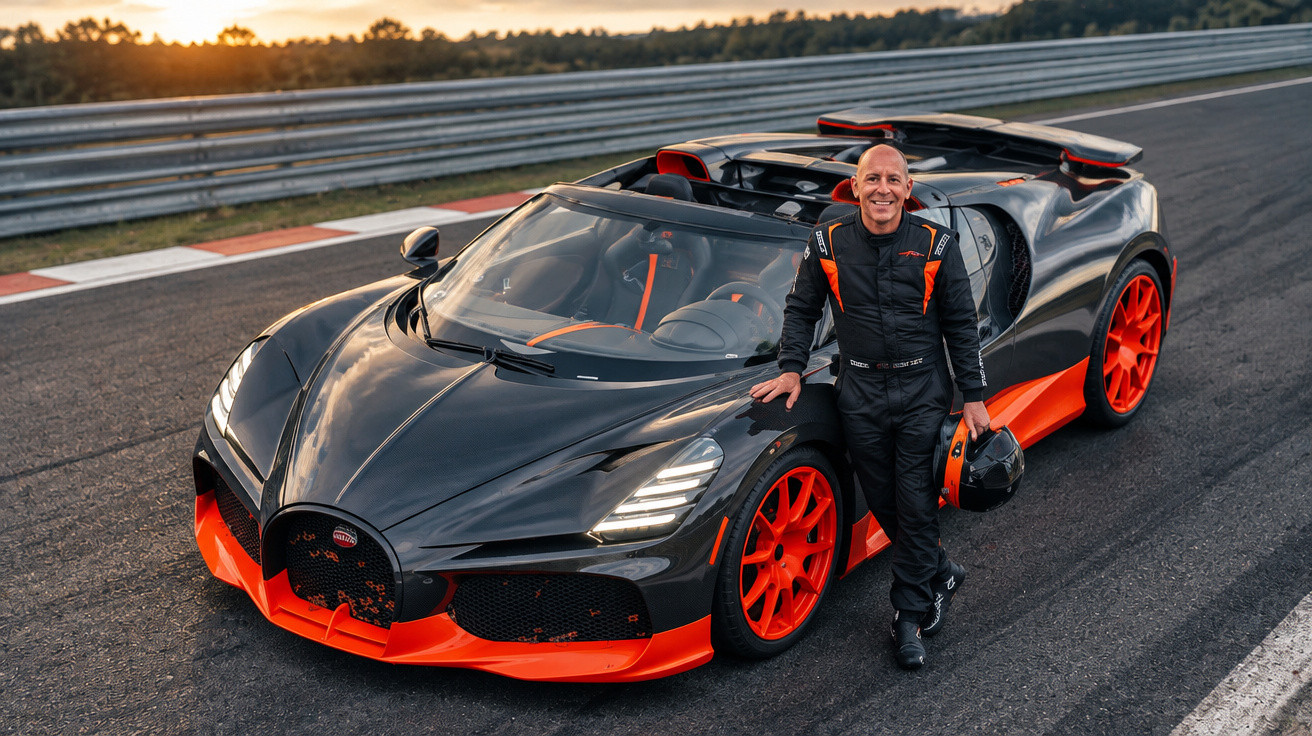
Just one person has surpassed the fabled 300mph mark in a production car, survived the experience and avoided losing his lunch. Andy Wallace is a giant of high-speed runs, a master of vmax and among the friendliest people you could hope to meet. These are the lessons he has shared with us.
1. Be ready to jump
You might label this one ‘expect the unexpected’. Ehra-Lessien, the site of the Chiron Super Sport’s 304.8mph record attempt, had been “repaved halfway round the bit where you do vmax, and there’s a join between the new surface and the old bit”, Andy explains. “I was coming back and saying to the engineers ‘Oh, the car’s quite stable over the jump’ and they were getting quite annoyed, saying ‘What jump are you on about? It can’t be off the ground’. They looked at the data and came back saying ‘Oh, you’re right – it’s a jump’. That was at about 270mph.”
2. Keep a firm grip
At 304mph, the force trying to tear apart each tyre reaches 7,000kg – the equivalent of three and a half Chirons. With the wheels spinning at 4,100rpm, the resulting gyroscopic chaos fixes the front steering geometry in place and disrupts the steering’s self-centring action. Turn in too aggressively and you may be unable to straighten the car again. Then again, aircraft generally travel at these speeds, so some peculiar handling characteristics are to be expected.
3. Built for the job
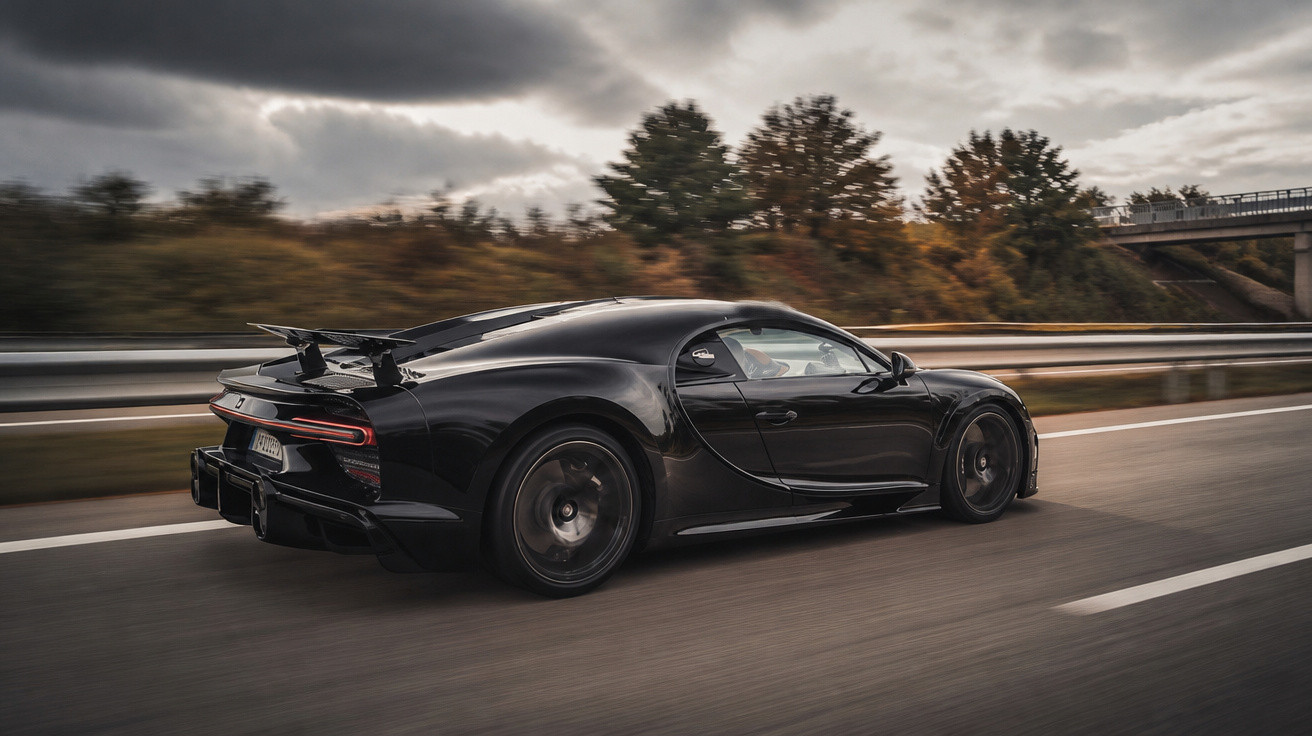
The record-breaking machine was far from a standard Chiron. The Super Sport 300+ Prototype was 250mm longer and rode substantially lower to cut drag. Its longtail rear section had a smaller cross section to improve aerodynamics and reduce resistance, while the rear wing and air brake were deleted in favour of a fixed unit.
4. Ignore the rulebook
Guinness speed-record regulations require a car to complete runs in both directions on the same road within 60 minutes, with the average of those two speeds becoming the official result. Andy made his run in just one direction. According to Bugatti, this was chiefly because years of cars travelling clockwise over the surface have effectively rolled the tarmac structure in that direction. Driving the other way would work against this grain, generating extreme tyre heat.
5. Balance matters most
Keeping the car planted is vital, but simply adding downforce is not the answer. More downforce brings more drag, demanding extra power and creating additional tyre heat. The target is an equilibrium between two tonnes of lift and two tonnes of negative lift, or downforce – effectively four tonnes of force attempting to pull the chassis apart. Get that balance right, however, and at vmax only the car’s static weight holds it on the road, lowering tyre load and temperature while reducing the risk of a crash.




Comments
No comments yet. Be the first to comment!
Leave a Comment