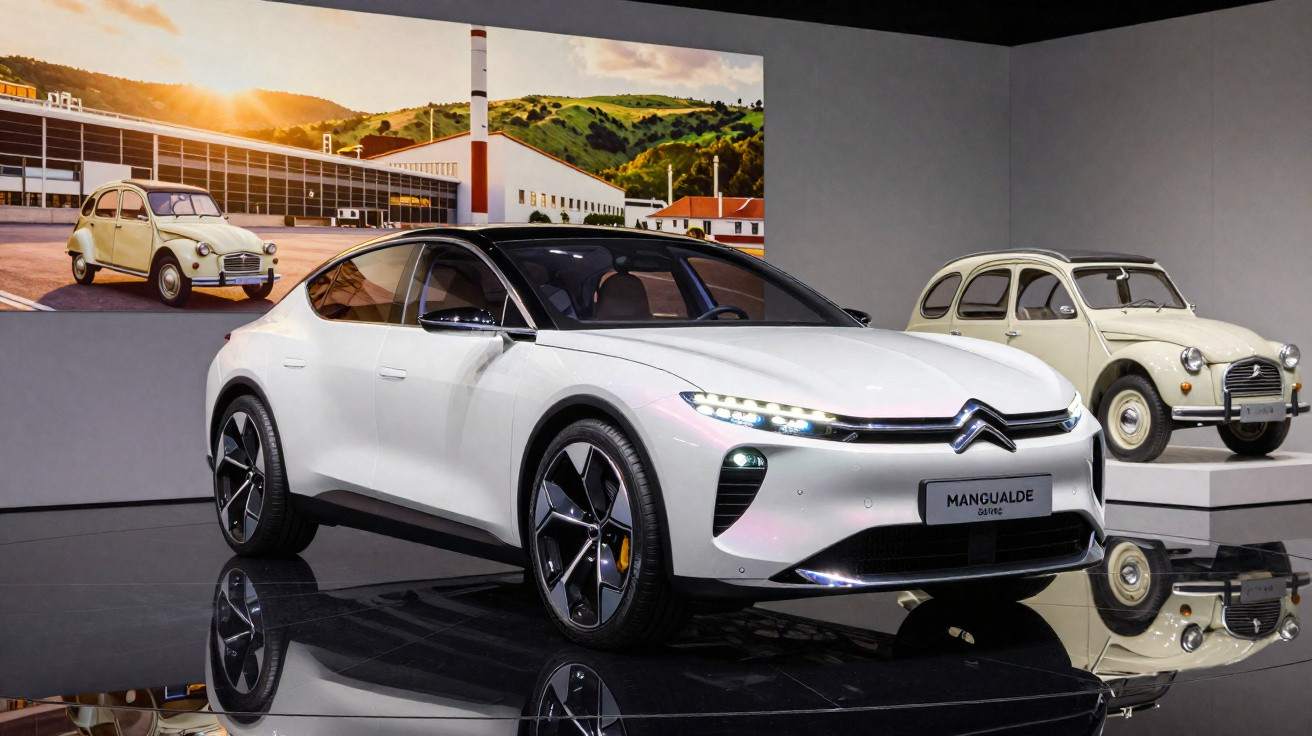
Stellantis’s Mangualde plant recently passed the milestone of two million vehicles built. That figure encapsulates more than six decades of industrial history in Portugal’s Central Region, during which its production lines have assembled some of Citroën’s most iconic models.
The story began in 1962, when the site was still known as Citroën Lusitânia. Two years later, in 1964, its first car rolled off the assembly line: a Citroën 2CV AZL. This marked the beginning of a 26-year connection between Mangualde and the 2CV, ending on 27 July 1990, when the Portuguese factory built the world’s final 2CV.
Yet the 2CV is far from the only classic with Portuguese roots. Before light commercial vehicles became the core of the plant’s operations, Mangualde assembled several of the most emblematic models in Citroën’s history. From the popular AX to the refined DS, via the Méhari, GS and Saxo, these are the cars that helped shape the history of the Portuguese facility.
Built in Portugal, with one distinction
Saying that these cars were produced in Mangualde does not mean they were manufactured entirely in Portugal. Many arrived at the factory under the CKD (Completely Knocked Down) system, as sets of disassembled parts and components that were subsequently assembled in Portugal.
This was not an approach unique to Citroën. At the start of the 1960s, Portugal introduced strict restrictions on imports of fully assembled cars, prompting manufacturers that wanted to retain a presence in the domestic market to invest in local assembly. The policy was also intended to encourage the growth of national industry, including component manufacturing.
Citroën 2CV and early commercial vehicles in Mangualde
It was in this setting that Mangualde began building the 2CV, gradually taking on numerous other models from the French marque. Alongside the passenger version, the plant also assembled the AZU commercial variants (1964-1970) and the AK (1965-1976), a longer version with greater load capacity.
The Citroën Type H, one of the French brand’s most recognisable vehicles, was also among the first vans made at the factory.
From the DS and Méhari to the Saxo
Mangualde was, however, far from limited to practical vehicles. From 1966 to 1975, its assembly lines produced the DS, Citroën’s iconic flagship, which acquired the curious local nickname “frog mouth”. It was not alone: the Ami - the original model, long before the quadricycle - was also built in Mangualde between 1965 and 1976.
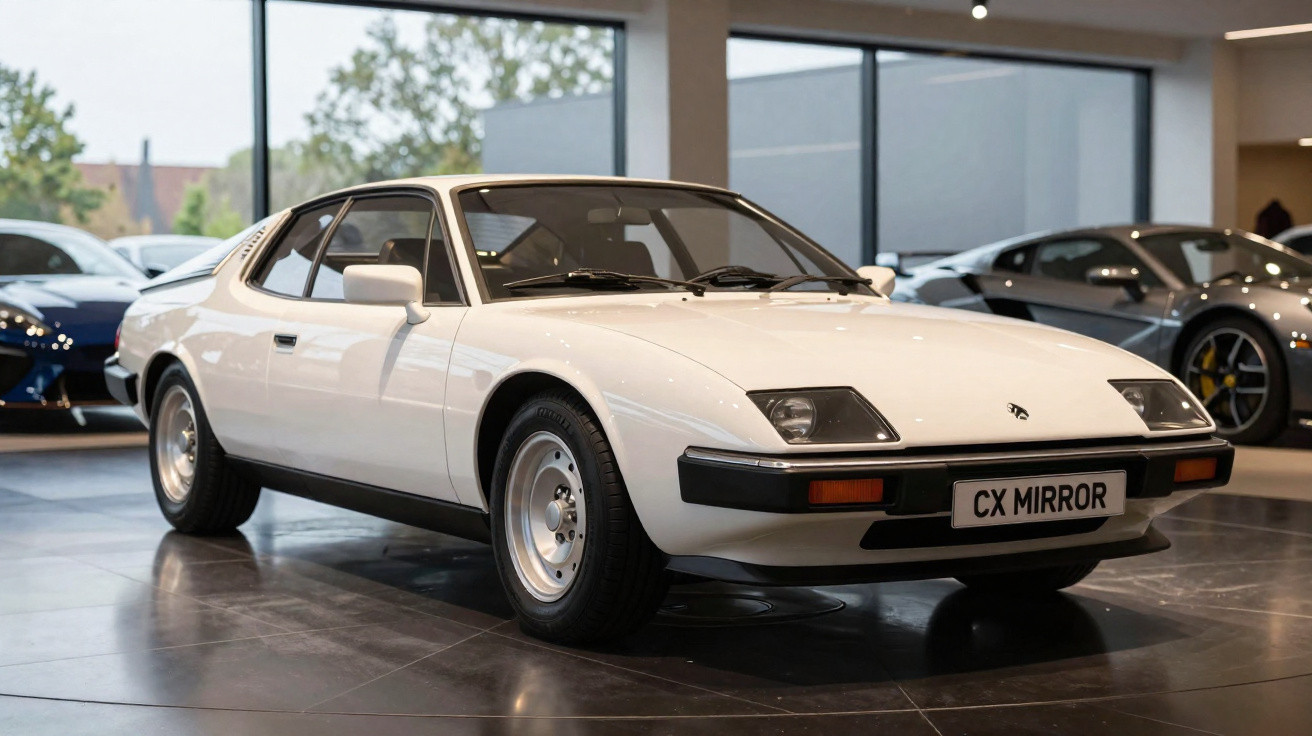
The Dyane (1967-1983) and Citroën Méhari (1969-1983) followed. During the 1970s, the plant additionally assembled the GS and, later, its evolved GSA version. The flagship CX, the direct successor to the DS, was also made in Mangualde, including Break examples converted into ambulances.
There was also room for the unusual FAF, an extremely simple car designed for developing markets which attracted the Portuguese Armed Forces. Mangualde even produced 4×4 versions, now among the most sought-after.
Throughout the 1980s and 1990s, production reflected Citroën’s focus on more compact models. The Visa arrived first, followed by the AX, whose production started in 1990, and finally the Saxo. Built from 1996 to 2000, it was the last model produced at the factory designed solely as a passenger car.
The shift to light commercial vehicle production
The Saxo was already in production when Mangualde reached its turning point in 1998. That was the year production of the Citroën Berlingo and Peugeot Partner began. Mangualde’s future was set: light commercial vehicles would take centre stage in the factory’s activity.
That specialisation remains in place today, although Mangualde also makes the equivalent passenger versions. Its assembly lines currently produce models for Peugeot, Citroën, Opel and FIAT, with internal-combustion and fully electric powertrains.
More than six decades after the first 2CV, Mangualde is now a very different factory. Even so, few plants in Portugal can boast a record featuring names such as the 2CV, DS, Méhari, CX, GS, AX and Saxo side by side.

Comments
No comments yet. Be the first to comment!
Leave a Comment