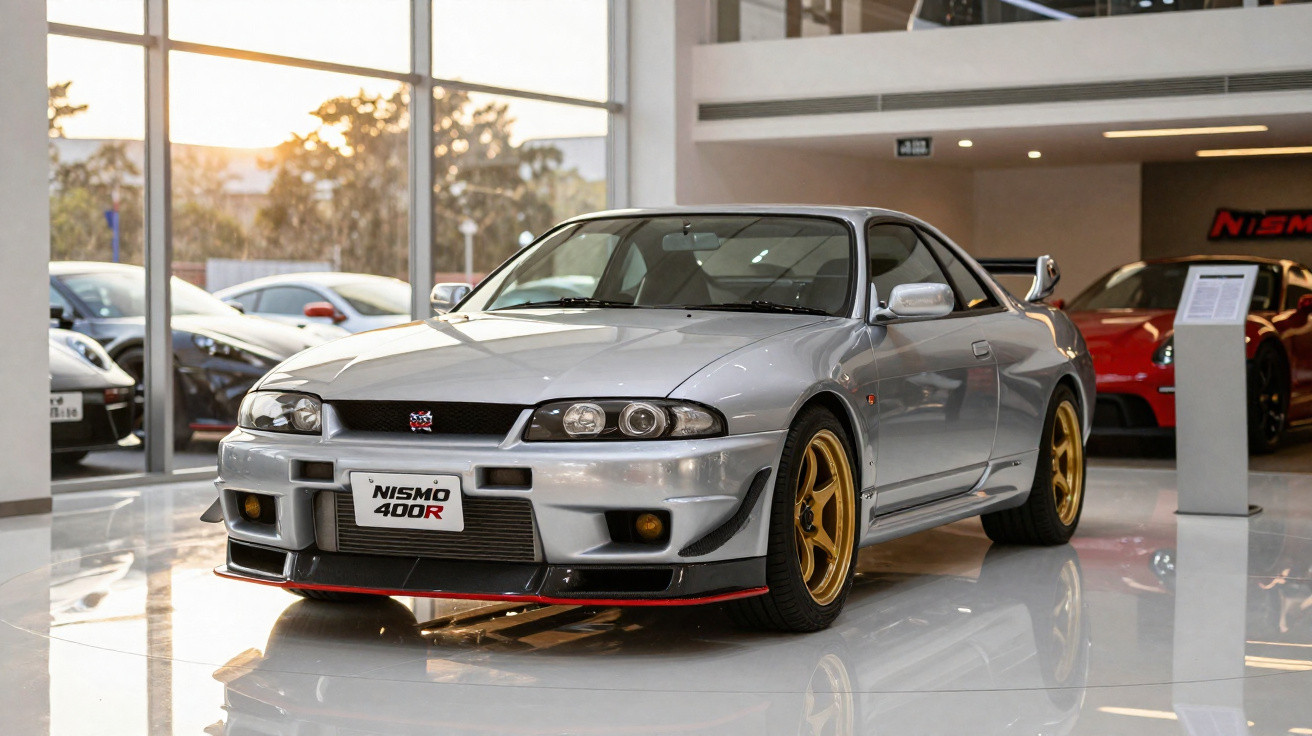
Some names need no introduction, and the Nissan Skyline GT-R R33 is one such car. Yet even within the GT-R lineage, certain versions have achieved legendary status, with the Nismo 400R firmly among them.
Launched in 1996, the Nismo 400R had a straightforward brief: to demonstrate how far the R33 could be taken once freed from Japan’s “gentlemen’s agreement”, which set a 280 hp power limit for cars sold in the country.
The outcome was 400 hp. It was a figure stated without qualification and one that gave the model its name.
Nissan Skyline GT-R R33 Nismo 400R: the RB-X GT2 engine
To reach that output, the iconic RB26DETT - a 2.6-litre twin-turbocharged inline-six - underwent extensive re-engineering, earning the new RB-X GT2 designation.
Capacity rose from 2.6 to 2.8 litres, while the engine gained a new crankshaft, pistons, connecting rods and larger turbochargers. This work was carried out by Reinik, which was also responsible for the Group A racing GT-R engines.
Chassis upgrades and distinctive styling
The changes extended well beyond the engine. Compared with the standard GT-R, the Nismo 400R featured bespoke springs and Bilstein dampers, lowering its ride height by around five centimetres. It also received a revised exhaust system and several structural reinforcements, creating a more immediate, rigid and purpose-built machine.
Its visual revisions were just as apparent: widened wheel arches, a unique front bumper, more pronounced side skirts and a rear spoiler ensured that the 400R could not go unnoticed.
Meanwhile, the bonnet was made from carbon fibre, while Nismo LM-GT1 wheels completed the package and further enhanced the Japanese sports car’s muscular appearance.
Only 44 examples were built
Although 100 cars were planned, just 44 Nismo 400R examples were completed, 41 of which are recorded by the GT-R Registry. Every one was hand-built at the Omori factory in Japan, and its exclusive components were never offered separately - making an authentic 400R virtually impossible to replicate.
Nearly three decades on, the blend of rarity, technical pedigree and cultural aura is beginning to be reflected in market values.
This 1996 example, which will be auctioned by Broad Arrow Auctions during the Amelia Island event on 6 and 7 March, is evidence of that trend: it could sell for as much as US$1.1 million (around €932,000 at the current exchange rate).
It was the eighth car built, has covered just over 16,000 kilometres, and is one of the few examples located outside Japan - all factors that help account for its value.

Comments
No comments yet. Be the first to comment!
Leave a Comment