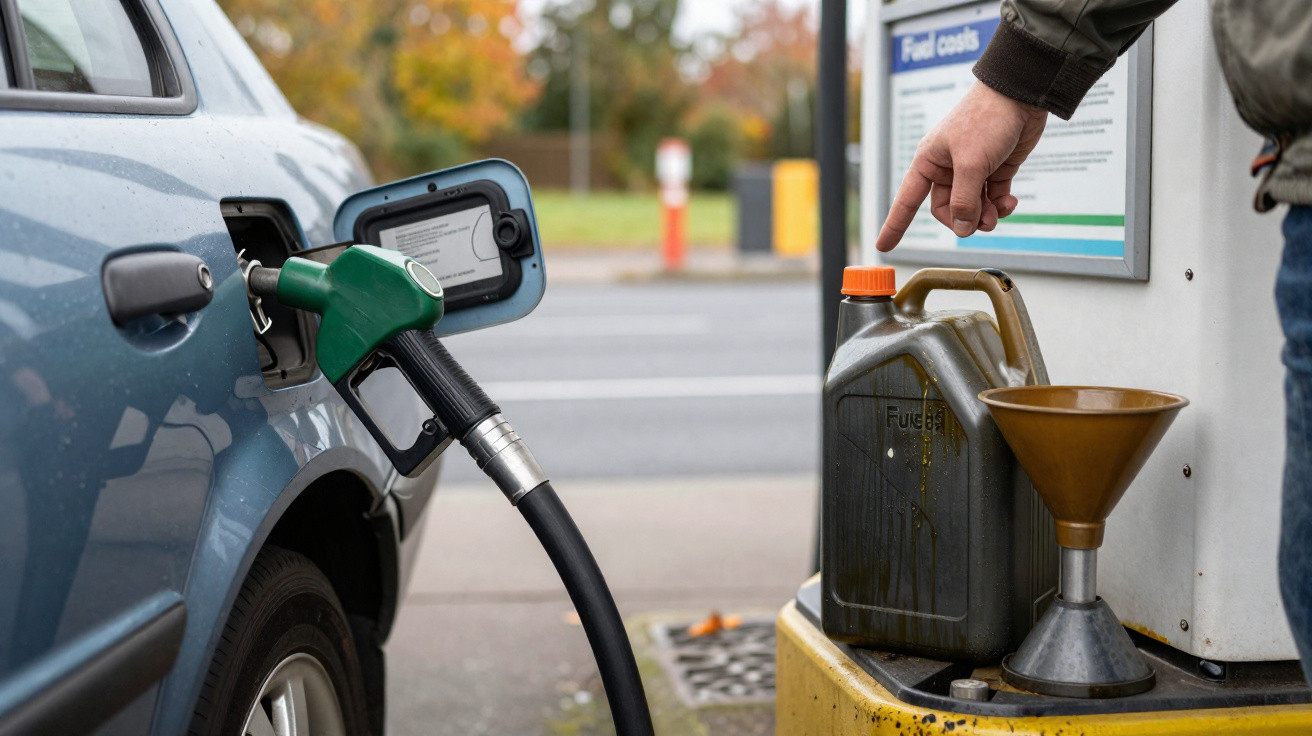
When filling the tank feels painfully expensive, supposedly clever shortcuts can sound tempting: used cooking oil from a café or restaurant, or lower-priced ‘red diesel’ meant for eligible machinery. Neither is a sensible answer for an ordinary road-going vehicle in the UK.
The central point is straightforward: the cheapest-looking liquid is not necessarily legal fuel, suitable for your engine or cheaper once repairs and enforcement are considered. Properly taxed fuel, sensible driving and routine maintenance remain the safer ways to cut running costs.
Why these shortcuts sound appealing
Fuel is a stubborn household expense, especially for rural drivers, people with long commutes and small businesses relying on vans. Online stories about old diesel cars running on vegetable oil can make the idea seem harmless, while red diesel may appear to offer an instant discount.
The attraction is easy to understand:
- used cooking oil can seem free or very cheap;
- rebated gas oil costs less than normal road diesel;
- older diesel engines are often wrongly assumed to run on any oily liquid;
- a short successful journey can be mistaken for proof that something is safe.
But an engine running briefly does not show that the fuel is legal, compatible or economical in the long term.
A low price at the start can become an expensive decision once damaged components, recovery costs or enforcement are involved.
What ‘red diesel’ means in the UK
In the UK, red diesel usually means rebated gas oil. It is marked with red dye and chemical markers because it is supplied at a lower duty rate for tightly defined permitted uses.
Since April 2022, the uses allowed to access rebated fuel have been substantially restricted. It is still used in some qualifying sectors and for certain machinery, but it is not a cut-price option for private cars, motorcycles, ordinary vans or everyday road travel.
HM Revenue & Customs can investigate suspected misuse of rebated fuel. Depending on the circumstances, consequences can include recovery of unpaid duty, penalties and seizure of a vehicle.
Assumptions that can cause trouble
- ‘It is only a short trip.’ The length of the journey does not turn an unauthorised use into a permitted one.
- ‘It is just normal diesel with dye in it.’ The legal status is the issue, and gas oil should not be assumed to meet the requirements of every road vehicle.
- ‘Nobody checks private motorists.’ Fuel can be tested, and the visible colour is not the only identifying feature.
- ‘A supplier sold it to me.’ Buying a fuel does not make every possible use lawful.
If you operate agricultural, forestry or specialist machinery, use current HMRC guidance to establish whether a particular use qualifies. Do not rely on hearsay, social-media clips or advice from a seller.
Why used frying oil is a poor substitute
Vegetable oil and used frying oil are not the same as road diesel made to the relevant fuel standard. Fresh oil has different flow and combustion characteristics; used oil may also contain water, food particles and substances formed during repeated heating.
Modern diesel fuel systems operate to fine tolerances. Common-rail injectors, high-pressure pumps and emissions equipment can be especially susceptible to contamination or fuel that does not flow as intended.
Possible consequences include:
- blocked fuel filters or lines;
- difficult starting, particularly in cold weather;
- poor fuel atomisation and rough running;
- injector or injection-pump damage;
- carbon deposits and increased smoke;
- issues with diesel particulate filters and other emissions equipment.
Older diesels may be less complex, but they are not immune from contaminated or unsuitable fuel. British autumn and winter weather adds another problem: oil that appears to flow on a mild day can become much thicker after a cold night.
Used cooking oil also needs responsible disposal. Never pour it into drains or gullies, where it can contribute to blocked pipes and sewers. Caterers should use an appropriate waste-oil collection service rather than allowing waste oil to become an informal vehicle fuel supply.
The legal and insurance position
Using red diesel outside an authorised purpose carries the clearest legal risk. Trying to hide its use, remove traces, or run a vehicle until the tank is empty before an inspection can make matters worse.
Using vegetable oil or another non-standard fuel can also raise tax questions. HMRC rules on fuel substitutes, duty and registration have conditions and exemptions that may change. Do not assume that free oil means there are no responsibilities simply because it came from a kitchen.
Insurance is another consideration. A fuel-system conversion or regular use of non-standard fuel may be something an insurer expects to be declared. Read your policy and ask the insurer for a written answer before making any alteration to the vehicle or its intended fuel.
If a plan relies on avoiding checks, concealing a change or hoping a garage will not notice, it is not a reliable money-saving plan.
Common mistakes that turn savings into bills
Mistake 1: Assuming an old diesel is indestructible
An older mechanical diesel may be simpler than a newer model, but it still depends on clean, suitable fuel. Contamination can damage filters, seals, pumps and injectors.
Mistake 2: Thinking filtering makes cooking oil suitable
Removing visible crumbs does not turn degraded frying oil into compliant road fuel. Water, altered chemistry and unsuitable viscosity remain concerns.
Mistake 3: Forgetting about cold weather
Thickened fuel can restrict flow, leave a vehicle difficult to start and create a recovery problem at exactly the time the car is needed.
Mistake 4: Treating dye as the only evidence
The red colour is not the only way rebated fuel can be identified. Attempting to remove dye or markers is not a solution.
Mistake 5: Overlooking the easy wins
Low tyre pressures, unnecessary roof bars, heavy clutter in the boot, harsh acceleration and overdue servicing can all increase fuel use without drivers noticing.
Safer, lawful ways to reduce fuel spending
No single trick removes the cost of motoring, but small changes can reduce consumption without putting your vehicle or finances at risk.
1. Compare nearby pump prices
Use a reputable price-comparison service or retailer app, but include the cost of the detour. Driving well out of your way for a small saving per litre may defeat the point.
2. Drive smoothly and anticipate traffic
Gentle acceleration, leaving space ahead and avoiding repeated sharp braking generally use less fuel. On faster roads, a modest reduction in speed can also help consumption.
3. Check tyre pressures when cold
Use the pressures shown in the handbook, on the door shut or fuel flap. Follow any separate recommendation for a heavily loaded car, and inspect tyres regularly for damage or uneven wear.
4. Reduce drag and dead weight
Remove roof boxes and roof bars when they are not needed. Clearing out heavy items that have been sitting in the boot for months is another simple step.
5. Keep the vehicle maintained
Use the fuel grade and engine oil specified by the manufacturer. Investigate warning lights, hard starting, excessive smoke or a sudden fall in fuel economy rather than hoping the problem disappears.
6. Plan journeys differently where possible
Combining errands, sharing lifts, using public transport for suitable trips and walking short local journeys can reduce fuel use more reliably than any improvised fuel substitute.
If the wrong fuel has gone into the tank
If petrol or another unsuitable fuel has been put into a diesel vehicle, avoid starting the engine where possible. Starting it can circulate the fuel through the system. Contact a reputable fuel-drain or recovery service and explain exactly what was added.
If you have accidentally used red diesel or cooking oil, do not keep driving simply to use it up, and do not attempt to conceal or chemically alter it. Seek advice from a reputable recovery provider on the vehicle’s mechanical condition and consult current HMRC guidance about the fuel’s lawful handling.
Fuel is highly flammable. Keep ignition sources away, work only in a well-ventilated area and never siphon fuel by mouth. Do not mix fuels with solvents, acids, bleach or household chemicals: potentially toxic fumes, fire and serious injury can result.
The practical bottom line
High forecourt prices are frustrating, but red diesel and improvised frying oil are not dependable ways to make a road vehicle cheaper to run. They can create legal problems, costly faults and unnecessary safety risks.
Buy the correct fuel for the vehicle, keep it maintained and concentrate on the everyday changes that genuinely reduce consumption. They may be less dramatic than a tank full of ‘cheap’ fuel, but they are far more likely to save money without leaving you stranded or in trouble.















Comments
No comments yet. Be the first to comment!
Leave a Comment