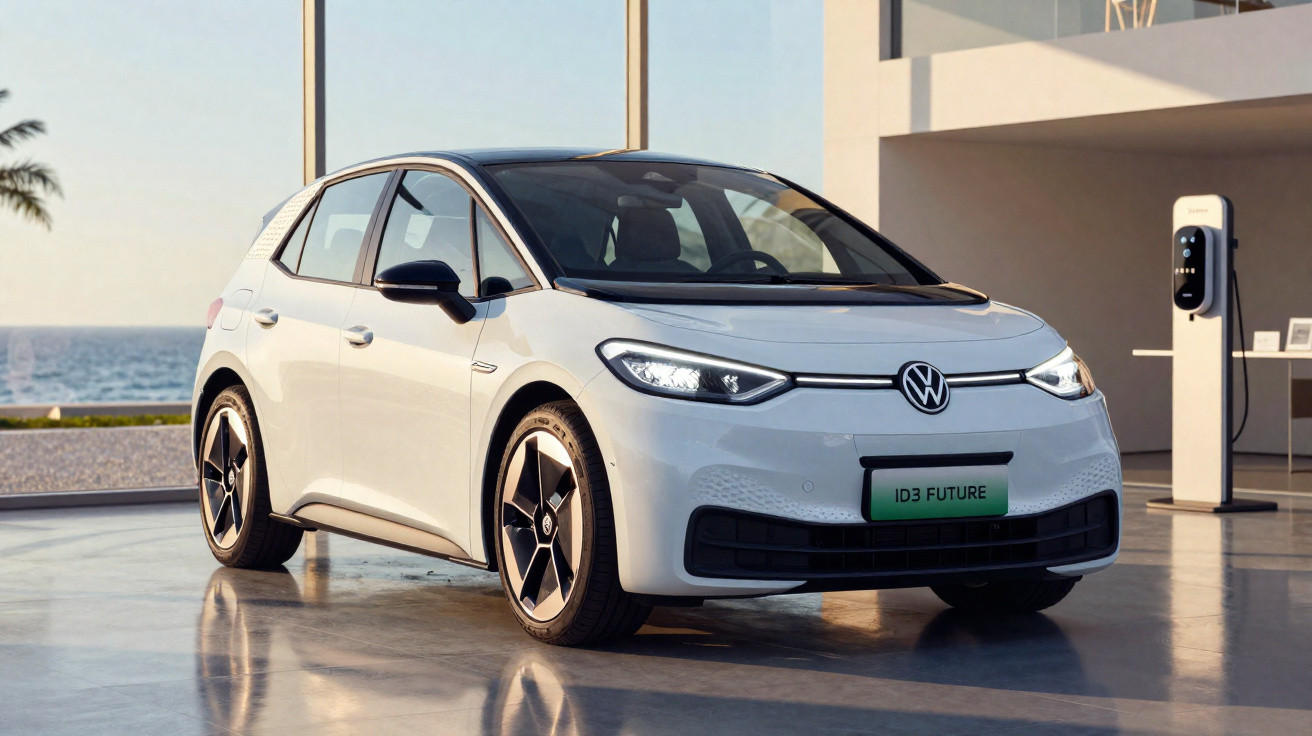
Despite delays caused by the coronavirus - as well as weeks spent fixing software bugs - the Volkswagen ID.3 is finally ready to begin its eagerly anticipated commercial life.
The first deliveries in Portugal will take place as early as September - prices and equipment details appear at the end of this article.
Having overcome these early setbacks, the German marque expects production of its first fully electric model - described as the Golf of Generation E - to reach five-figure volumes this year. Expectations, then, are high.
The most eagerly awaited Volkswagen of recent years
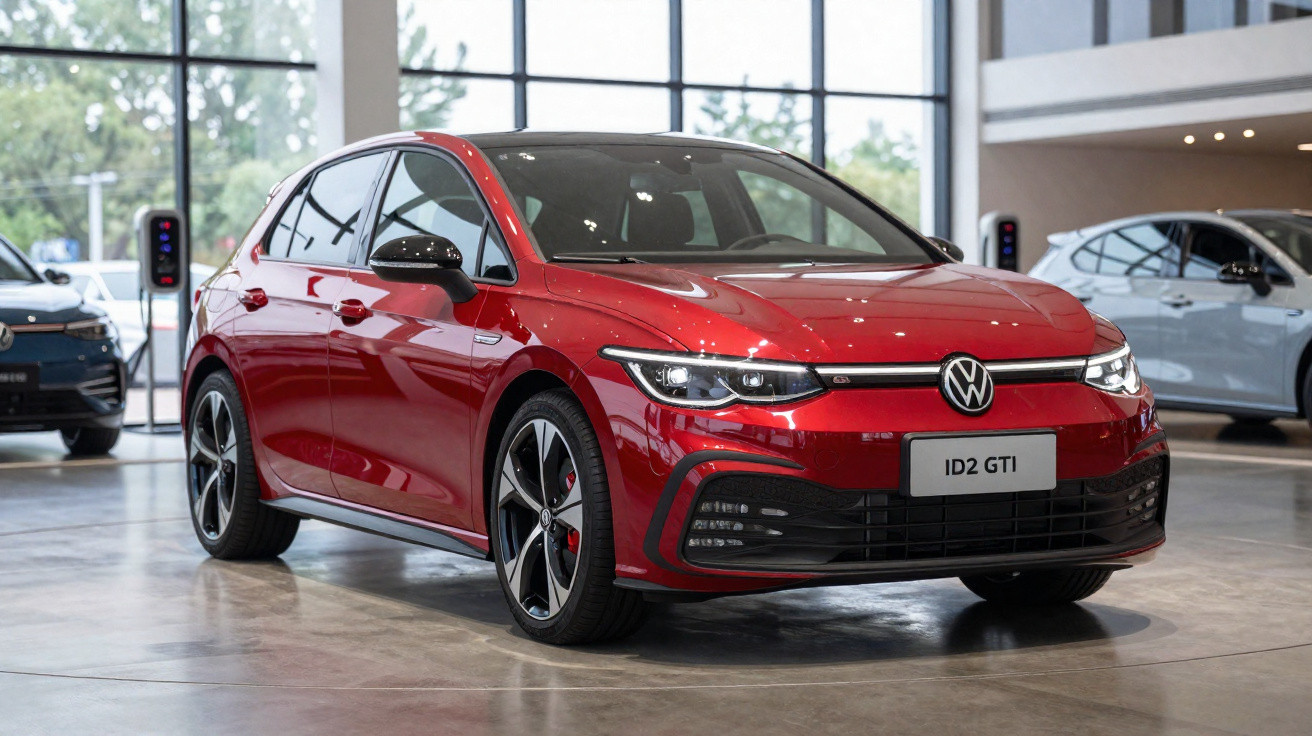
The Volkswagen ID.3 leads the first family of fully electric models from the Volkswagen Group.
Built on the MEB platform, which will underpin several models from the German group, the Volkswagen ID.3 is the spearhead that could put Volkswagen in a position to challenge Tesla.
However, with the larger MEB-based derivatives still to come - including the ID.4 crossover - the ID.3 is currently aimed more at cars such as the Nissan Leaf and Renault Zoe than the Tesla Model 3 or Model Y.
That applies, at least, to its dimensions - 4.26 m long - and its price: just over €38,000 for the 1st Edition, while the entry-level version due next year will cost a little over €30,000.
These are highly appealing figures and could well establish the ID.3 as the new benchmark among electric cars with up to 550 km of range.
Volkswagen ID.3 performance is strong
For now, Volkswagen will offer the ID.3 with only one power output: 204 PS (150 kW). Several battery packs will, however, be available:
45, 58 or 77 kWh, delivering ranges between 330 and 550 km.
With 310 Nm of instant torque, the ID.3 feels more forceful in acceleration than most of its rivals, pulling ahead not only of the Nissan Leaf but also the Renault Zoe.
Against combustion-engined models, the ID.3 can even outpace the iconic Volkswagen Golf GTI over the first few metres.
Its performance is very satisfying and, thankfully, is not restricted to urban driving. During our first encounter with it, the ID.3 accelerated very smoothly all the way to motorway speeds.
Yet while sports-car-like acceleration is no longer a surprise in a fully electric vehicle - and the electronically limited 160 km/h appears to be becoming the new “normal” - the ID.3’s braking feels more conventional than that of its rivals.
Lift off the accelerator in Normal mode and it coasts for what feels like kilometres; switch to B mode using the transmission selector and it slows only very gradually.
In this respect, the Volkswagen ID.3 is miles away from the “one-pedal” driving common in other electric cars.
That does not mean the ID.3 is inefficient at recovering braking energy. In fact, Volkswagen’s fully electric model is very capable of converting motion into electrical energy.
The system even works proactively. As the car approaches a junction, a new speed limit, a downhill section or another vehicle, the ID.3 is already prepared to reverse the motor and recover some energy.
More agile and lighter - apparently
The ID.3 is taller and heavier than its Volkswagen Golf sibling. Yet, because its centre of gravity is lower thanks to the battery’s position in the floor of the platform, the ID.3 actually feels lighter and more agile than the all-powerful Golf.
Adaptive DCC suspension is still to come, as is progressive steering, which changes its ratio in tighter bends. Even with this balance, though, understeer cannot be avoided when cornering more enthusiastically.
Another dynamic differentiator is its turning circle. With no bulky combustion engine taking up room at the front, and with different front-axle geometry, the wheels can turn through a greater angle than is usual in a car.
Even with its longer wheelbase, the ID.3 turns like a smaller car - it is more manoeuvrable than the Polo - and in town it feels more like a go-kart at an amusement park. I wish a MINI were still like that!
Futuristic inside, but...
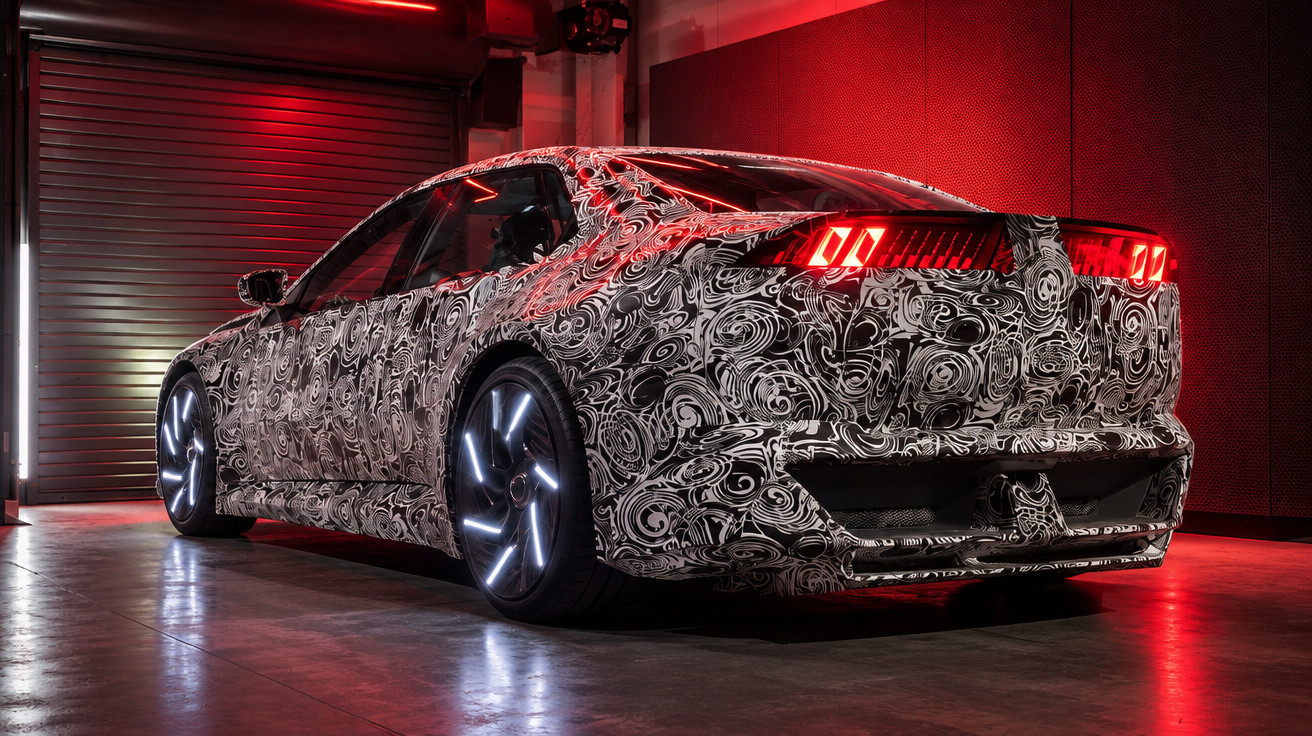
Have you ever found the new Golf too avant-garde? If so, the ID.3 will seem like a car from the future. That applies not only outside, but inside too. Although it remains quite familiar, the overall design is minimalist and notably bright.
A new feature is the light bar beneath the windscreen, which uses different colours to “speak” to the driver and passenger as an additional communication channel. It pulses white when it recognises somebody is talking to the system, shows directions in blue, communicates warnings in red, and signals incoming calls in green.
Although we like the ID.3’s “look”, there is no doubt about the materials. There are few smooth, soft-touch surfaces and more hard grey plastic - the ID.3 falls below the “mainstream-premium” standard Volkswagen has offered us for years.
The hard grey plastics found, for example, on the rear doors are several notches below those in the Volkswagen Polo - which can, in some cases, cost half as much.
Space, the final frontier...
Like any purpose-built electric car, the ID.3 takes advantage of its compact motor and the battery mounted in the platform floor.
At 4.26 m long, it is almost 2 cm shorter than a Golf, yet it offers 13 cm more wheelbase and far more legroom. It is Golf-sized, behaves like a Polo and feels like a Passat for passengers.
Although the benefits appear greater in the rear, the differences are noticeable up front too. Without a huge central tunnel or a gearbox between the seats, the ID.3 feels wider than it really is. And despite the motor being mounted beneath the boot, its luggage capacity matches that of the Golf: 385 litres for the ID.3 and 380 litres for the Golf.
Perhaps that is why Volkswagen did not even attempt to fit a “frunk” - the term coined for Tesla’s front boot - beneath the bonnet, using that space instead for items such as the air-conditioning system.
The Volkswagen ID.3 in Portugal
It is already possible to order the Volkswagen ID.3 First models that were pre-reserved online, with delivery of the 80 cars allocated to Portugal expected in September.
Those who placed an online pre-order have two choices: take delivery of their ID.3 in September and wait for the software update due at the start of next year, which adds the augmented-reality head-up display and App Connect functions; or wait until the final quarter of 2020 to receive an ID.3 with every function already available.
Prices for the ID.3 First - the special launch edition - start at €38,017, and all versions use the 58 kWh battery pack:
- ID.3 First: €38,017
- ID.3 First Plus: €43,746
- ID.3 First Max: €49,478
What separates them? The First Plus features equipment with a greater emphasis on design, while the First Max is more technology-focused.
The ID.3 First therefore comes with 18-inch East Derry alloy wheels; 10-colour ambient lighting; a centre console with a storage compartment; and fabric-trimmed door panels.
On the ID.3 First Plus, the wheels are upgraded to 19-inch Andoya alloys; ambient lighting gains 30 colours; the centre console receives an illuminated storage compartment and sliding cover; the door panels are finished in synthetic leather; and there is a rear-view camera, Matrix LED headlights, an illuminated LED strip between the headlamps and illuminated door handles.
Finally, the ID.3 First Max moves up to 20-inch Sanya alloy wheels and adds an augmented-reality head-up display; panoramic roof; travel-luggage compartment in the boot; wireless smartphone charging; pneumatic lumbar adjustment with massage function; Travel Assist + Lane Assist + Lane Keeping System + Emergency Assist.
All versions share the First logo on the steering wheel and mudguards, pedals featuring play/pause symbols, an exclusive start-up screen and exclusive C-pillar decoration. Equipment also includes dual-zone climate control; voice control; Car2X; a heated multifunction steering wheel; heated seats; the Discover Pro navigation system, including streaming & internet; a rain sensor; adaptive cruise control; and App Connect Wireless, available only at the end of the year.
Regular ID.3 versions are expected to arrive later. In Portugal, the entry-level Volkswagen ID.3 is expected to be priced below €35,000. These figures remain provisional, but they would place the new German fully electric car well above the €30,000 price that had previously been communicated.

Comments
No comments yet. Be the first to comment!
Leave a Comment