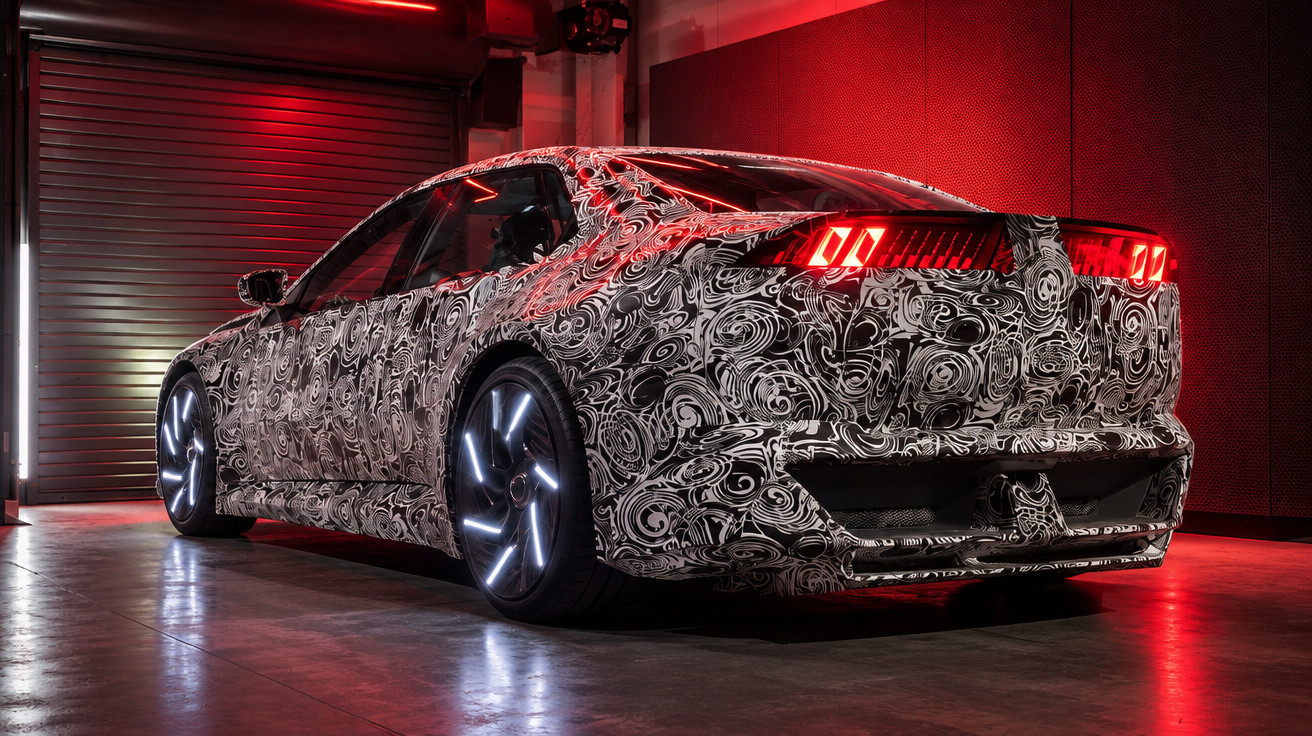
As a respectable member of the TopGear.com community, you will surely have seen BMW’s utterly bonkers VDX development mule, with its 13,269lb ft of torque.
And, as a respectable member of the TopGear.com community, your immediate thought will not have been: ‘What does this mean for the future of its electric SUVs?’
No, it will have been closer to: ‘Blimey! An electric M3 is going to be an absolute monster!’ Which is more observation than question, really.
BMW VDX points to electric M cars
Still, you would be correct. BMW discreetly kicked its way into the four-motor era late last year, and it has now explained for the first time quite how central the one-motor-per-wheel layout will be to its M division.
“For M cars, it's obvious to have more than just one electric engine [motor],” says BMW driving-dynamics specialist Christian Thalmeier. “And with this architecture, we're now able to run up to four engines. So... this is what high potential cars will have in the future. More electric motors.”
BMW’s thinking is that, if its development prototype can cope with cartoonish outputs of power, torque and downforce - plus general abuse - then everyday driving should present no difficulty for the forthcoming Neue Klasse EVs. Yet you cannot build something as savage and aggressive as the VDX - descriptions TG selected after its passenger ride in November - without considering what this technology could achieve during a proper old-school drift…
Torque vectoring and rear-axle control
“If you want to think of torque vectoring possibilities,” Thalmeier explains - and naturally we do - “when you have three electric motors – with one on the front axle and two on the rear axle – you can steer with the rear axle.
“Maybe you steer to the left: if you make the right wheel faster and the left wheel slower, we get this movement like a tank. Yeah? And the car will go fast.
“Without other things, you can agilize [sic] the car only while doing different speeds of the electric motor. This is because they are so quick. And then any actuator – for example in rear wheel steering – it's not so quick as the electric motor. You can enhance cars… like BMW Ms, for example.”
We are very keen on that illustration. It also raises questions about what the system might offer an electric M5, for instance. The saloon expanded from 1,855 to 2,435kg when it became a plug-in hybrid last year, and it has not come through that change especially gracefully.
Fan-generated downforce for heavyweight BMWs?
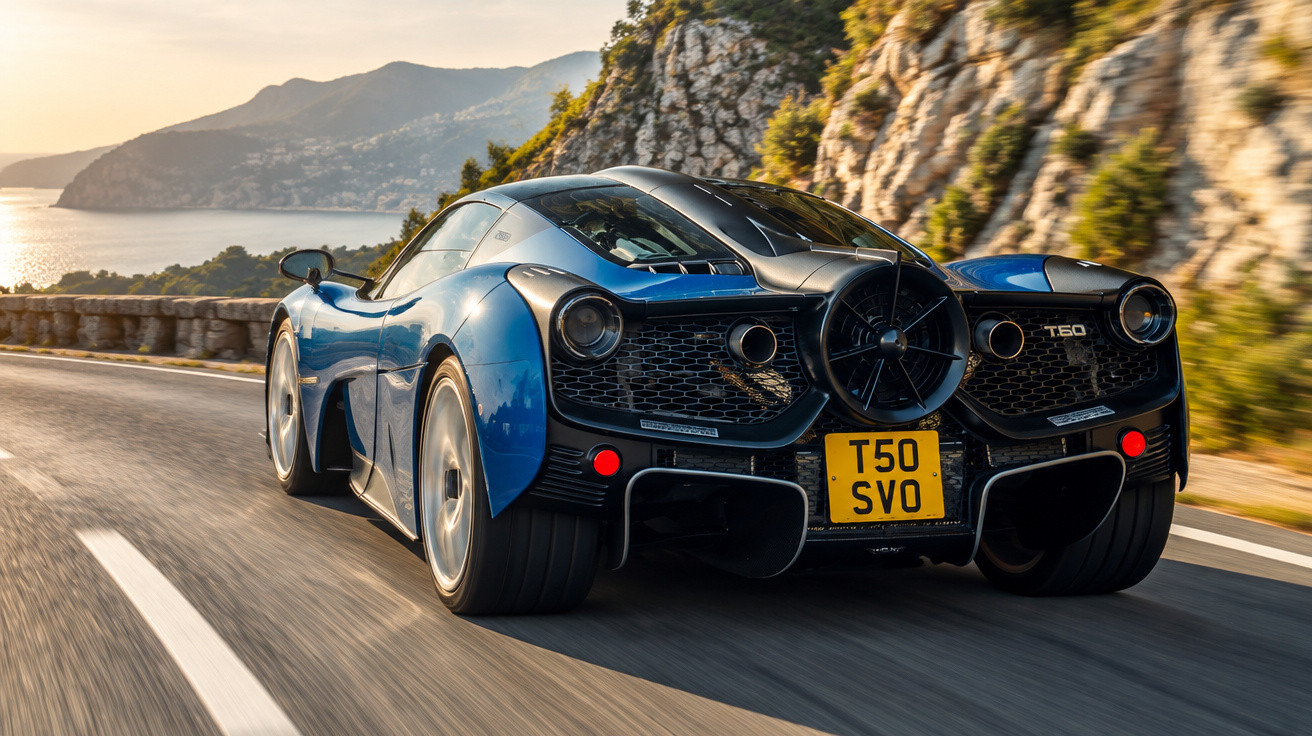
Could fan-generated downforce be the answer for heavyweight cars? Not quite so quickly, Thalmeier says. “I can understand [your excitement] because there’s downforce at 0kph. This is great! There are five impellers inside, and there's a lot of noise.” At precisely that point, the car starts up for a demonstration on the floor beneath us, and the discussion stops while our eardrums are pummelled inside our skulls. “So I think the answer is clear, yeah? You want something [like this] in the production car? Hmm.”
Then again, if Gordon Murray considers it a sound idea…

Comments
No comments yet. Be the first to comment!
Leave a Comment