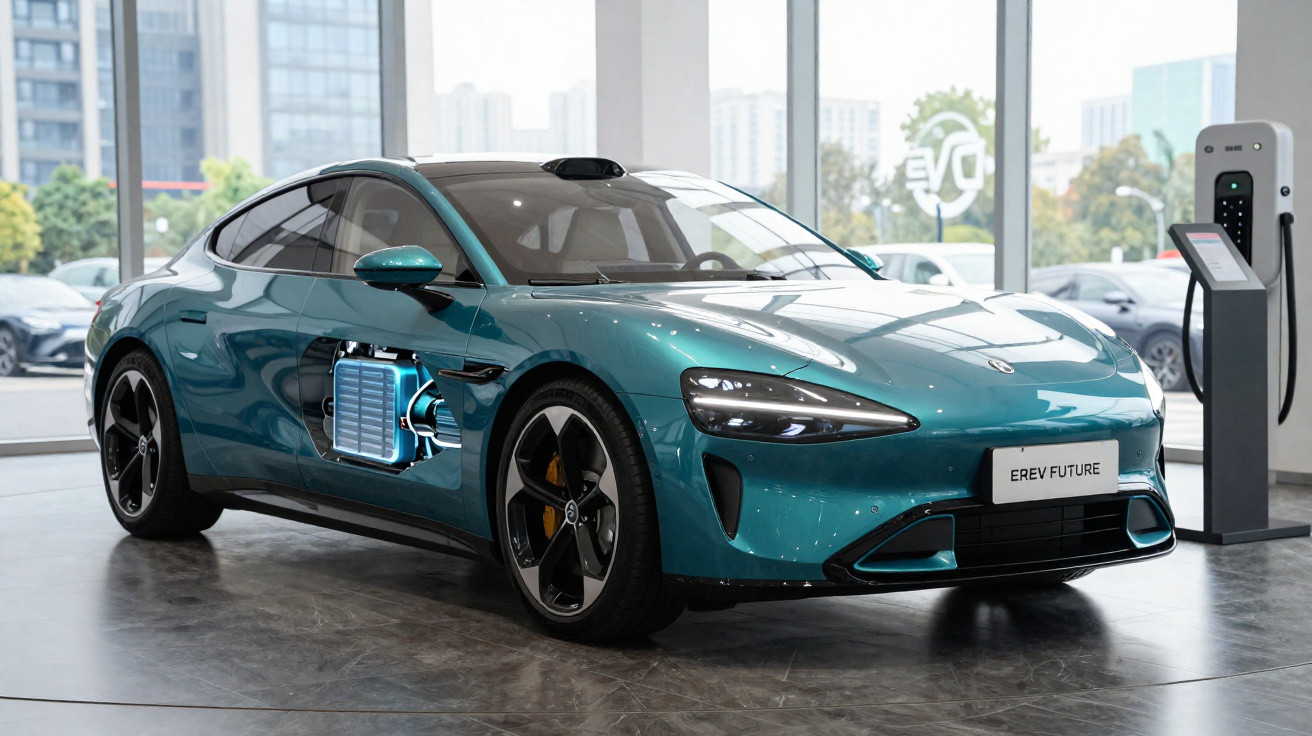
Many motorists still do not trust a fully electric car – but an old hybrid trick is now returning and reshaping the market.
Rather than choosing between an internal-combustion vehicle and a fully electric car, buyers are increasingly looking at a third option: electric vehicles with a range extender. They offer quiet electric driving for everyday use while providing reassurance on longer journeys, striking a chord with commuters, high-mileage drivers and SUV enthusiasts.
How electric cars with a range extender work
Electric vehicles with extended range – often referred to technically as EREV (Extended Range Electric Vehicle) models – are not conventional hybrids. The distinction matters: the wheels are powered solely by an electric motor. The onboard combustion engine does not drive them directly; it functions only as a generator.
In everyday use, the system works as follows:
- The car runs solely on electricity for daily driving, typically covering 150 to 300 kilometres.
- Once the battery is depleted, a petrol engine starts.
- While driving, this engine recharges the battery rather than powering the wheels directly.
- With a full tank and fully charged battery, total ranges of up to around 1,500 kilometres are possible.
These vehicles drive like an electric car – but have the “Plan B” of a filling station behind them.
The idea itself is not new. Manufacturers such as Fisker with the Karma and BMW with the i3 REx adopted this approach years ago, but high prices, limited demand and immature markets prevented it from succeeding. The situation is different today: range anxiety remains a persistent concern, while pressure is mounting to move away from pure combustion engines. The EREV concept fits precisely into that gap.
Why China is leading the EREV trend
While Europe remained sceptical for a long time, China recognised the potential early on. Millions of these vehicles are already on its roads. Brands such as Li Auto have built entire model ranges around the technology and have expanded rapidly, especially in the profitable SUV sector.
The arguments that apply in China can readily be transferred to other regions:
- Long distances between major cities
- Charging infrastructure that is sometimes unreliable or incomplete
- Buyers who favour large, heavy SUVs
- Political pressure to reduce emissions from new-vehicle fleets
In this combination, the range extender looks like a compromise that eases many issues in the short term: these vehicles count as “electrified” in official statistics, yet can be used like a combustion-engined car with an extra charging socket.
USA: the pick-up market discovers the backup engine
A new wave is also gathering momentum in North America. Drivers of large pick-ups and 4x4s in particular are reluctant to rely entirely on an electric solution in freezing conditions or while towing a trailer. A backup engine offers reassurance.
One example comes from a young Volkswagen-linked brand that is planning rugged off-road models in the United States. Its figures revealed that, from 160,000 pre-orders, almost nine in ten prospective buyers specifically wanted a range extender. That says much about the mood in a market where filling stations are everywhere, yet rapid chargers are often scarce.
It is clearly easier to sell a heavy 4x4 with a “safety petrol engine” than a pure EV in areas with hardly any charging points.
Established manufacturers including Ford, Audi, Ram and Jeep are also considering how to incorporate the concept into their ranges. For them, it provides a way to electrify large, high-margin vehicles without completely retraining their established customer base.
Why environmental groups are raising the alarm
Although customers welcome the technology, climate campaigners see it as misleading labelling. Their criticism is that these cars are promoted as “clean for everyday driving”, yet often perform very differently in real-world conditions.
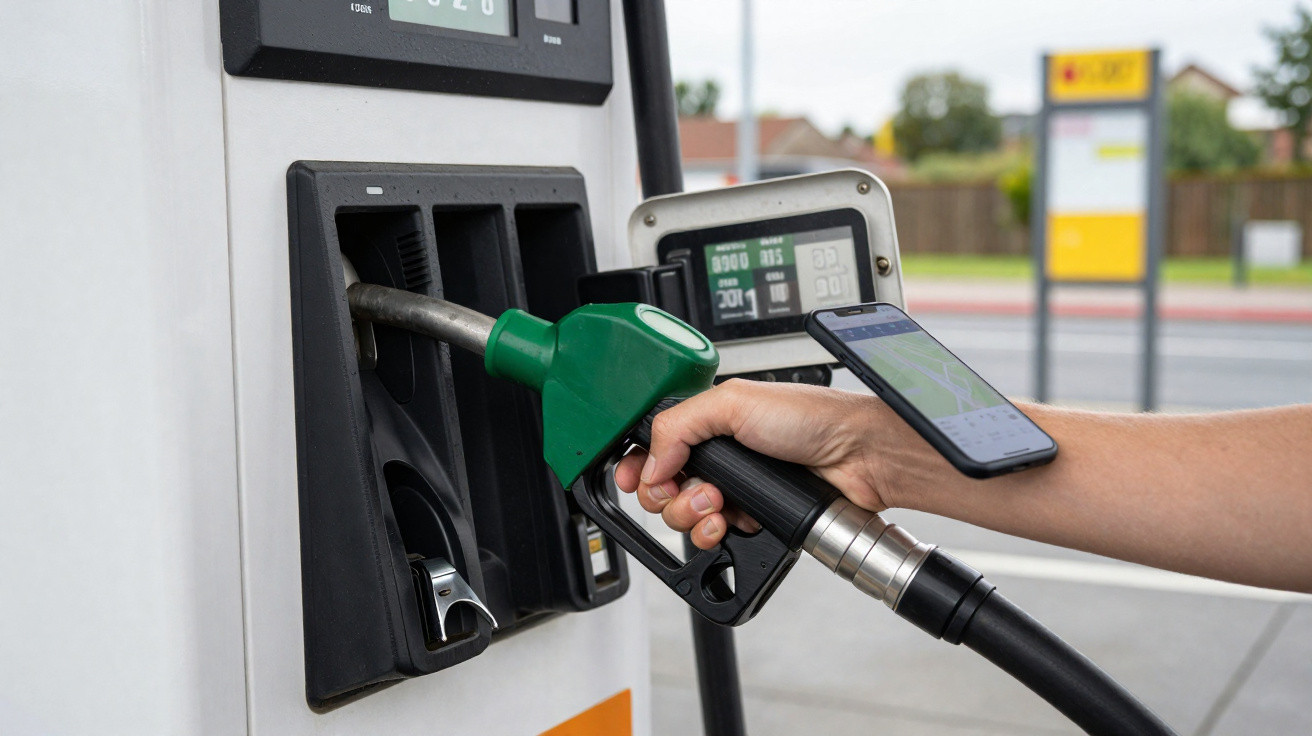
An analysis by a European environmental organisation examined strong-selling vehicles in this category. It found that, once the battery is empty and the petrol engine is running continuously, many of these vehicles consume around 6.4 litres of fuel per 100 kilometres. That is comparable with conventional combustion-engined vehicles.
The issue arises mainly when owners rarely charge and instead depend on the fuel tank. In theory, they drive electrically in towns and only use the generator on longer trips. In practice, some lack the discipline to plug the car in every day.
Without consistent charging, the “electric car with backup” becomes a heavy petrol vehicle with a built-in alibi.
For a vehicle’s climate impact, what matters is not what the brochure claims but how it is used. An EREV that is driven with an empty battery most of the time loses its advantage – and emits almost as much CO₂ as a conventional SUV.
Technical debate: dual powertrain or double the nonsense?
Engineers disagree over whether this mixed solution truly has a future. Critics argue that combining two complete systems in one vehicle – a high-voltage battery and electric motor alongside a combustion engine and fuel tank – adds weight, complexity and cost.
Some powertrain developers believe the range extender is only a transitional technology. Their reasoning is:
- Dense rapid-charging networks reduce range anxiety.
- Batteries are becoming cheaper and more capable.
- Software improves route planning and charging strategies.
If these developments take hold, an additional engine will look like unnecessary ballast. Why carry a complicated system when a pure EV with a sufficiently large battery can do the job?
Other experts take a more relaxed view. They point out that many people do not want to change their travel habits overnight. Anyone who regularly tows a caravan or horsebox, or drives at high speeds on motorways, may feel more comfortable with a straightforward “five-minute stop at the filling station” than searching for the next available rapid charger.
Europe is still hesitant but preparing to enter
In Europe, the first extended-range models often appear as imported vehicles from China. For local manufacturers, this is a test: how many customers will actually buy them? How will politicians respond? Which future rules will apply to fleet fuel consumption and CO₂ standards?
Brands such as BMW, Volvo and Xpeng are working on their own concepts or adjusting existing strategies. For them, this is about more than adding another model: EREV vehicles could help meet strict climate targets without completely abandoning combustion engines. At the same time, they must not undermine confidence in fully electric cars.
The motor industry is buying time – caught between political pressure, customer demands and technical constraints.
Who can genuinely benefit from an EREV?
Whether an electric car with a range extender makes sense depends heavily on a driver’s everyday routine. Those most likely to benefit include:
- Commuters travelling less than 100 kilometres each day who can charge at home or at work
- High-mileage drivers who regularly cover long motorway distances
- People in rural areas with few charging points
- Drivers who tow large trailers or use heavy SUVs
The crucial point is that anyone buying such a vehicle should treat it like an electric car – charging it as often as possible. Short journeys can then be almost emissions-free, with the combustion engine only starting occasionally. Conversely, anyone who continually drives with an empty battery and simply refuels is carrying an expensive battery without using it properly.
Opportunities, risks and what lies ahead
EREV models address a genuine problem: they ease fears of being stranded with a flat battery. They also lower barriers for people moving away from combustion-engined vehicles, reducing the psychological pressure to rely entirely on electricity immediately.
The risk is that political targets could be delayed. If too many buyers settle for this “middle-ground solution”, fully electric cars may take longer to reach the mass market. Manufacturers could become complacent rather than investing in consistently electric platforms.
Consumers should examine the technical specifications closely: what is the all-electric range? What is the real-world consumption when the generator is operating? Which incentives apply? And, most practically, is there a socket at home or at work that can be used regularly?
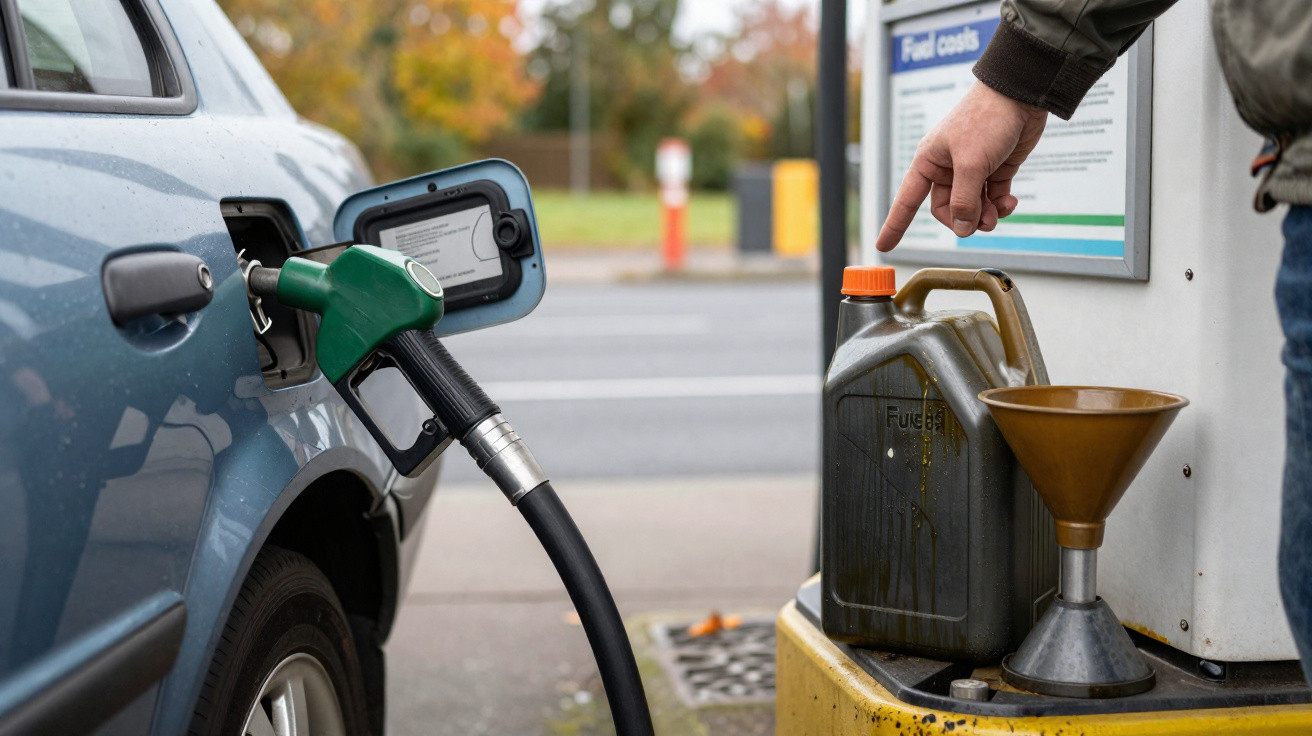
One misconception persists: a range extender does not automatically make a car cheaper over the long term. Consistent charging can cut fuel costs, but the second powertrain also increases the complexity of servicing and potential repairs. Those who calculate the costs realistically before buying can avoid expensive surprises.
Over the long term, the role of these vehicles will depend on three factors: the speed at which charging infrastructure expands, battery technology development and the strictness of climate policy. Between pure combustion vehicles and fully electric cars, EREVs will continue to serve as a bridging technology for several years – whether they become a permanent solution will be determined not by technology alone, but by driver behaviour and political courage.





Comments
No comments yet. Be the first to comment!
Leave a Comment