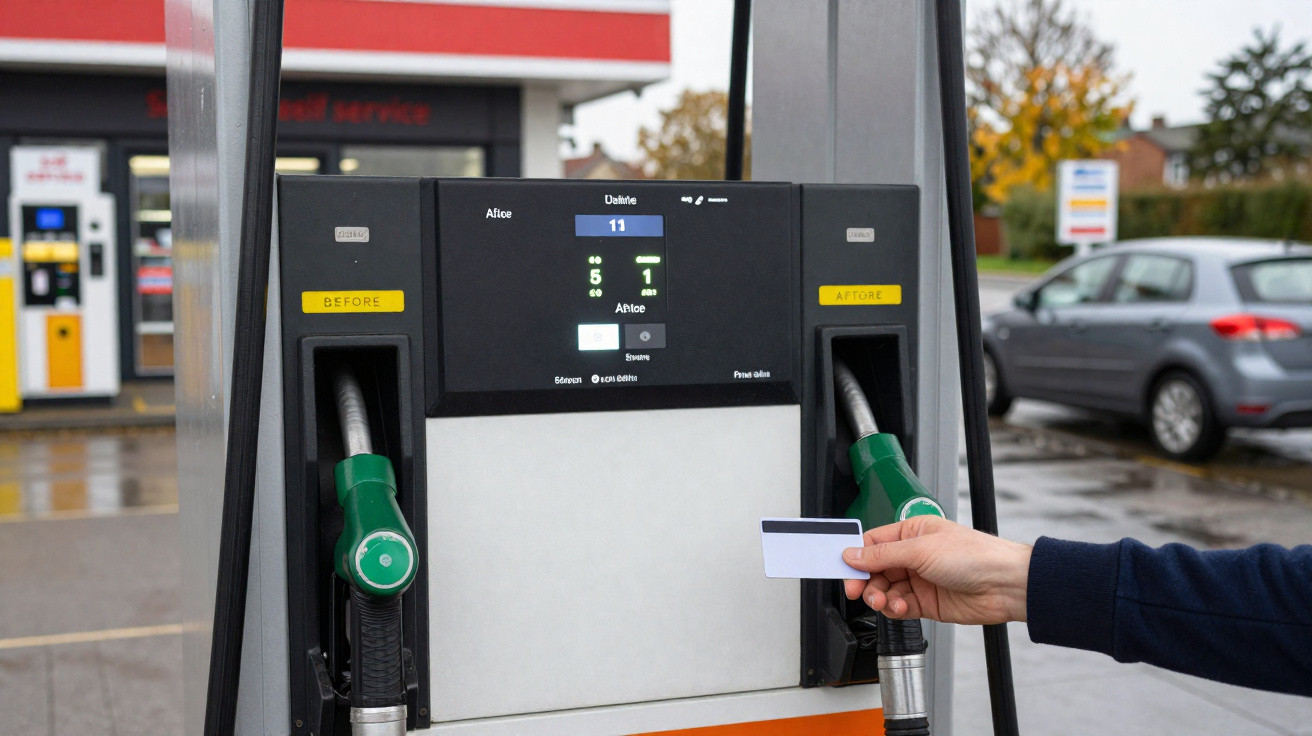
A petrol station is often relied on for more than fuel: a quick food shop, toilets, air for the tyres or help when a payment goes wrong. That is why the move towards unmanned forecourts can feel like a significant change, even when the pumps remain open.
The basic calculation is straightforward. If a site sells enough fuel to keep the pumps worthwhile but not enough shop goods to support a staffed convenience store, an operator may choose automation rather than closure. For drivers, that can preserve access to fuel - but it also means planning ahead and knowing what support will not be available.
What an unmanned forecourt actually is
An unmanned forecourt is not simply a normal petrol station with the shop shut. It is designed to work without a member of staff on site, usually through card payment at the pump, automated monitoring and a remote help contact.
Facilities vary widely, but an unattended site may offer:
- payment by debit or credit card at the pump;
- fuel only, with no conventional shop;
- a vending machine or limited self-service provision;
- CCTV, lighting and emergency equipment;
- an intercom, help button or telephone number for remote assistance.
Some locations are unattended overnight but staffed during the day. Others operate entirely as self-service sites. Drivers should not assume that a forecourt’s appearance, branding or opening hours mean that a shop, toilets or assistance will be available.
An automated fuel stop can keep a useful service open, but it is not a like-for-like replacement for a staffed local petrol station.
Why operators are considering the model
Running a conventional forecourt involves far more than maintaining pumps. A retailer must pay for staff, stock, refrigeration, deliveries, cleaning, security, utilities and maintenance. The shop also needs enough customers to justify the range of goods it carries.
At a site with weak shop sales, that cost can be difficult to sustain. A fuel-only or mostly automated operation may be a way to continue selling fuel at a location that would otherwise be at risk of closing altogether.
This does not mean every petrol station is heading in the same direction. A busy urban forecourt, motorway service area or large suburban convenience site may depend heavily on coffee, food-to-go, groceries and parcel services. There, staff and a well-stocked shop remain central to the business.
The unattended format is most likely to suit sites where drivers chiefly want to fill up and leave, rather than browse in a shop.
The Australian example - and what it means for Britain
The recent discussion has been prompted in part by plans in Australia, where some operators have explored converting selected convenience-led petrol stations into unattended formats. Viva Energy, which licenses the Shell brand in Australia, has described plans to use automated formats at particular sites where the fuel offer remains viable but the staffed shop model is less sustainable.
That is an Australian commercial decision, not an announcement of a comparable nationwide change at Shell forecourts in the UK.
Branding can be misleading in this respect. Petrol stations carrying the same name in different countries may have different owners, suppliers, operating agreements and retail strategies. Even within Britain, some branded forecourts are operated directly by a fuel company while others are run by independent businesses or supermarket groups.
UK drivers already know the building blocks of the model. Pay-at-pump is common, particularly at supermarkets and larger forecourts. The difference is that many British sites still have a staffed shop alongside it, so someone may be available when a card is declined, a pump fails or a customer needs practical help.
What drivers may gain - and lose
For some motorists, an unattended forecourt can be convenient. Payment can be quick, the pumps may be accessible outside conventional shop hours, and a local fuel stop may remain available when a full shop would not be viable.
There are trade-offs, however. A self-service site may not provide:
- toilets or baby-changing facilities;
- hot drinks, food or basic groceries;
- air and water equipment;
- cash payment;
- help with a pump or receipt problem;
- immediate assistance for customers who find the payment system difficult to use.
Accessibility matters too. A remote help point may be useful, but it is not always an adequate substitute for a person on site. Drivers with reduced mobility, those travelling with young children, and people who are unfamiliar with pay-at-pump systems may need more time or support.
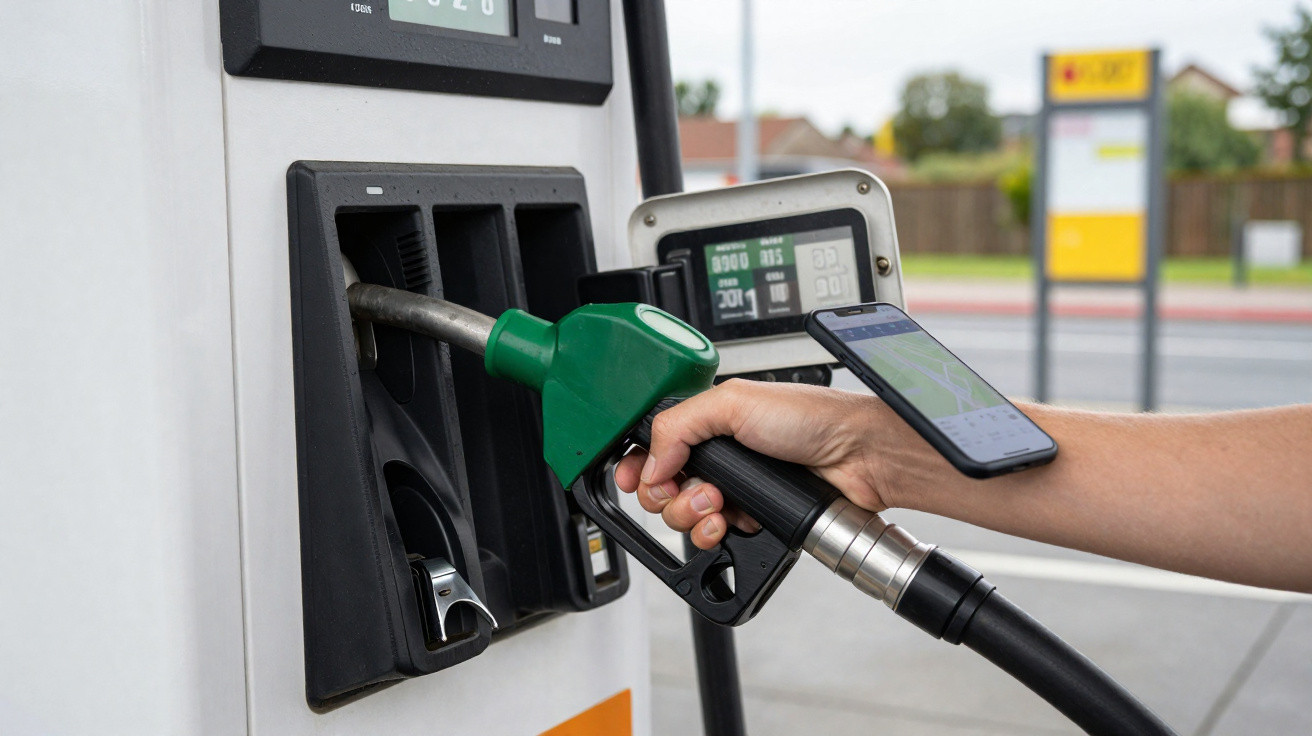
Before relying on an unfamiliar station late at night or on a long journey, check its listing on a mapping app or the operator’s own website. Details can change, so treat online information as a guide rather than a guarantee.
Safety still comes first
A forecourt is a place where flammable fuel is handled. The absence of a cashier does not lessen the need to follow the rules shown on the pump and around the site.
Before filling up
- Check that the pump accepts your payment method and read the screen before authorising a transaction.
- Confirm the correct fuel for your vehicle. Read the labels on the pump and inside the filler flap; do not rely on nozzle colour alone.
- Switch off the engine, extinguish cigarettes and keep all naked flames well away.
- Keep children with you and away from the pump area.
While you are refuelling
- Stay with the nozzle until filling is complete.
- Avoid getting back into the vehicle during refuelling. If you do, touch metal away from the filler area before handling the nozzle again, to reduce static risk.
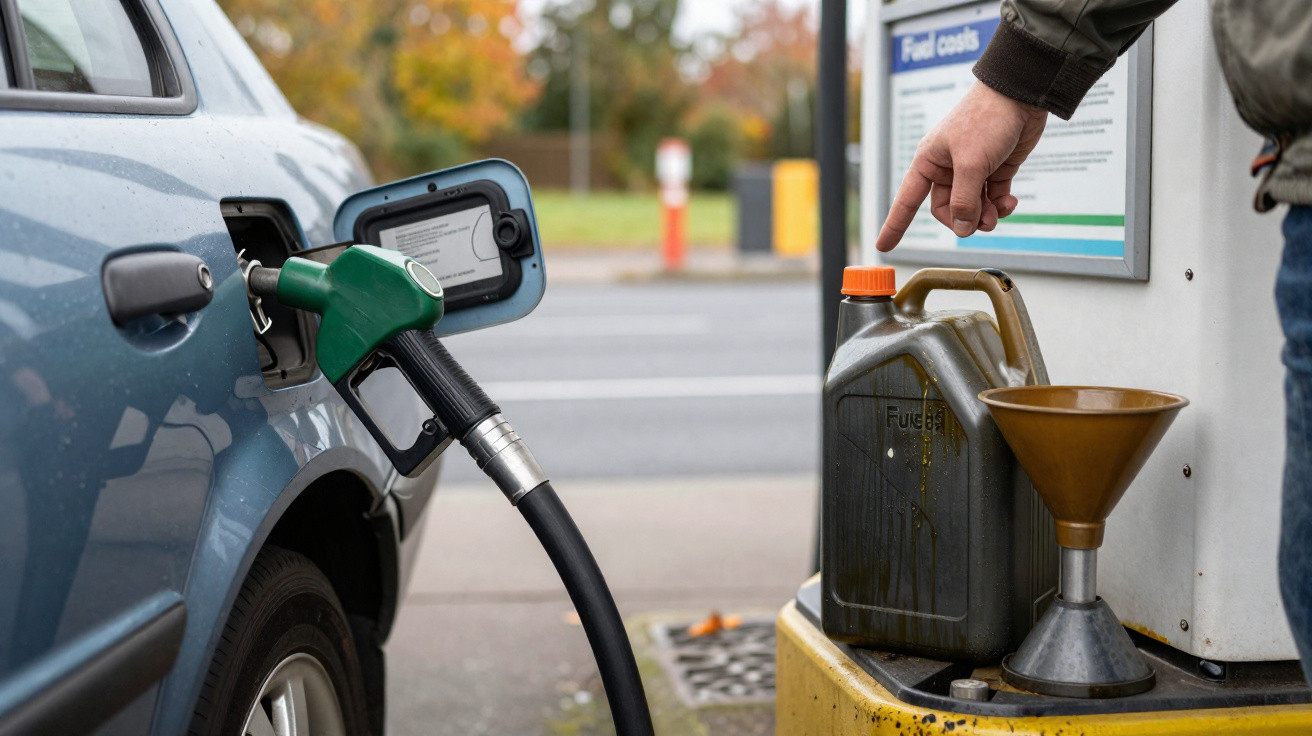
- Do not use makeshift containers. Only use suitable, approved fuel containers where the forecourt permits them.
- If fuel is spilt, stop dispensing and follow the instructions displayed at the site. Never wash petrol or diesel into a drain.
If there is an emergency
Use an emergency stop only where there is a genuine need, such as a significant spill, leak or immediate danger. Move away from the pumps and follow the forecourt’s emergency instructions. If there is a fire, a strong fuel vapour smell or an obvious leak, keep clear and call 999 when it is safe to do so.
Common mistakes at pay-at-pump sites
Most transactions are simple, but a few recurring errors can cause avoidable stress.
- Confusing a pre-authorisation with the final bill. Your bank may show a temporary pending amount before the final fuel charge is settled. Check the transaction status before concluding that you have been charged twice.
- Choosing the wrong fuel. Stop immediately if you realise before starting the engine. Do not start or drive the vehicle; contact your breakdown provider or the relevant recovery service.
- Driving off before the transaction has finished. Wait for the pump to confirm that fuelling has ended, replace the nozzle securely and take a receipt if one is offered.
- Expecting cash to be accepted. Fully unattended sites will usually depend on electronic payment, but accepted cards and contactless limits can differ.
- Assuming the usual facilities are there. A familiar-looking forecourt may no longer have toilets, a shop or a member of staff.
- Forgetting that a bank card may be declined. Keep enough fuel in reserve to reach an alternative station, particularly in rural areas or during late-night travel.
Why communities can be uneasy
A local petrol station can act as a small but important service hub. It may be the nearest place to buy milk, use a toilet, ask for directions or get help when a vehicle develops a problem.
The concerns around automation are therefore wider than the act of paying at a pump. They can include fewer local jobs, less support for people who struggle with self-service technology and the loss of a late-night convenience shop.
Operators may take the view that a self-service forecourt is preferable to no forecourt at all. Residents may reasonably feel that the removal of a staffed shop reduces the quality of local provision. Both can be true: the value of the change depends on the alternatives nearby.
For motorists, the useful question is not whether automation is good or bad, but whether a particular site still meets the needs of the journey.
How to plan around an unattended stop
The practical approach is simple: do not wait until the fuel warning light is on before checking what is available.
If you are making a longer trip, particularly through rural parts of the UK or in poor winter weather:
- identify a staffed forecourt if you will need food, toilets or assistance;
- make sure your usual payment card is accepted and has available funds;
- keep your phone charged in case you need the operator’s remote-support number;
- avoid arriving with very little fuel if you are uncertain whether a site is open or operational;
- retain the receipt or note the pump number if there is a payment query.
Unmanned forecourts are likely to remain one option among many, rather than replacing every traditional petrol station. They can be useful where they preserve local fuel access, but they require drivers to be a little more self-reliant. Knowing the facilities before you pull in is the best way to make the stop quick, safe and uneventful.











Comments
No comments yet. Be the first to comment!
Leave a Comment