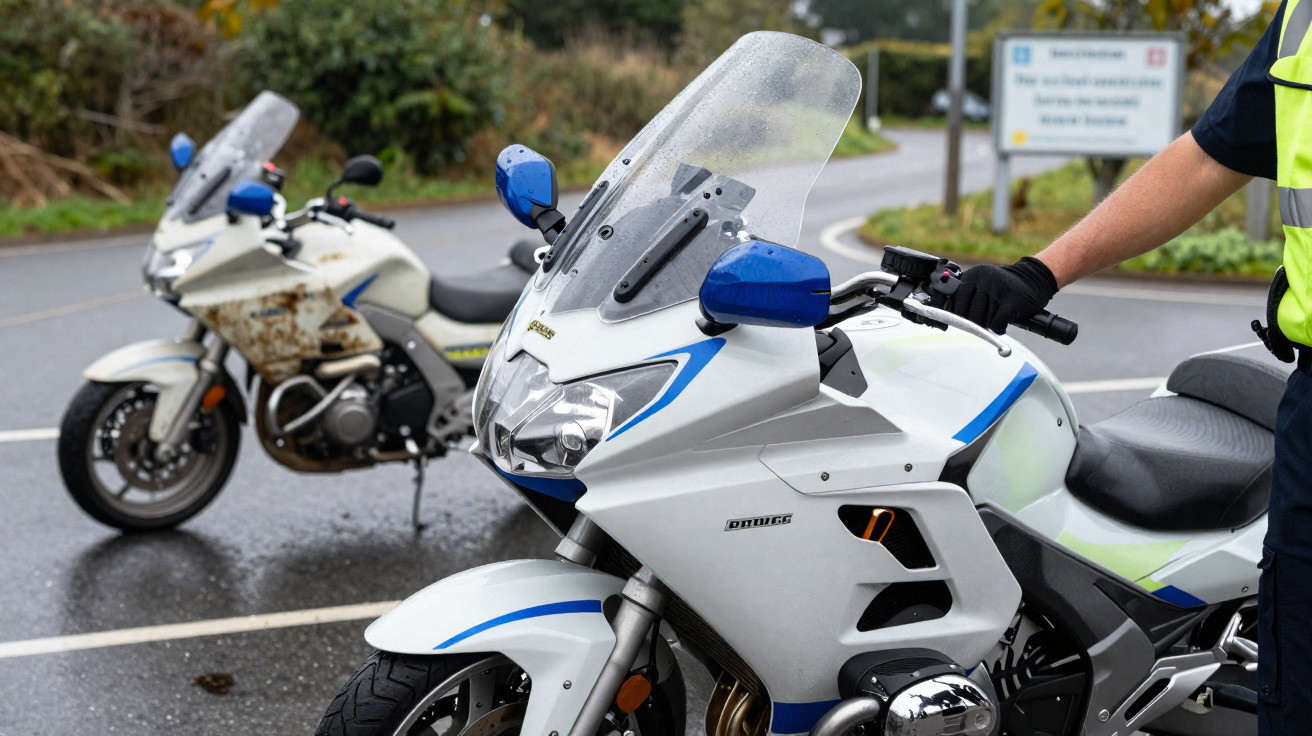
A patrol motorcycle has a job that is rather different from a weekend touring bike. It must carry an officer and equipment for long shifts, cope with difficult weather and reach collision scenes or congestion where a larger vehicle may be held up.
Brittany’s Gendarmerie is due to receive 35 BMW R 1300 RT motorcycles by the end of 2026 as part of a wider renewal of France’s motorised road-policing fleet. The machines are intended for traffic enforcement, road-safety patrols and rapid attendance on key routes - not simply as a visible upgrade.
For a roads-policing unit, mobility matters: getting safely to an incident can be as important as the equipment carried there.
What is changing in Brittany?
The new motorcycles are expected to be allocated across Brittany, including units in Morbihan responsible for traffic control and road-safety duties. Their arrival forms part of a national fleet-replacement process rather than a scheme limited to one département.
Thirty-five machines is a meaningful addition, but it does not imply that every existing motorcycle will disappear at once. Public-service fleets are usually replaced gradually, with new vehicles entering service as older ones are retired or reassigned.
The operational bikes will differ from a showroom touring motorcycle. They need warning equipment, communications systems, secure storage and fittings appropriate for officers working at the roadside. Their specification will also reflect the demands of long shifts on motorways, rural roads and busy approaches to towns.
Why road-policing teams use motorcycles
Technology such as fixed cameras, mobile enforcement equipment and control rooms plays an important role in modern policing. It does not remove the need for trained officers to attend incidents, manage traffic or assess changing conditions in person.
Motorcycles can be particularly useful where traffic has slowed sharply. On a congested dual carriageway, a rider may be able to reach the front of a queue more readily than a patrol car, provided it is safe to do so. They can also be practical on long rural routes, where an officer may need to cover substantial distances.
Road-policing motorcycles may be used for:
- visible patrols on motorways and main roads;
- responding to collisions, breakdowns and hazardous obstructions;
- helping manage traffic around incidents;
- monitoring busy routes during holiday travel periods;
- supporting authorised escorts and managed movements;
- enforcement work where a mobile, conspicuous presence is useful.
A motorcycle is not automatically the right response to every incident. Severe weather, a major collision scene or the need to carry specialist equipment may call for cars, vans or other emergency vehicles instead.
A practical fit for Brittany’s roads
Brittany combines major trunk roads with coastal routes, country lanes and busy holiday corridors. In summer, roads leading to ferry ports, campsites and seaside towns can become noticeably busier. At other times of year, persistent rain, strong winds and shorter daylight hours can make journeys more demanding.
Those conditions explain why an all-weather touring platform is suited to the role. Officers may spend hours in the saddle, then need to work safely beside fast-moving traffic or on a wet verge. Wind protection, luggage capacity and stable road manners are practical concerns, not luxuries.
The Gendarmerie’s task is also broader than issuing penalties. At a collision or sudden traffic build-up, officers may need to protect the scene, alert other road users and help restore safe traffic flow while further assistance is arranged.
New motorcycles may improve day-to-day capability, but training, judgement and safe deployment remain more important than the badge on the fuel tank.
What the BMW R 1300 RT will be used for
The BMW R 1300 RT is a large touring motorcycle platform, a type commonly suited to long-distance operational work. In this context, the central issue is its role rather than its performance figures.
The incoming motorcycles are expected to support three broad areas of work:
- Road-safety patrols
Officers can maintain a visible presence on routes where speeding, dangerous overtaking or other unsafe behaviour is a concern.
- Monitoring major routes
Motorcyclists can patrol important road corridors and attend developing congestion, breakdowns or incidents.
- Rapid attendance
Where traffic density or road layout delays larger vehicles, a motorcycle may provide a quicker way for a trained officer to reach and assess a situation.
For UK readers, there is a clear comparison with specialist police motorcyclists working in roads-policing teams. The French Gendarmerie has its own organisation, powers and procurement arrangements, but the underlying purpose is familiar: using a highly trained rider where flexibility and access are valuable.
What British riders should take from the news
Brittany remains a popular destination for visitors arriving by ferry from the UK, whether by car, campervan or motorcycle. Quiet-looking roads can be enjoyable, but they still demand attention - especially after rain, around villages and on narrow lanes with limited sightlines.
The arrival of newer Gendarmerie motorcycles is not a sign that French road rules have changed. It is, however, a reminder that enforcement and traffic patrols remain active on main roads and local routes alike.
Before travelling, check current official guidance rather than relying on an old forum post or a packing list saved years ago. Requirements can change, particularly around vehicle documents, emissions zones and equipment rules.
A sensible pre-departure check includes:
- confirming that your driving licence, insurance and breakdown cover apply to the journey;
- carrying the travel and vehicle documents you may need;
- checking tyres, brakes, lights, chain or shaft-drive condition, and fluid levels;
- reviewing current rules for motorway tolls, low-emission zones and local restrictions;
- allowing extra time for wet roads, crosswinds and unfamiliar junctions.
Common mistakes on unfamiliar French roads
1. Forgetting to reset for driving on the right
The change can catch out even experienced UK riders, particularly after leaving a ferry terminal or fuel stop. Take extra care at roundabouts, junctions and when positioning for turns.
2. Treating an empty road as a predictable one
Rural Brittany can bring hidden farm entrances, slow agricultural vehicles, cyclists, loose gravel and bends that tighten unexpectedly. Keep your speed appropriate to what you can see and stop within.
3. Underestimating wet surfaces
Atlantic weather can change quickly. Reduce speed smoothly, leave a larger gap and be alert for slippery painted lines, drain covers, mud and fuel spills. Strong coastal gusts can also affect a loaded motorcycle.
4. Stopping in an unsafe place after a breakdown
If possible, get yourself and the bike away from moving traffic. On a motorway, use the emergency telephone or contact the authorised assistance service rather than attempting roadside repairs beside fast traffic. Wear high-visibility clothing if you have it, but do not put yourself at risk to retrieve luggage or tools.
5. Assuming familiar UK habits apply everywhere
Speed limits, priority rules, filtering expectations and local restrictions may differ. Read signs carefully and check up-to-date official advice before setting off.
Safety matters more than a quick arrival
A patrol motorcyclist’s ability to make progress through traffic depends on specialist training, risk assessment and conditions at the scene. It is not a model for ordinary riders to copy.
Do not attempt to follow emergency vehicles through queues, use the space they create or ride along a hard shoulder unless specifically directed by an authorised official. Keep a predictable position, leave room for emergency services and let them pass safely.
For everyday motorcyclists, the useful lesson is simpler: prepare the bike, give yourself time and adjust early when the weather or road surface changes.
The practical message for riders
The planned addition of 35 BMW R 1300 RT motorcycles gives Brittany’s Gendarmerie more modern equipment for road-safety and traffic duties by the end of 2026. It is one element of a wider approach that also relies on trained officers, safe road design, sensible driving and well-maintained vehicles.
For anyone touring in Brittany or commuting at home in the UK, the most effective preparation remains unchanged. Check the motorcycle before the journey, understand the local rules, slow down for conditions and leave enough margin for the unexpected. The best trip is not the one completed fastest, but the one completed safely.

Comments
No comments yet. Be the first to comment!
Leave a Comment