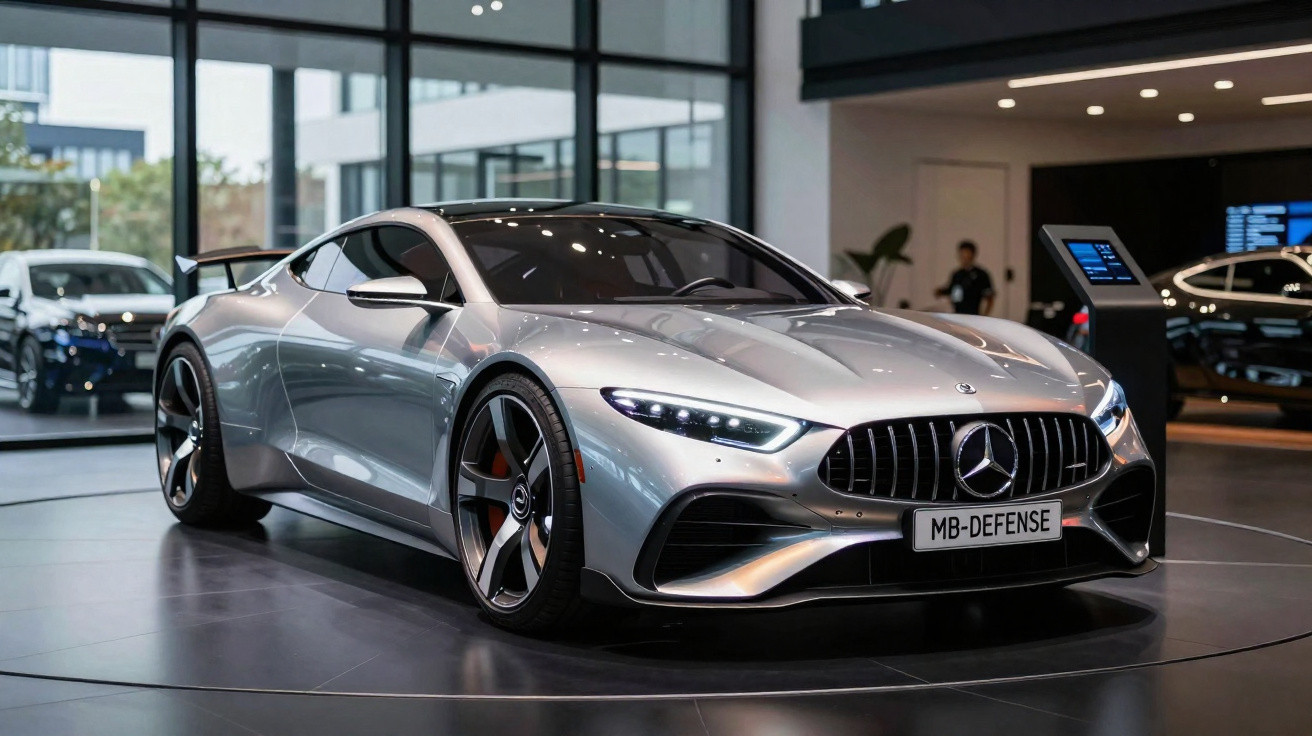
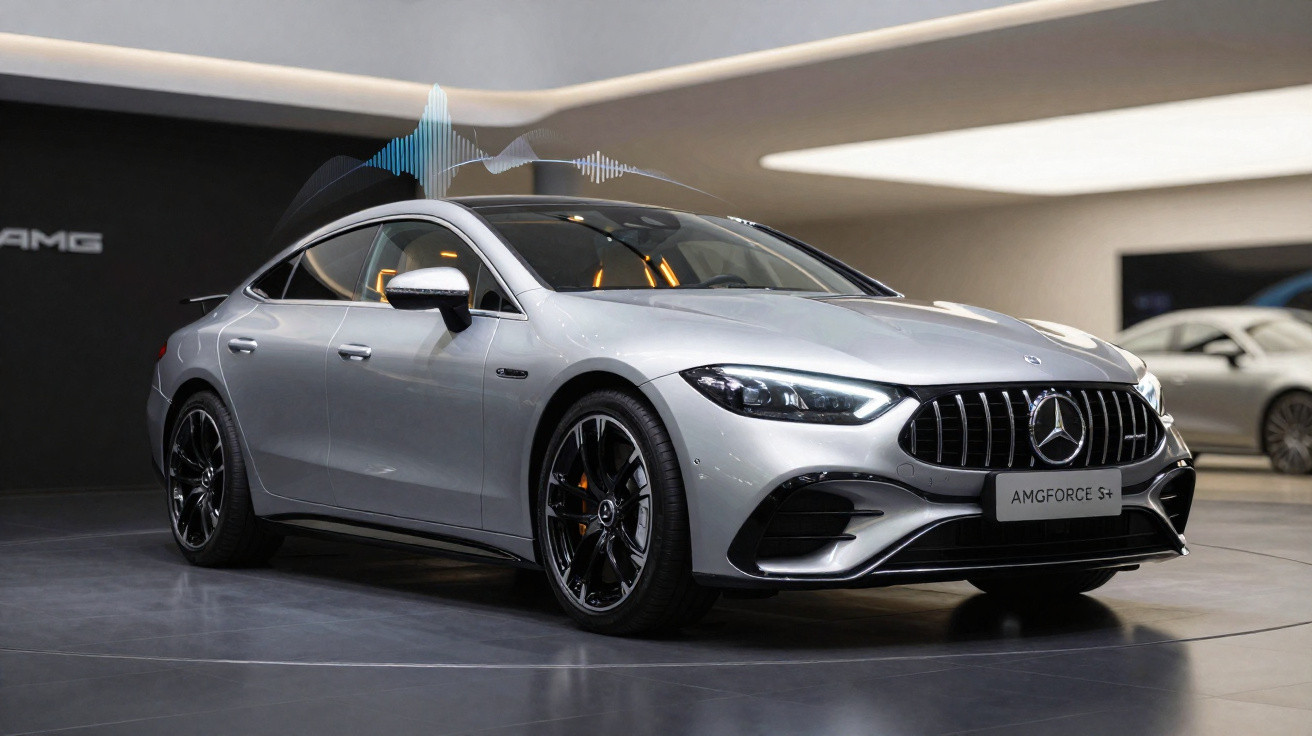
With the crisis gripping Europe’s car industry, Mercedes-Benz is no longer ruling anything out, including manufacturing for the defence sector. The move forms part of a broader trend: major carmakers are increasingly looking towards rapidly expanding military budgets.
2025 was a punishing year for Mercedes-Benz. The German manufacturer reported operating profit of €5.8 billion, down 57% on the previous year. The causes included a weak Chinese market, where sales fell by 20%, increasingly intense domestic competition from BYD and Xiaomi, and the costly impact of the electric transition on margins. Tariffs also added €1 billion in extra costs.
Mercedes is not the only European group experiencing a downturn. Stellantis recorded an exceptional charge of €22 billion during the second half of 2025, while Volkswagen unveiled a 20% cost-cutting programme and plans to eliminate 35,000 jobs in Germany.
Europe’s automotive industry under structural pressure
Indeed, the continent’s car sector is facing a deep structural crisis, squeezed by pressure from Chinese manufacturers, uncertainty around the energy transition and a market losing momentum. Against this backdrop, large groups are seeking new sources of growth, and an increasing number are turning to defence, including Mercedes-Benz.
“A growth niche” for Mercedes-Benz
In an interview with The Wall Street Journal on Friday 15 May, chief executive Ola Källenius said the company would be prepared to enter defence equipment manufacturing, provided it made economic sense. “The world has become a more unpredictable place, and it is absolutely clear that Europe needs to strengthen its defence profile. If we can play a positive role in this area, we would be prepared to do so,” he explained.
The executive nevertheless remains cautious. He described defence as a “minor” part of the business compared with vehicle manufacturing, while stressing that it could become “a growing niche” capable of supporting the group’s results.
Defence spending creates a new industrial opportunity
The timing is significant. Europe has embarked on major rearmament since Russia’s invasion of Ukraine, while NATO member states’ military budgets have reached levels unseen since the Cold War. For industrial groups looking for new income streams, defence is now an opportunity that is difficult to overlook.
Volkswagen recently reached an agreement with Israeli group Rafael Advanced Defence Systems to convert its Osnabrück plant into a manufacturing site for components used in Iron Dome, Israel’s well-known anti-missile shield. This week, too, German arms giant Rheinmetall announced a partnership with Deutsche Telekom to develop an anti-drone shield.
Our analysis
The message is clear: German industry, spanning both automotive and electronics, is decisively moving towards defence. It represents a genuine economic opportunity in a European environment that is encouraging this direction. In France, Renault has also formed a partnership with the military to build drones.
However, this shift also raises ethical questions that these groups will eventually have to confront.



Comments
No comments yet. Be the first to comment!
Leave a Comment