At the Paris Motor Show, Stellantis chief executive Carlos Tavares disclosed that the group intends to begin a performance review of all its brands in 2026, a process that could lead to final decisions.
This review forms part of Stellantis’s ‘Dare Forward 2030’ strategic plan. Its findings could prove decisive for the future of some of the 14 brands in the Stellantis portfolio.
As Tavares explained, the assessment will take place when the plan is two-thirds complete. However, as his departure from the chief executive role is already scheduled for 2026, responsibility for the future of some of these brands is likely to fall to his successor.
Stellantis’s Dare Forward 2030 brand review
For context, when Stellantis was created in 2021, every brand was required to develop a 10-year product plan, with the first five years fully funded.
According to Tavares, the group has so far delivered on every commitment it made. This includes the introduction of a new generation of platforms, beginning with STLA Medium, which debuted in the Peugeot 3008.
Although the schedules for certain product launches have been adjusted, the Portuguese executive stresses that none of the planned projects has been cancelled. The course originally set remains in place despite the industry’s continual changes worldwide.
The future of Stellantis’s 14 brands
For that reason, the performance review of the 14 brands will be crucial to their future, particularly amid the energy transition and increasingly demanding market conditions. On this point, Tavares is unequivocal: “brands that fail to meet their financial targets could be reconsidered or, as a last resort, discontinued.”
Maserati at the top of the list
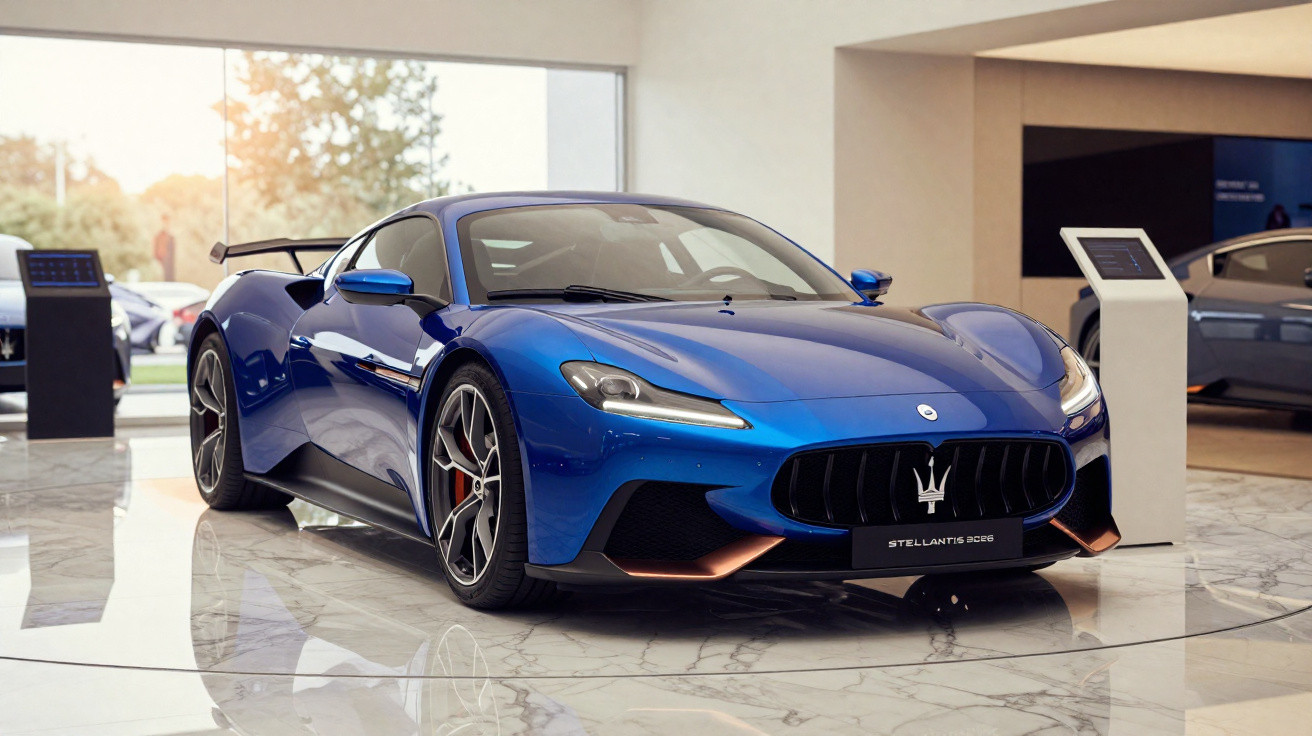
One of the most evident current challenges within Stellantis’s brand portfolio is Maserati. Carlos Tavares recently said that the marque’s difficulties lie not in its technology or products, but in its marketing.
Sales for the Trident brand are falling, and it has been unable to establish its position among rival luxury marques. In the first half of 2024, sales dropped by more than 50% compared with the same period in 2023, reaching 6,500 units (15,300 units in 2023).
Tavares says the product range is strong and already includes fully electric options, yet Maserati has not succeeded in getting its message across to its target audience.
The disappointing results recently led to Davide Grasso leaving his role as the brand’s chief executive. He will be replaced by Santo Ficili, who will also hold the same position at Alfa Romeo, succeeding Jean-Phillipe Imparato.
Earlier in the year, Giovanni Perosino was appointed as the new marketing director in another move intended to turn the brand around, although results remain below expectations.
Several Maserati models have also been discontinued in recent months, including the Ghibli, Quattroporte and Levante. While the Ghibli will not receive a successor, the replacements for the other two will not be revealed until 2027/2028.


Comments
No comments yet. Be the first to comment!
Leave a Comment