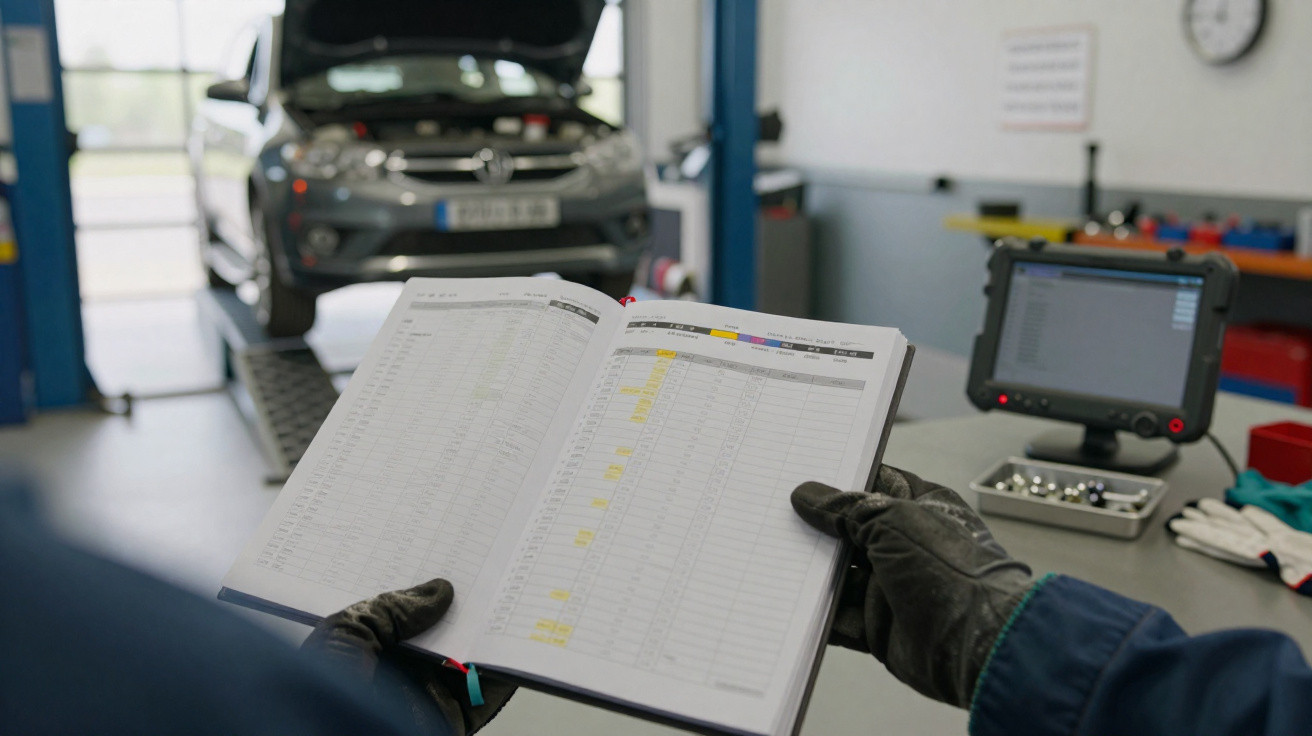
A packed booking diary ought to be good news for an independent garage. Yet it can become a problem when there are not enough trained people to complete work safely and on time. One absent technician can quickly mean delayed servicing, longer waits for diagnostics and a team under pressure.
The core point is simple: a four-day working week is not a straightforward switch in a customer-facing workshop. It can work, but only with a rota that protects cover, training, supervision and customer access. Trying to fit the same workload into fewer hours is likely to create mistakes, fatigue and disappointed customers.
A full diary is not the same as real capacity
A garage can have no shortage of customers while still lacking the capacity to serve them well. Small workshops are particularly exposed when a technician leaves, is off sick or is attending training. The remaining staff may have to juggle repairs, diagnostics, parts deliveries, estimates, vehicle movements and customer calls.
That can lead to familiar problems:
- jobs being carried into the following day;
- repeated interruptions for technicians on complex work;
- delays while waiting for parts or authorisation;
- routine overtime becoming normal;
- customers losing confidence after missed completion times.
Vehicle repair now requires a broad range of skills. Alongside conventional mechanical work, garages may need people competent in electronic diagnosis, advanced driver-assistance systems, hybrid and electric vehicle procedures, air-conditioning and digital service records.
A staffing shortage is not fixed by booking more vehicles in. It is managed by matching promises to the people, time and equipment actually available.
Can a four-day week work in a garage?
Predictable hours and more personal time can matter greatly to employees, especially in a trade where skilled people have options. A capable technician may consider jobs with dealerships, fleet operators, public bodies or businesses maintaining commercial vehicles and machinery.
But an independent garage open five or six days a week cannot assume that everyone working Monday to Thursday will leave customers unaffected. If the whole team takes the same day off, Friday or Saturday opening may become impossible - often the most convenient times for drivers to drop off a vehicle.
There are practical alternatives:
- staggered four-day patterns, with different staff covering different days;
- a planned Saturday rota, shared fairly across the team;
- part-time roles with clearly defined responsibilities;
- early and later shifts where supervision, security and insurance arrangements permit;
- protected training time that is built into the diary rather than added on top of it.
Reducing an individual’s weekly hours does not automatically mean reducing the workshop’s opening hours. However, longer opening needs enough suitably competent people on site.
Check where workshop time really goes
Before changing rotas or advertising a vacancy, look at how work flows through the garage. A full diary may conceal bottlenecks caused by parts delays, unclear job instructions or too much non-technical work landing with technicians.
1. Record productive time honestly
For two to four weeks, compare:
- hours each technician is at work;
- time available for repair work;
- labour hours sold or recovered;
- time spent awaiting parts, approval or technical information;
- time spent on estimates, customer contact and moving vehicles.
This should not be used to blame individuals. It helps identify tasks that can be organised better. A trained technician should not routinely be pulled away from a repair to search for parts or chase a routine approval.
2. Leave room for uncertainty
Not every job goes to plan. Diagnostic work can uncover further faults, and same-day tyre or battery issues will arise. A completely full diary may look efficient, but it leaves no margin for the reality of repair work.
3. Match work to competence
Allocate high-voltage, safety-critical and complex diagnostic work only to staff who have the appropriate training, information and authority. Trainees can build experience through servicing, inspections and routine repairs, provided they are properly supervised.
The best rota is not the tidiest-looking one. It is the one that keeps the workshop accessible while allowing people to do safe, properly supported work.
Make technician vacancies specific
An advert for a “fully qualified mechanic” says very little about the actual job. Applicants need to know what work they will do, what hours are expected and whether the business will support their development.
A useful vacancy should cover:
- normal hours and the approach to Saturday work;
- pay range, or a clear explanation of how pay is decided;
- overtime arrangements and any time off in lieu;
- the mix of servicing, repairs and diagnostics undertaken;
- workshop equipment and diagnostic tools available;
- training support and time allowed for courses;
- holiday, pension and other genuine benefits;
- whether applicants from related trades or those returning to work will be considered.
Do not promise a career path that does not exist. A small garage may not offer several management grades, but it may be able to provide training in diagnostics, MOT testing where suitable, hybrid and EV work, or responsibility for a specialist area.
Use more than one route to recruit. Local colleges, apprenticeship providers, trade contacts, reputable job sites and community networks can all reach different candidates. Recommendations from staff can help, but recruitment decisions should remain fair and consistent.
Apprentices need time and supervision
Apprenticeships can help build a future workforce, but they are not an instant answer to a vacancy. An apprentice needs a named person to guide them, sufficient time to learn and work that develops beyond the least popular jobs.
Basic tasks are part of training, but they should lead towards inspection routines, servicing, brake work, safe equipment use, fault-finding and customer communication.
A simple development plan
- Agree which tasks the apprentice can carry out, and at what level of supervision.
- Appoint a mentor who has time to explain procedures.
- Review progress regularly with the training provider.
- Rotate work so experience is not limited to one repetitive task.
- Discuss likely opportunities before the apprenticeship ends.
Automotive work offers more variety than many young people realise. It can involve electronics, software-led diagnosis, vehicle systems, parts operations, body repair and customer service as well as hands-on mechanical repairs.
Retention is built day by day
Pay matters, but it is not the only reason people choose to stay. Staff are more likely to remain where they have workable equipment, clear expectations, useful training and managers who listen when something is unsafe or impractical.
Workshop owners should ask:
- Are lifts, tools and diagnostic equipment maintained and available?
- Are parts and customer authorisation arranged before a job starts where possible?
- Is Saturday work shared fairly?
- Is overtime occasional rather than assumed?
- Is training relevant to the vehicles arriving at the workshop?
- Can staff raise safety concerns without being dismissed?
Advance notice of rotas is a practical benefit in itself. It gives people a fair chance to organise childcare, appointments and family commitments.
Common mistakes when staffing is tight
Pressure can encourage decisions that make matters worse.
- Overbooking every ramp: there is no room for unexpected faults, late parts or urgent repairs.
- Using untrained staff for specialised work: brakes, steering, lifting equipment, refrigerants and high-voltage systems require appropriate competence and procedures.
- Treating overtime as standard: sustained long hours can increase fatigue and make retention harder.
- Giving unrealistic completion times: an early, honest update is better than a missed promise late in the day.
- Leaving Saturday expectations until after recruitment: raise them clearly from the beginning.
- Sending staff on training without arranging cover: training is valuable, but the diary must reflect their absence.
Safety must not be traded for speed
Staff shortages must never lead to shortcuts on braking, steering, tyres, lifting operations, electrical repairs or high-voltage components. Follow the vehicle manufacturer’s repair information, use suitable protective equipment and ensure work is carried out only by people competent to do it.
Work involving air-conditioning refrigerant also needs proper equipment and trained handling. High-voltage vehicles should be isolated and worked on in line with the relevant procedures. If a job cannot be completed safely that day, it should be explained and rescheduled rather than rushed.
For customers, a longer booking lead time does not necessarily mean poor service. It may mean the garage is refusing to compromise on safety. If a vehicle has a warning light, unusual noise or suspected safety fault, ask the garage whether it should be driven before the appointment.
The practical way forward
Independent garages do not have to choose between treating staff well and serving customers reliably. The sensible approach is to understand real capacity, set realistic booking promises, plan cover properly and invest in skills.
A four-day week may suit some technicians and some businesses. But a workshop that needs to remain open on Fridays and Saturdays requires a coverage plan, not an expectation that the same work will be completed faster. Skilled people, adequate time and good preparation remain the foundation of safe vehicle repair.

















Comments
No comments yet. Be the first to comment!
Leave a Comment