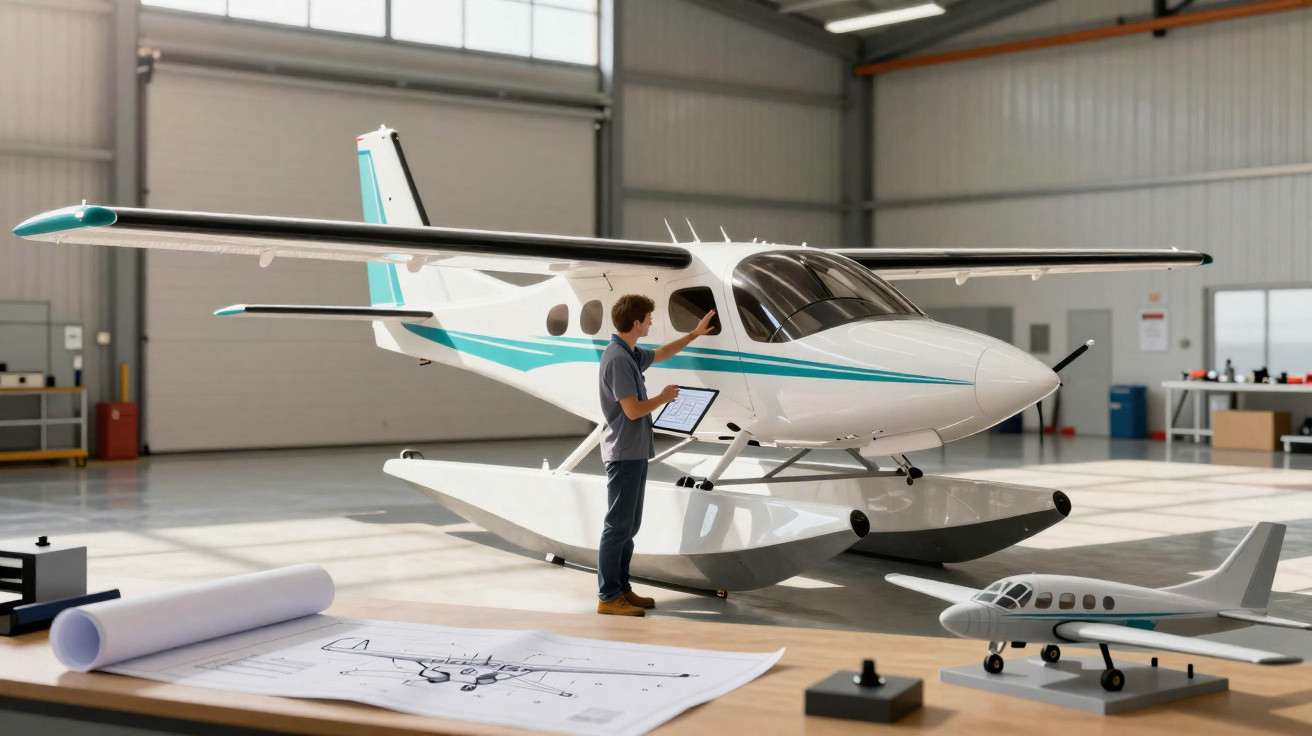
Noemi Aerospace begins full-scale prototype production
Norwegian company Noemi Aerospace has started building a full-scale prototype of its all-electric amphibious aircraft, the Noemi, which has room for nine occupants.
The company expects the aircraft to make its first flight by the end of 2027, powered by an in-house propulsion system built around commercially available automotive components.
Previously known as Elfly Group, the start-up has received US$ 10 million in funding from the Oslo government. It intends to begin certification of a production version of its twin-engined design, with operations targeted to begin in 2031. Noemi Aerospace is based at Sandefjord Torp, Norway.
Noemi electric amphibious aircraft platform and applications
Alongside the commercial model, Noemi Aerospace has developed a broader plan for the platform. By fitting conventional landing gear, it envisages versions for a range of roles, including military reconnaissance, firefighting and skydiving activities.
“From the outset, the Noemi was intended to be more than just an aircraft,” explains founder and CEO Eric Lithun. “We are developing a platform that can evolve to serve several markets.”
The “TAC1” prototype will use the company’s own propulsion system, incorporating parts from high-performance cars, while the certified version may use an approved system.
According to chief technology officer Tomas Brodreskift, the Noemi’s electric system has energy requirements comparable with those of a car. This differs from an eVTOL, which consumes considerably more energy.
Noemi Aerospace has already flown a smaller remotely controlled version and has been working through design challenges, including reducing water spray and drag, as well as redesigning the cabin.
Range and role for the Noemi amphibian
The aim is to produce an efficient, affordable electric amphibian capable of replacing conventional turboprop aircraft adapted for water operations, such as the De Havilland Canada Twin Otter and Cessna Caravan, neither of which was designed to minimise the additional drag.
The company sees an opportunity for more economical and efficient seaplanes, particularly for linking remote coastal communities such as those in Norway’s fjords and the Pacific Northwest. The Noemi is expected to have a range of 200 km (108 nautical miles) while carrying up to nine passengers.

















Comments
No comments yet. Be the first to comment!
Leave a Comment