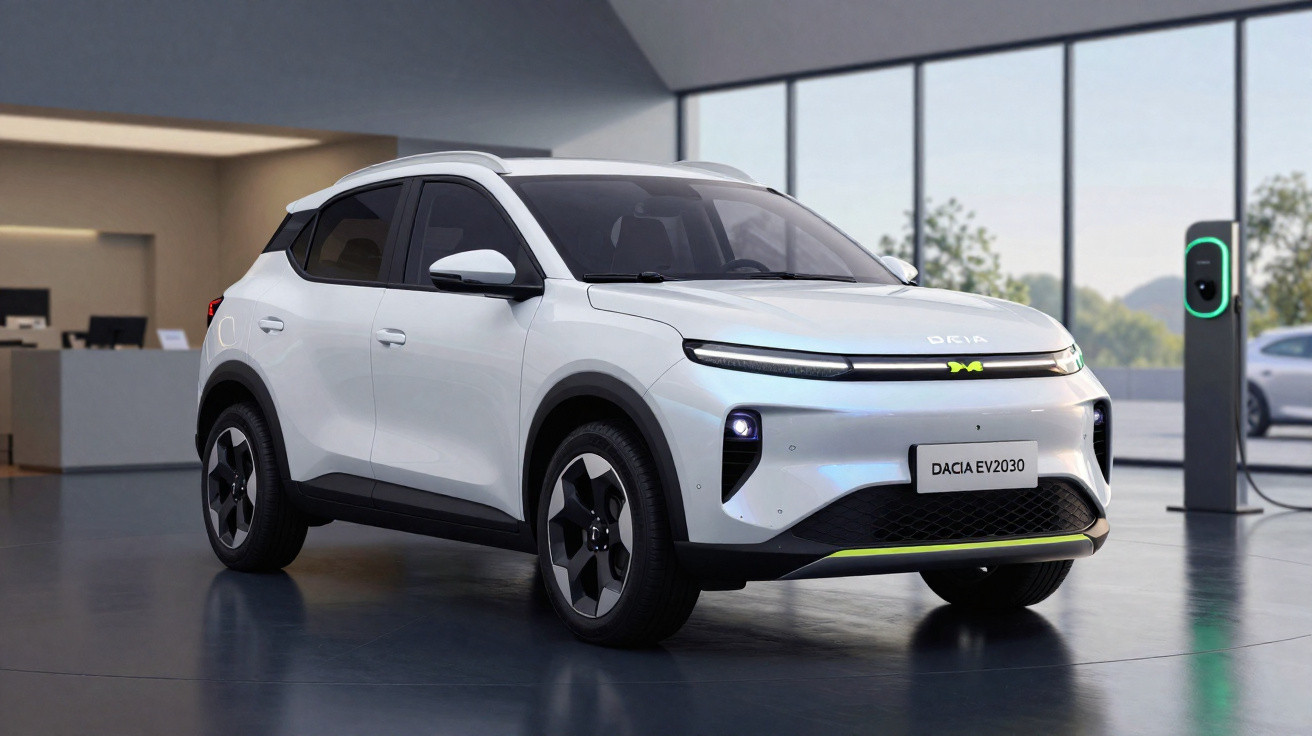
For a long time, Dacia was seen as a brand for purists who wanted one thing above all else: as much car as possible for the money. Now the manufacturer is significantly stepping up its electric plans. By 2030, four fully electric cars are due to be in the range, led by a particularly affordable city EV with a starting price below €18,000. This is part of a wider Renault Group plan intended to make electric mobility more affordable across Europe again.
Renault’s “futuREady” plan gives Dacia a clear electric direction
On 10 March, the Renault Group unveiled its new strategy, named “futuREady”. Dacia is using this roadmap to reposition itself. Rather than offering just one electric model, as it currently does with the Spring small car, it aims to have four vehicles powered solely by electricity within a few years.
“Dacia aims to generate two thirds of its sales from electric drivetrains by 2030 – while still remaining one of the most affordable brands on the market.”
So far, Dacia is still at an early stage in electrification. The Spring sells reasonably well, but it is disadvantaged when it comes to incentives because it is built in China and therefore does not qualify for government grants in some countries. The new strategy addresses precisely that issue: more models, considerably more aggressive pricing and European production.
Four Dacia electric models by 2030: the planned line-up
No model names have been officially confirmed so far, but the group has already provided a fairly clear indication of what is coming. By 2030, Dacia’s range is expected to include four pure EVs. The main elements can broadly be outlined as follows:
- new electric small cars based on the next-generation Twingo
- a planned electric version of the popular Sandero
- further as-yet unnamed models in the compact and city-car segments
- the Spring will remain in the line-up for the time being as the entry-level EV
The Duster is not currently included, and no all-electric SUV version has been announced directly. Dacia apparently sees its biggest initial opportunity in the price-sensitive small and compact-car classes, where the brand has traditionally been strongest.
New city EV: an electric car below €18,000 is planned
The most noteworthy detail is the pricing for the new city EV range, which will be closely related technically to the forthcoming electric Twingo generation. Dacia is promising a starting price below €18,000. In some markets with government incentives, the effective purchase price could fall considerably lower.
“With potential deductions through an environmental grant, the entry price in individual countries could drop to around €15,000 – a highly unusual figure for a new electric car.”
The new small car will be manufactured in Europe. This means it meets the requirements to qualify again for environmental grants in countries such as France. Buyers benefit twice: from a low list price and additional state support.
Why European production matters so much
The Spring illustrates the problem. Building it in China keeps manufacturing costs low, but excludes the model from many incentive schemes. Dacia is now reversing that logic: production closer to customers, slightly higher manufacturing costs, but renewed access to government support. Overall, the final price could therefore even be lower than that of an imported model without incentives.
Dacia Sandero EV: what to expect from the technology
An all-electric version of the popular Sandero range is also highly likely. It has not yet been officially confirmed, although such a variant is regarded internally as a certainty. The battery technology will be particularly interesting. Much points towards the use of LFP batteries, or lithium iron phosphate units.
This cell chemistry is somewhat heavier and normally delivers less range per kilogram than conventional nickel-manganese-cobalt batteries, but it is cheaper and more durable in everyday use. That fits Dacia’s brand image precisely: straightforward, long-lasting technology without unnecessary gimmicks.
Comparison of Dacia’s known electric vehicle plans so far
| Model / project | Status | Planned starting price | Production location | Key features |
|---|---|---|---|---|
| Twingo-based city EV | announced | below €18,000 | Europe | may qualify for an environmental grant |
| Spring | already on sale | still open | China | not eligible for incentives in some countries |
| Sandero Electric | planned | still open | still open | LFP battery highly likely |
Strategy: 66 per cent electric share without premium prices
Dacia has stated its target clearly: around two thirds of sales should use an electric drivetrain by 2030. At the same time, the brand intends to maintain its familiar approach: as few unnecessary extras as possible, clearly defined equipment packages and practical cars at a low price.
“Dacia refers to the ‘most competitive’ offering in terms of price, costs and value for the customer – in other words, as much practical benefit per euro as possible.”
Rather than costly infotainment features or huge batteries, Dacia plans to use more compact battery packs that are sufficient for daily use and help keep costs down. Range records are not the priority; everyday usability and manageable monthly payments are.
What does this mean for buyers in German-speaking countries?
For customers in Germany, Austria and Switzerland, Dacia is becoming more appealing again. Until now, the Spring has been inexpensive, but many people have considered it too compromised and its access to incentives has been limited. A new European-built city EV could become a genuine price leader here, especially for commuters, car-sharing fleets and young drivers.
Typical situations in which Dacia’s EVs could perform well include:
- daily commuting distances of between 20 and 60 kilometres
- a second car for families living in cities
- car-sharing or company fleets with clearly predictable costs
- budget-conscious buyers who do not want a used car but still want to buy new
Those who can manage with 250 to 350 kilometres of range and do not need every high-tech driver assistance feature could get a new vehicle with a warranty at a price level that has so far often only brought older combustion-engined cars into consideration.
Background: why affordable electric cars are so scarce
In recent years, many manufacturers have focused primarily on expensive electric SUVs and high-performance models. Profit margins are higher in those segments, and development costs can be recovered more quickly. Affordable battery-powered small cars, by contrast, have been viewed as difficult to make viable because the battery and related technology account for a large proportion of the vehicle price.
Dacia is taking a different route: fewer variants, simple platforms and a deliberate decision not to offer costly equipment options. The brand now wants to transfer precisely this concept into the electric era. The four planned EVs therefore also send a message to the market: affordable e-mobility is possible when savings are made in the right places – rather than on the car’s basic function.
For buyers, this means less glamour, less luxurious interiors and possibly smaller displays, but more manageable list prices and comparatively low running costs. Those who share these priorities could have considerably more choice from Dacia in the coming years than they do today.

Comments
No comments yet. Be the first to comment!
Leave a Comment