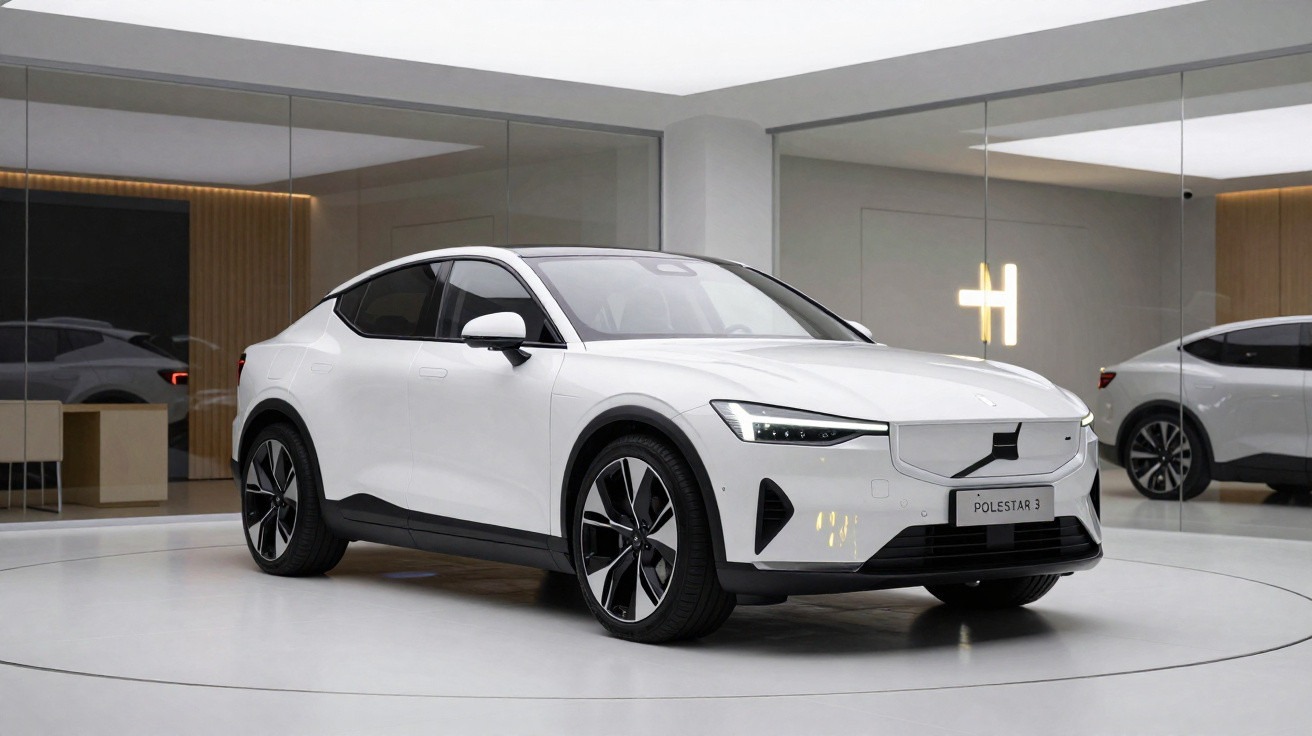
Third time lucky? The Polestar 3 has no shortage of strengths, but its German rivals are relentless.
Seven years after Polestar became independent from Volvo, its results have not exactly shone, though the manufacturer remains confident about what lies ahead. The Polestar 3 may well be the model capable of reversing its recent fortunes.
Yet the launch of this all-electric SUV could scarcely have been more troubled. Sharing almost everything with its Volvo EX90 “cousin”, it too saw its arrival delayed by several months because of software issues.
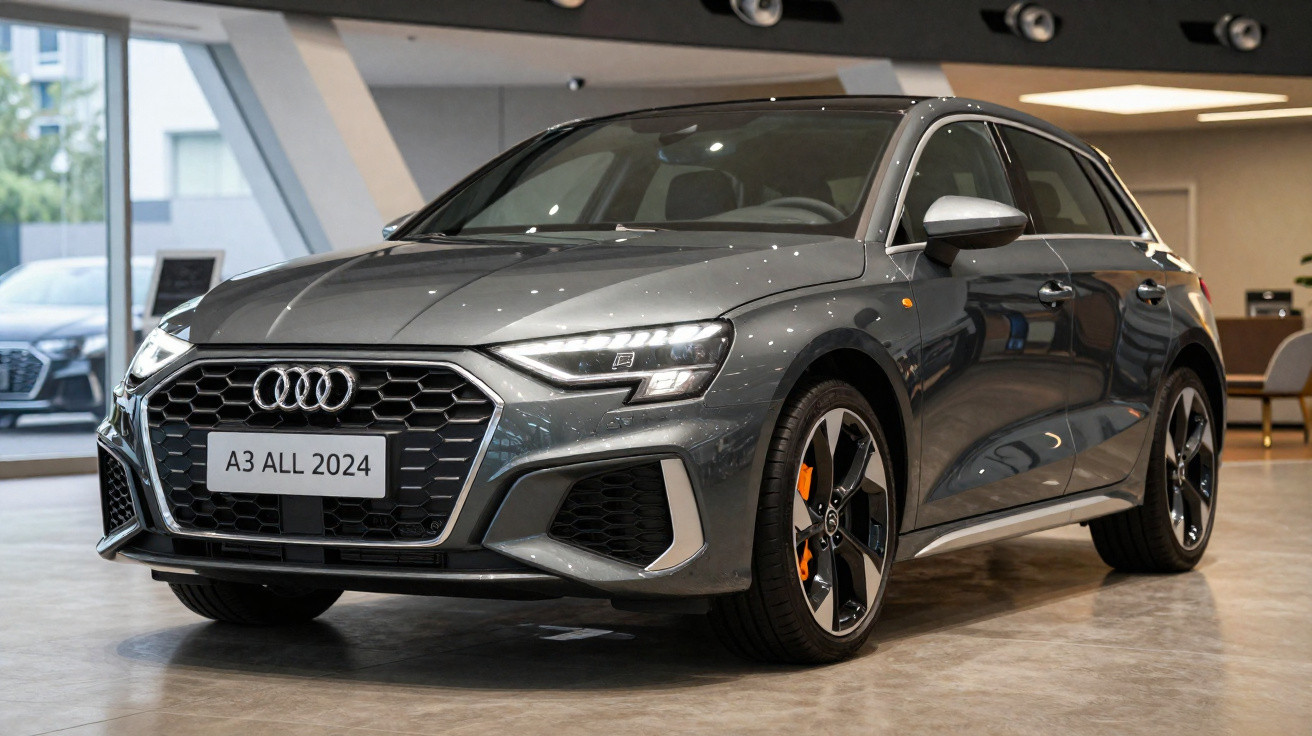
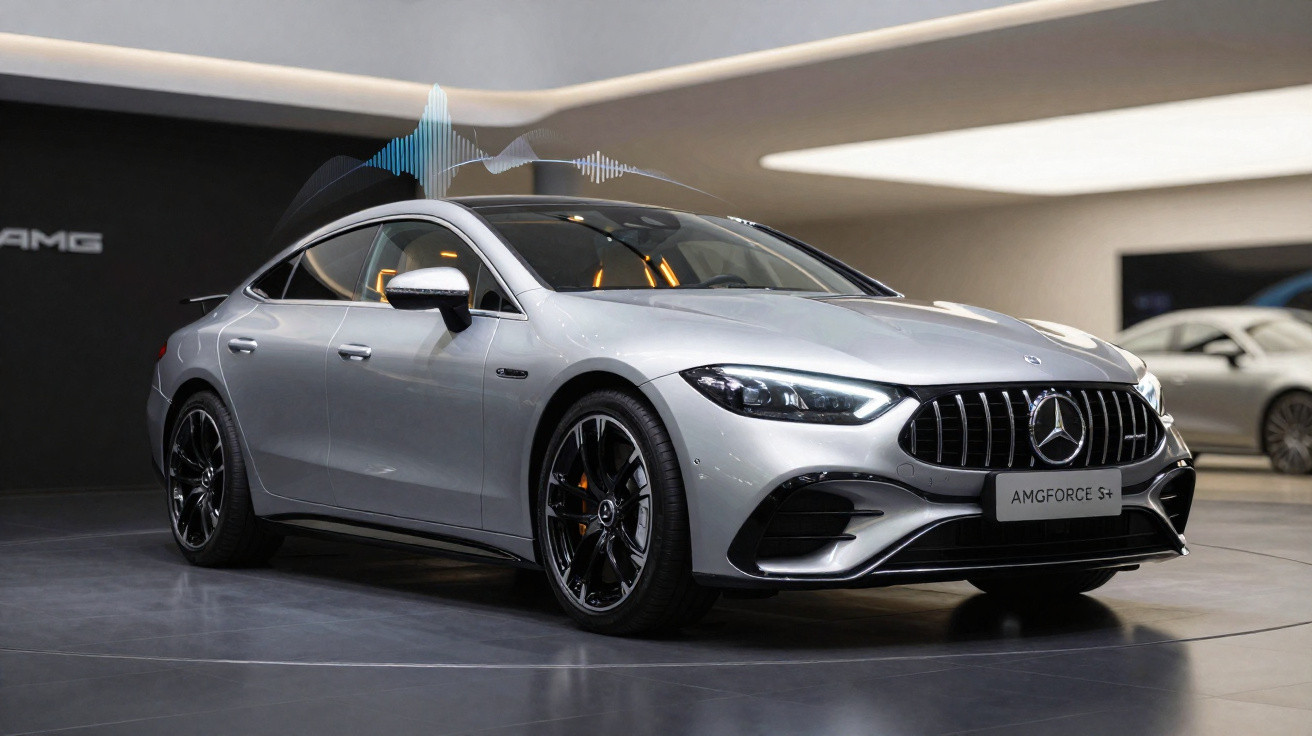
It is now ready to take on a fiercely contested segment. When asked which rivals this electric SUV is targeting, the brand’s executives have an immediate answer: “Porsche Cayenne, BMW iX, Audi Q8 e-tron and Mercedes-Benz EQE SUV”.
Is it up to the task?
This is no easy challenge. It faces models with outstanding dynamic ability - the Cayenne, despite not yet being available as a fully electric model, which is expected in 2026 - as well as more aspirational alternatives in the remaining contenders. Still, this is Polestar’s ambition.
To support such a bold target, Scandinavian engineers have fitted the Polestar 3 with two clutches on the rear axle, enabling genuine torque vectoring rather than a simulated effect created through selective braking-system intervention.
The system is intended to make the rear of the SUV contribute through corners, encouraging it to rotate around its own axis while improving grip, traction… and enjoyment.
Further evidence of this electric SUV’s strong technical specification is the chassis of the Performance version we drove, which comes as standard with two-chamber air suspension and electronically controlled adaptive damping.
As the 3 Performance, it also delivers 380 kW (517 hp) and 910 Nm of torque, rather than the 360 kW (489 hp) and 840 Nm offered by the version without this “extra”.
Smaller than the EX90
Although it uses the same SPA2 platform as the EX90, the Polestar 3 is shorter (-13 cm) and lower (-13 cm) than its Volvo relative, while retaining the same 2.985 m wheelbase.
The shorter body is explained by the lack of a third row of seats, while its considerably lower height gives it proportions that move away from the Volvo’s more formal image and create a much more dynamic appearance.
Interior highs and lows
Its wheelbase of almost three metres, however, helps account for the generous rear legroom.
With no central tunnel intruding into the cabin, rear passengers also benefit from greater comfort and freedom of movement.
Headroom is also surprising, particularly given the lower exterior height, although the rear seats sit lower than usual. The theatre-style layout now found in many cars, with the second row positioned higher than the first, is absent from the Polestar 3.
Up front, the seats offer enough lateral support to hold occupants in place without “strapping” them in. The square control on the outer side of each seat for electrically adjusting the seating position is wonderfully intuitive. Using these controls becomes almost addictive.
A deep storage compartment sits between the front seats, along with two cupholders, a wireless mobile-phone charging tray and USB ports.
Boot capacity, by contrast, is one of its weaker points. It reaches only 484 litres, including the space beneath the floor. This figure is below that of the much smaller BMW iX1 (500 l), and is also lower than those of rivals such as the Mercedes-Benz EQE SUV (520 l) and Audi Q8 e-tron (631 l). There is some compensation in the form of a 32-litre front boot, where, for instance, the battery-charging cables can be stored.
From the driver’s seat, the steering wheel has a small diameter and features several capacitive, touch-sensitive buttons, but controls for the Adaptive Cruise Control following distance and audio volume are missing.
Sound volume is adjusted through the sole physical control beneath the central screen, meaning everything else must be found in menus and submenus - far from ideal for anyone who needs to keep their attention on the road.
It helps that the virtual buttons assigned to the main functions are sufficiently large to be selected easily while driving, without becoming too distracting.
The door mirrors and steering wheel can only be adjusted through the central touchscreen, one of Polestar’s particular quirks. However, their position settings can be stored in the driver profile, saving time and simplifying the process.
Polestar 3 technology and quality
The central display shows that Polestar has developed bespoke graphics to distinguish itself from Volvo, while also using the intuitive Android Auto system, which the Scandinavian manufacturers were the first in the world to adopt in their cars.
The screen is supported by a new NVIDIA-powered brain. There is also a 9.5-inch head-up display, helping the driver keep the most relevant information in view as it is projected “onto the road”.
Build quality is robust and confidence-inspiring, although the use of recycled materials affects the final perceived quality of the trim, which feels less soft to the touch than is normally expected in this segment. The synthetic leather, on the other hand, is very pleasant to touch.
A fan of corners
The dynamic ingredients have been selected wisely, and the Polestar 3 demonstrates very good cornering traction alongside an impressively balanced overall character. Even during sudden direction changes - quick and precise enough - it remains predictable and progressive, without catching the driver out.
The even weight distribution between both axles and rear tyres that are wider than the front ones also play their part, as does the torque-vectoring system mentioned earlier. It also helps disguise the enormous 2670 kg weight. More experienced drivers may even notice greater torque being sent to the outside wheel in a bend, allowing the chosen line to be followed more easily.
On a series of tight corners tackled at a more spirited pace, the Polestar 3 approaches its limits without matching the Cayenne chassis’s exceptionally high level of competence, but it remains worthy of praise.
The two-chamber air suspension controls body movements effectively, allowing the necessary balance between comfort and stability, while offering three different ride heights. Its damping is electronically adjusted every two milliseconds.
A final word for the brakes, supplied by the highly regarded Brembo. They do not initially feel especially powerful, but once accustomed to the deceleration they produce, they prove easy to modulate and progressive.
Fast? Yes
There is no shortage of pace or speed, with 0 to 100 km/h taking 4.7 seconds. Its 210 km/h electronic speed limit is surprising for a “child” of Volvo-Geely, but it underlines Polestar’s sporting ambitions. Volvo, after all, has limited all of its cars to 180 km/h.
Instant acceleration is a constant in any electric car, but it is less common for it to be managed with such judgement. That is what happens in the Polestar 3, which avoids creating the sensation of sitting on the back of a terrified bull charging forward. Useful, considering there is more than 900 Nm of torque to deal with…
High consumption, but…
During part of the mountain-road drive, we used the right-hand pedal somewhat more enthusiastically in Performance mode, naturally pushing consumption towards 27 kWh/100 km - well above the claimed average of 22.1 kWh/100 km.
Switching to Range mode means the front axle takes care of propulsion while the rear motor “hibernates”, enabling the battery’s 111 kWh gross capacity (107 kWh net) to get us closer to the stated maximum range of 561 km.
When charging, the Polestar 3 is not the market’s new benchmark for power and speed, but it performs very well at 250 kW, especially considering its 400 V electrical system. Some rivals, including others within Geely, the group to which Polestar belongs, already operate at 800 V.
A heat pump is fitted as standard to help optimise the durability of the prismatic lithium-ion battery cells supplied by CATL, the world’s largest manufacturer of batteries for electric cars.
Starting from what price?
The Polestar 3 is already available in Portugal, with pricing structured as follows:
For this Polestar 3 Long Range Dual Motor Performance, the price is nevertheless €10,000 less than the Audi SQ8 e-tron and substantially lower than directly comparable models such as the Mercedes-AMG EQE SUV 43 4MATIC (€125,000) or BMW iX xDrive50 (€135,490).
Alternatively, in the segment below, there is a difficult-to-ignore proposition, also because of its focus on driving and dynamics: the new Porsche Macan 4S. Although smaller inside and out, it is very close to this Polestar in terms of power (516 hp), performance (0 to 100 km/h in 4.1 seconds), range (up to 606 km) and price (€94,000).


Comments
No comments yet. Be the first to comment!
Leave a Comment