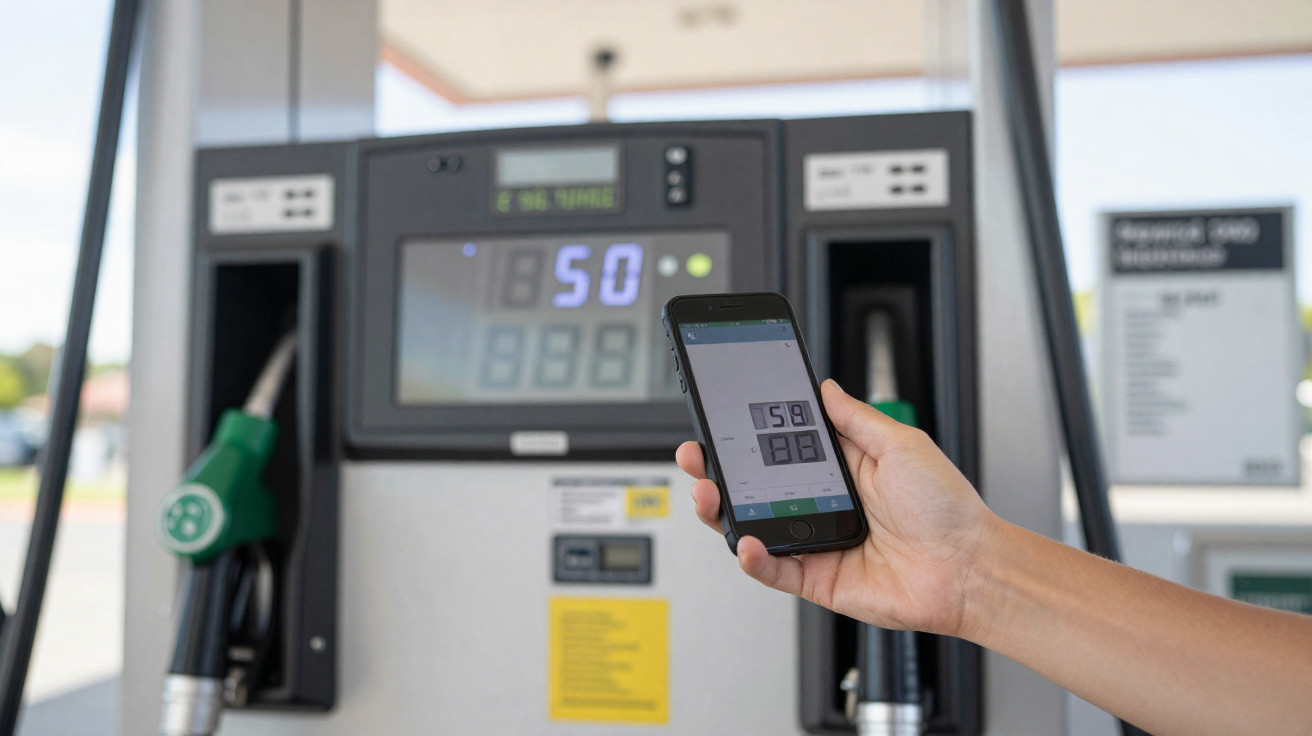
A cheap fuel price shown online is no use if it has disappeared by the time you reach the forecourt. That is the everyday problem behind fuel-price reporting schemes: drivers need information that is close enough to the price on the pump to make a worthwhile comparison.
However, a headline claiming a new 30-minute rule and $5,000 fines needs careful reading. Australia does not have one single fuel-price reporting system covering every state and territory, and the draft claim does not identify the regulator, legislation or location involved. Drivers and retailers should therefore treat the specific deadline and penalty as something to verify with the relevant Australian authority, rather than assuming it applies nationwide.
The price on the pump before you begin fuelling is the price that matters most. An app or comparison site is a useful guide, not a substitute for checking it.
What a prompt fuel-price reporting rule can do
Where a state or territory requires fuel retailers to report price changes, the purpose is normally to improve the usefulness of official price-checking tools. A short reporting window can reduce the time during which a website or app displays a price that no longer matches the forecourt.
Such schemes may cover fuels including:
- regular unleaded petrol;
- premium unleaded petrol;
- diesel;
- LPG, where available;
- other vehicle fuels, depending on the local scheme.
The precise requirements matter. A retailer may have different obligations depending on its location, the fuel it sells and the reporting platform used. Deadlines, exemptions, technical-failure procedures and enforcement powers should be checked in the official guidance for that jurisdiction.
A reporting rule is about the accuracy and timing of published information. It does not, by itself, set a maximum pump price or require every customer to pay the same amount. Loyalty offers, fuel cards, supermarket discounts and payment-method conditions can affect the final price paid.
Why the claim of a $5,000 fine needs checking
Maximum penalties make attention-grabbing headlines, but they do not tell the full story. A fine may relate to a particular offence, apply only in one jurisdiction, or depend on factors such as repeated non-compliance and whether a business followed the required process after a technical fault.
The $5,000 figure in this headline is also clearly an Australian-dollar figure. It is not a UK penalty and does not indicate that British filling stations are subject to the same reporting rule.
Before repeating or relying on a claim about a deadline or fine, establish:
- the Australian state or territory concerned;
- the name of the fuel-price scheme or regulator;
- the date the requirement took effect;
- which fuel grades and retailers are covered;
- when the reporting period starts;
- whether there is a formal process for reporting system failures;
- whether the stated amount is a maximum penalty, an infringement notice or something else.
For retailers, this is more than a technical distinction. A policy based on an unverified headline could lead to the wrong procedures being put in place.
Why accurate prices matter to motorists
Fuel prices can move quickly, particularly where several service stations compete along the same route. If a listed price is old, a driver may make a special journey only to find that the saving has vanished.
This is particularly frustrating when:
- the tank is low and there is little flexibility to shop around;
- someone is driving in an unfamiliar town or on a long trip;
- prices are changing rapidly in a local cycle;
- a household is filling a larger vehicle;
- a small business is buying fuel for several vehicles.
UK motorists will recognise the habit of comparing supermarket forecourts, independent stations and roadside prices. Australia has fuel-price tools in some areas with a broadly similar consumer purpose, but coverage and rules are not uniform across the country.
How to use a fuel-price checker sensibly
Price-comparison tools can still save time and money, provided they are used as a starting point rather than a guarantee.
1. Look for an update time
A recent time stamp is more useful than a tempting price with no indication of when it was reported. If the listing seems unusually cheap, be especially cautious.
2. Compare the same grade
Check that you are comparing the correct fuel. Regular unleaded petrol, premium petrol and diesel are not interchangeable merely because they appear in the same search results.
Use the grade specified in the vehicle handbook. Choosing premium fuel when it is not required may cost more without providing a useful benefit; using an unsuitable fuel can create problems.
3. Check the pump before fuelling
Read the price per litre on the pump for the nozzle you intend to use before inserting it into the vehicle. If it differs from an app, website or roadside sign, ask a member of staff to clarify the position before you start.
4. Count the cost of the detour
A few cents per litre can sound worthwhile, but a long diversion uses fuel and time. Heavy traffic, parking constraints and the risk of reaching the station after a further price change can erase a small saving.
5. Keep a clear record if needed
If a published price appears materially different from the pump price, note the site, location, date, time and fuel grade. A screenshot of the listing and a photo of the pump display, taken safely and without obstructing others, may help when making an enquiry with the operator or relevant regulator.
What forecourt operators should have in place
Any reporting requirement needs a practical routine, not simply a reminder pinned in the office. Price changes can happen during busy periods, overnight or when a reporting system is unavailable.
A robust process may include:
- giving a named role responsibility for price reporting;
- ensuring pump, roadside-sign and digital-listing prices are checked against one another;
- recording when a price changed and when it was submitted;
- confirming whether the reporting platform accepted the update;
- training staff to escalate mismatches quickly;
- documenting what to do during an internet, software or equipment failure.
An automated feed can reduce errors, but it should still be monitored. Businesses should check their own regulator’s guidance before deciding who is responsible when a third-party provider submits data on their behalf.
Common mistakes when comparing petrol prices
Most poor fuel-buying decisions are caused by small oversights rather than anything more complicated.
- Relying on an old search result: search previews can show outdated information.
- Missing a condition: a low advertised price may depend on a membership, voucher, payment card or purchase threshold.
- Comparing different grades: the cheapest figure on screen may not be for the fuel your vehicle needs.
- Ignoring site access: opening hours, card-only payment or vehicle-height restrictions can make a station unsuitable.
- Chasing a tiny saving: a lengthy detour can cost more than it saves.
- Assuming the roadside board applies to every nozzle: always check the pump display.
- Running the tank very low: waiting for a better price can leave you with fewer safe and convenient choices.
Safe fuelling comes before saving money
Do not let a price comparison distract from basic forecourt safety. Switch off the engine, do not smoke or use any naked flame, and follow the instructions displayed at the site. Keep mobile-phone use to a minimum while handling fuel, particularly if the station’s rules require it.
Avoid re-entering the vehicle while fuelling where possible. If you do, touch a metal part of the vehicle away from the fuel filler before handling the nozzle again, to reduce static-electricity risk. Clean up minor drips only as directed by the site, and alert staff promptly to any significant spill.
If you put the wrong fuel into a vehicle, do not start the engine or turn on the ignition. Tell forecourt staff and arrange suitable recovery assistance. Running a vehicle after misfuelling can cause serious and expensive damage.
A practical approach for drivers
Rather than chasing every change, check nearby prices before the tank is close to empty, compare a small number of convenient options and choose a sensible station. Then confirm the grade and price at the pump before filling up.
Prompt reporting rules can make official fuel-price tools more useful, but only if the particular scheme, deadline and penalty are properly established. The sensible lesson for motorists is simple: use price information to narrow the choice, check the forecourt price, and do not make an inconvenient or unsafe journey for a marginal saving.
















Comments
No comments yet. Be the first to comment!
Leave a Comment