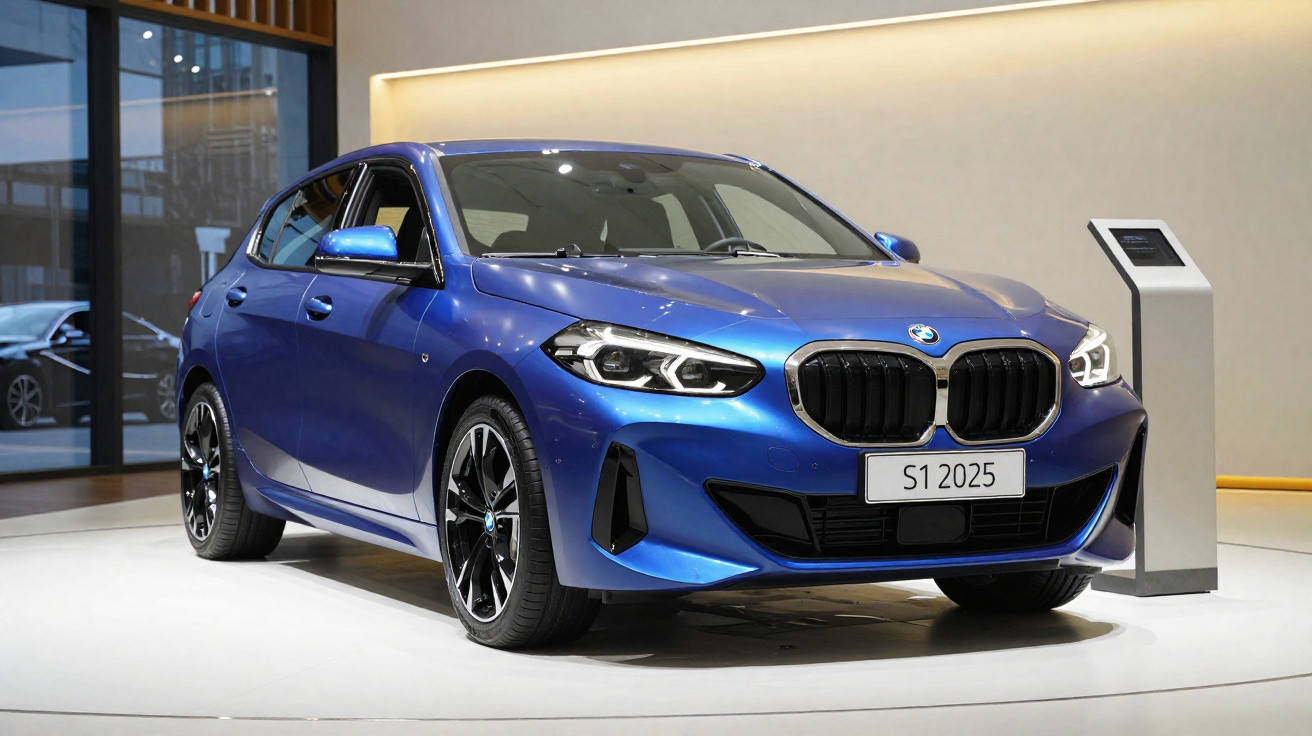
BMW says the 1 Series (2025) is an all-new generation, even though at first glance it may appear to be little more than an update.
The premium compact segment is essentially a European stronghold, as demonstrated by the fact that BMW sells four out of every five 1 Series units on this continent.
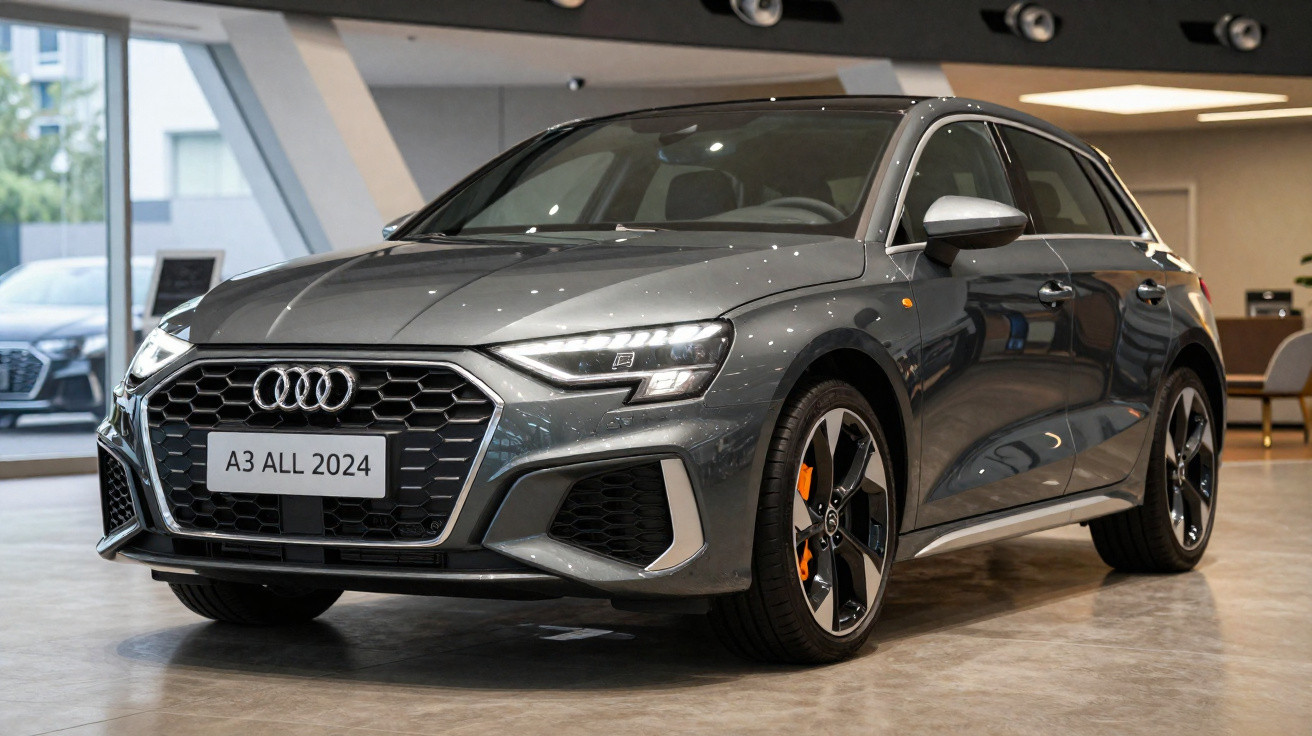
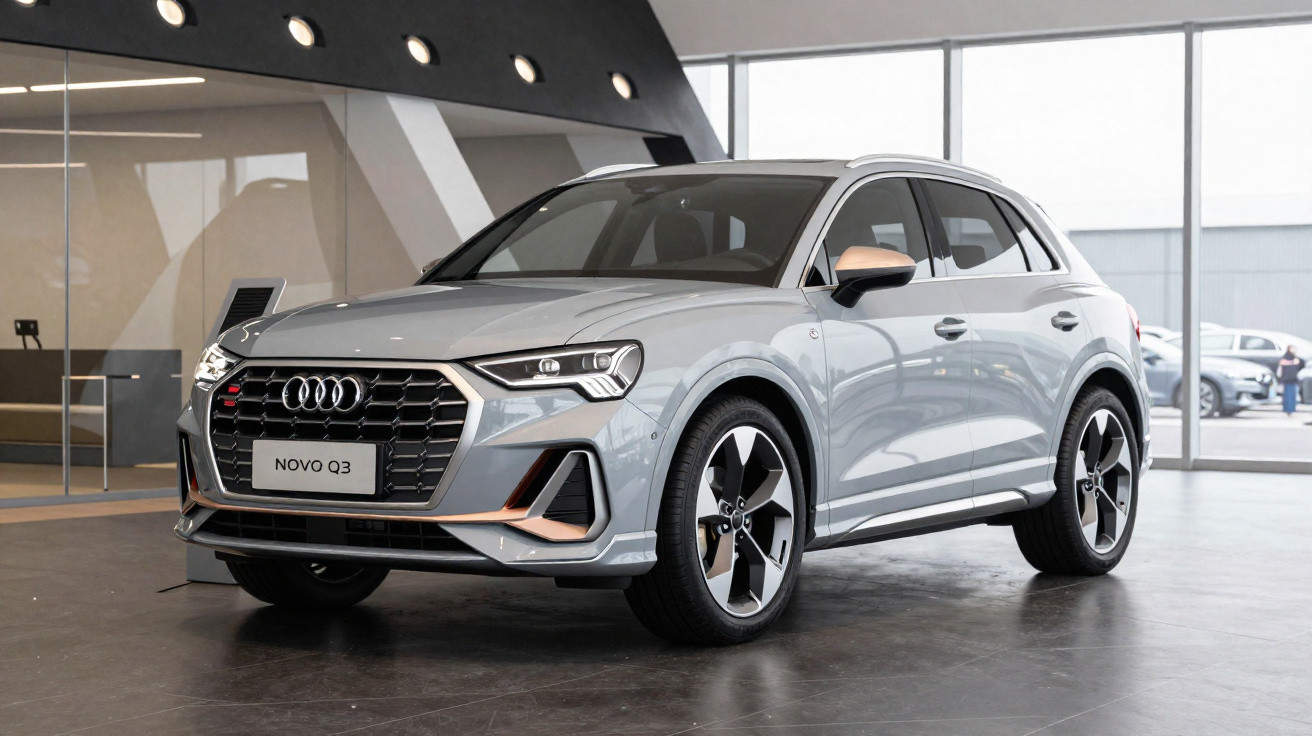
It is one of the few premium segments worldwide in which Mercedes-Benz and BMW are not the leaders. That position instead belongs to Audi, which pioneered the category when it launched the first A3 in the 1990s and still tops the sales chart.
The 1 Series is not far behind, however, taking second place in Europe during the first half of 2024. It has also delivered strong commercial results throughout its history, with more than three million registrations since the first generation arrived in 2004; this is the fourth generation.
Larger outside, not inside
BMW maintains that the new 1 Series is far more than an update of the generation it replaces. It has even been assigned a new code, F70, rather than the previous model's F40. It retains the same platform, while gaining slightly in length - 42 mm, to 4,361 mm - and height - 25 mm, to 1,459 mm. Width remains at 1,800 mm, as does the 2,670 mm wheelbase.
On the outside, the relatively restrained grille stands out, positioned lower down and with the option of an illuminated surround for the twin kidneys instead of the previous chrome trim. The headlights are LED as standard.
Matrix LED headlights are available as an option. Their diode matrix allows the individual light beams to be controlled, improving illumination while preventing glare for other drivers.
At the rear, the exhaust outlets are hidden - a bridge towards a future made up solely of electric cars - except on the sportiest M135 version. This model displays four tailpipes, two on each side, specifically to emphasise its character.
Inside, there is no increase in available space, although four occupants can travel in considerable comfort. The fifth passenger, in the rear centre seat, will be more restricted, both because that seat is narrower and because they must contend with a substantial central tunnel in the floor.
For a rear passenger measuring 1.80 m tall, there are two fingers' worth of clearance between their head and the roof, and seven fingers between their knees and the front-seat backrests, which have no storage pockets.
The front and rear door bins are both generously sized and divided into compartments, but they have no soft lining. Place a harder item there, such as keys or a mobile phone, and it will be heard moving around.
The same is true of the glovebox, which is also finished in bare plastic. That makes little sense in a premium model, and such trim details are identical to those found in more price-conscious alternatives.
No animals were harmed in making this car
The seats, which provide sufficient lateral support in both the cushion and backrest, are trimmed as standard in a recycled textile material called Econeer, made from water bottles. Customers may alternatively choose imitation leather, called Venganza, with Alcantara in the centre. There is no real leather inside.
The cabin also features two curved-effect digital displays: a 10.25-inch instrument panel and a 10.7-inch infotainment screen. It uses the newest generation of the operating system, OS9, and, for the first time - alongside the new X3 - the latest-generation iDrive controller.
Apple CarPlay and Android Auto can be connected wirelessly, while the 1 Series can remain permanently online through a 5G-speed SIM card.
Those keen on information and wanting the most relevant details directly in their line of sight can opt for a head-up display with augmented-reality features. A BMW Digital Premium subscription allows third-party apps to be downloaded and used.
Petrol and diesel
The new BMW 1 Series range comprises six petrol and diesel powertrains, with and without mild-hybrid technology. Every version is paired with a seven-speed dual-clutch automatic gearbox; there is no manual transmission.
- 116 - petrol, 1.5-litre, 3-cylinder, 122 hp; front-wheel drive;
- 120 - petrol, 1.5-litre, 3-cylinder, 170 hp (combined); 48 V mild hybrid (electric motor with 20 hp/55 Nm and a 0.96 kWh battery); front-wheel drive;
- 123 xDrive - petrol, 2.0-litre, 4-cylinder, 218 hp (combined); 48 V mild hybrid; four-wheel drive;
- 118d - diesel, 2.0-litre, 4-cylinder, 150 hp; front-wheel drive;
- 120d - diesel, 2.0-litre, 4-cylinder, 163 hp (combined); 48 V mild hybrid; front-wheel drive;
- M135 xDrive - petrol, 2.0-litre, 4-cylinder, 300 hp; four-wheel drive.
The chassis has also received revisions and additions. The most significant is the adoption of frequency-selective dampers as part of the M Sport package, which also includes suspension lowered by 8 mm and sportier steering. These dampers contain a valve that opens under more severe impacts, allowing a greater flow of oil through to create a softer, more cushioned response and improve comfort for 1 Series occupants.
When the road surface is smoother, their response becomes firmer, favouring stability during sporty driving. The M135 is the only version to receive this equipment as standard. It also has a mechanical limited-slip differential, optimising traction from the front wheels, particularly through bends.
More demanding drivers can also purchase the M-Technic package, comprising thicker anti-roll bars, structural reinforcements, special dampers, 19-inch forged wheels and higher-performance M Compound brakes.
On the road in the BMW 120
The drive around Munich took place in the 120 version with the M Sport package, on a route combining motorway sections and country roads.
The first conclusion was the chassis's very good balance in this configuration. It allows the car to be effective through corners when the pace is increased, without becoming uncomfortable on rougher road surfaces.
Stephan Keller, Head of Driving Dynamics, acknowledges that “there were some criticisms regarding the understeer tendency of the previous 1 Series and, therefore, the caster angle at the front axle was increased and a thicker anti-roll bar was used at the rear axle”.
The steering is very direct, requiring 2.4 turns from lock to lock, and precise. However, given the 1 Series' dimensions and this version's moderately sporting character, a slightly smaller steering-wheel diameter than 36 cm would be preferable.
The driver also has a paddle on the left-hand side, labelled Boost, for situations requiring immediate extra power. As Bernd Ofner, project director for the new 1 Series, explains: “for 10 seconds and with a single press of a control, the car has its powertrain in its sportiest configuration and the gearbox in its sportiest programme, S”.
The 120 is far from slow, as shown by its ability to complete the 0–100 km/h sprint in just 7.8 seconds and reach a top speed of 226 km/h.
Its response is also sufficient for most users even from very low revs. This is aided both by the dual-clutch gearbox and the small electric motor, which provides an initial push when the combustion engine's torque is not yet at the command of the right foot.
Only at high throttle loads and above 4,000 rpm does its three-cylinder nature become more apparent. In terms of intrusive noise, though, the more noticeable sound was aerodynamic noise from the right-hand exterior mirror.
The brakes, with ventilated discs front and rear, always responded promptly and showed little tendency to fade.
The 160 km test route ended with an average of 7.4 l/100 km, clearly above the stated 6 l/100 km combined WLTP figure. The increase is normal: the route included motorway sections with no speed limit and more winding roads that encouraged faster driving than the homologation tests.
What is the price?
Prices for the BMW 120 start at €39,200. However, the most affordable BMW 1 Series is the 116, which can already be ordered from €33,500.

Comments
No comments yet. Be the first to comment!
Leave a Comment