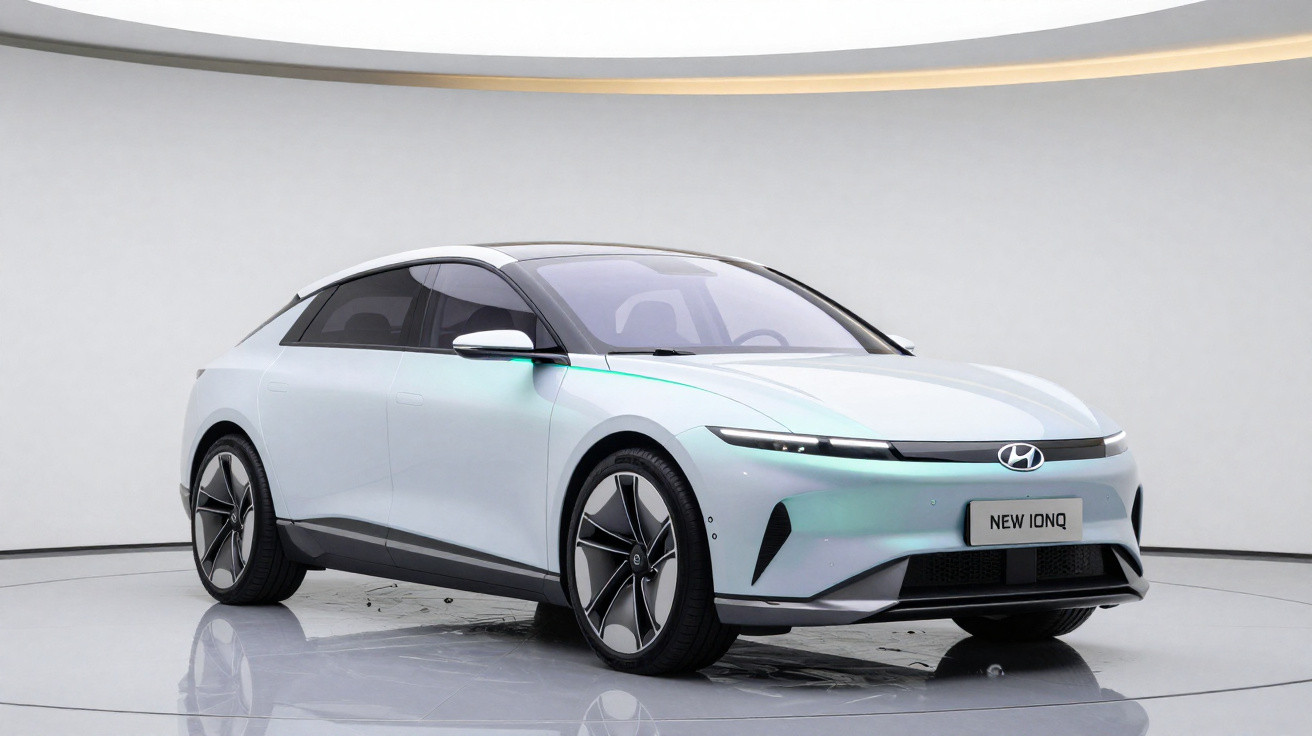
Hyundai electric concept at the Munich Motor Show
Hyundai is preparing to unveil a major new development at the forthcoming Munich Motor Show, taking place from 9 to 14 September: the concept for a new electric model.
Very little is currently known about the upcoming car, although all signs suggest it will sit between the Hyundai Inster, in the A-segment, and the Hyundai Kauai, in the B-segment. Its name remains under wraps, but if it uses the Electric Global Modular Platform (E-GMP), shared with the IONIQ family, it could be called the IONIQ 2, according to Automotive News Europe.
Pleos Connect and production plans
The new Hyundai will also be the first model to introduce the Pleos Connect infotainment system, which is based on the Android Automotive operating system. Representing the South Korean brand’s next-generation connectivity offering, the system is expected to be fitted to around 20 million vehicles by 2030.
If the limited forecasts available prove accurate, Hyundai’s new fully electric model will be built at the brand’s Turkish factory alongside the Bayon. This suggests that the newcomer will be an SUV, or at least have comparable dimensions.
Despite the secrecy surrounding the project, Hyundai Europe chief executive Xavier Martinet has revealed that the manufacturer is developing a fresh range of compact electric cars at its European R&D centre in Rüsselsheim, Germany. “There are still many new developments on the way,” the executive said.
When will the Hyundai electric model arrive?
The new electric car is expected to reach the European market in the second quarter of 2026. It is still too early to establish pricing, but predictions indicate a starting price of around €30,000. That would place it in line with its future Kia cousin, the EV2.
Its technical specifications have yet to be confirmed as well. Even so, Hyundai’s next model is highly likely to be offered with two battery choices: one using LFP (Lithium Iron Phosphate) chemistry and another using NMC (Nickel Manganese Cobalt) chemistry. Depending on the version selected, range should be between 300 and 450 km on the WLTP cycle.

Comments
No comments yet. Be the first to comment!
Leave a Comment