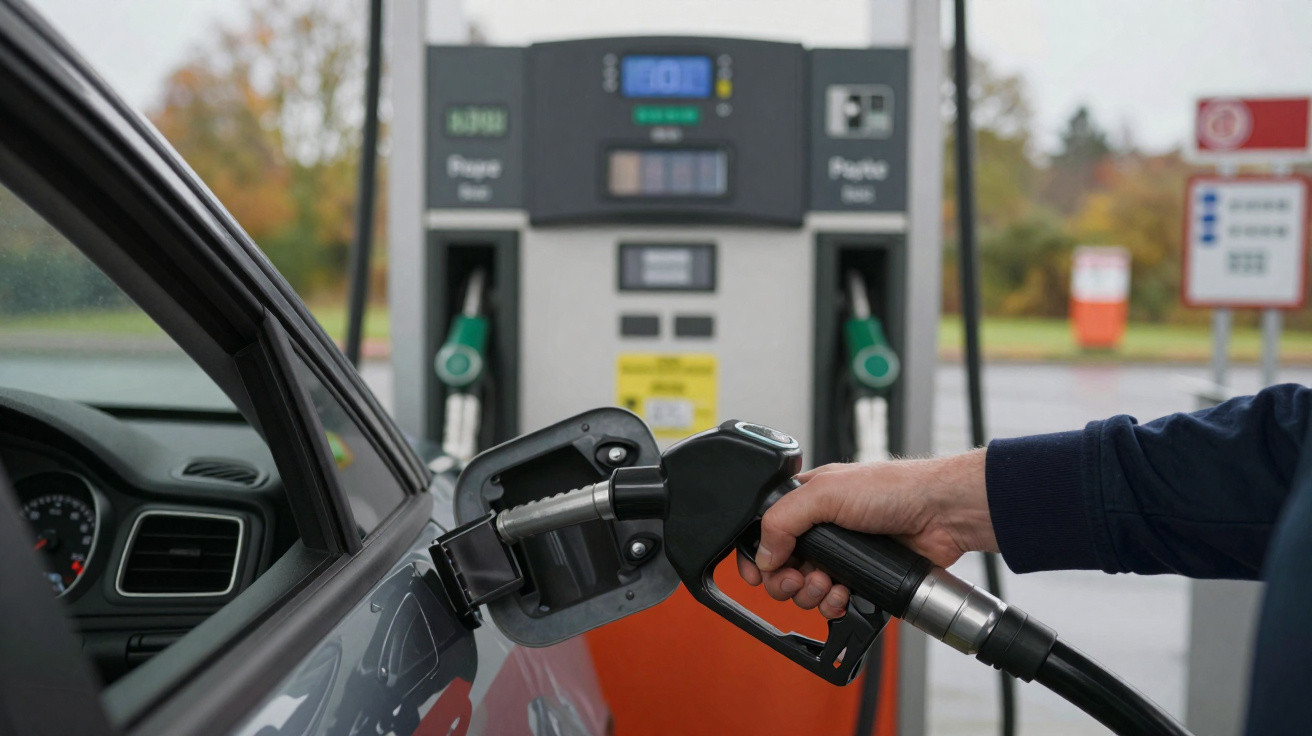
It is an irritatingly familiar dilemma: pump prices have been edging down, so you put off filling up for another day - only to find the cheapest nearby forecourt has put its price back up. Fuel prices can change direction, but no headline or chart can tell you exactly when to buy.
The useful approach is not to chase the absolute lowest price. Compare a few convenient local forecourts, keep enough fuel for unplanned journeys, and fill up when a competitive price fits your normal routine. Falling pump prices do not guarantee that the next fill will be cheaper.
A lower average price is a snapshot, not a promise about tomorrow’s forecourt prices.
Why pump prices can change direction
The price on a UK forecourt sign reflects far more than a retailer’s decision on a particular morning. Key influences include:
- crude oil prices, which are commonly traded in US dollars;
- wholesale prices for refined petrol and diesel;
- movements in the pound against the dollar;
- fuel duty and VAT;
- transport, storage, staffing and operating costs;
- local competition between forecourts.
Wholesale markets can respond quickly to concerns over oil supply, refinery outages, shipping disruption or changing expectations for global demand. That does not mean a matching change will appear at every pump immediately.
Forecourts replenish their supplies at different times and may have bought their existing stock at different prices. Some retailers may reduce prices promptly when costs ease; others may move later. The same delay can apply when costs rise.
As a result, national averages can still be declining while prices at individual sites have levelled off or started to increase. Equally, a small local rise does not prove that a wider upward trend has begun.
Watch local prices, not dramatic predictions
Nobody can reliably identify the cheapest possible day to fill up. It is more practical to look for a pattern over several days and focus on the places you can realistically use.
1. Track two or three convenient forecourts
Compare stations on routes you already use: perhaps a supermarket, an independent forecourt and another option near work or home. Make a brief note of the price per litre when you pass, or use a price-comparison service where its information is current.
After a week or two, you may spot whether one site is consistently competitive or merely slower to change its prices than the others.
2. Compare like with like
Petrol and diesel do not always move at the same rate. Their wholesale markets, demand and refinery supply can differ.
Check that you are comparing the same product, too. Standard unleaded, premium petrol, diesel and premium diesel are not interchangeable for price-comparison purposes. Use the grade recommended in your vehicle handbook unless there is a sound reason to choose another.
3. Look for a pattern rather than one change
A one-pence-per-litre movement may simply be a local adjustment. More useful signs include repeated rises at several nearby sites, or a period in which prices stop falling after a sustained decline.
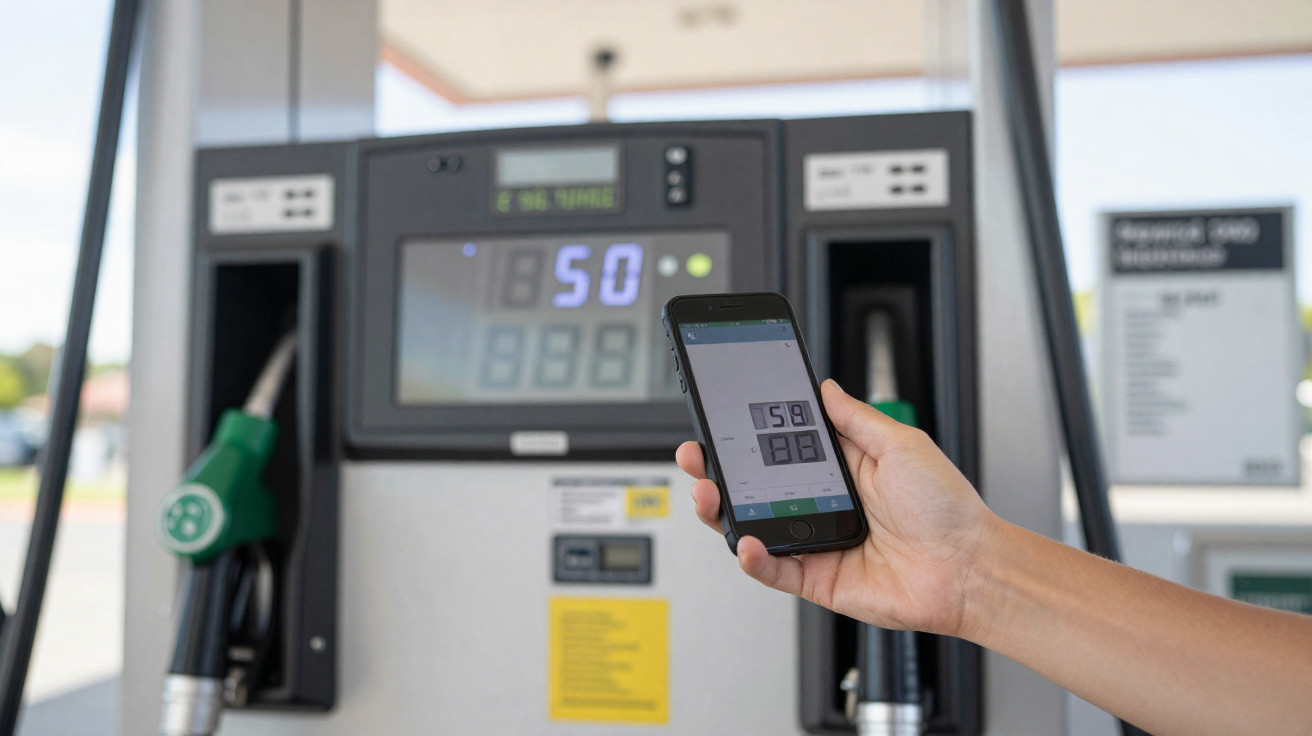
Online information can lag behind a forecourt’s displayed price, so treat an app or website as a guide and check the pump price before committing to a fill.
4. Treat motorway services separately
Motorway service stations are useful when you need them, but their prices are often not a sensible benchmark for local forecourts. If you are setting off on a long journey, filling up beforehand can give you more choice.
What wholesale prices can - and cannot - tell you
Wholesale fuel costs are useful background, but they are not the price you pay at the pump. Retailers hold stock bought at different times and face different costs. A gap between wholesale trends and local prices is therefore not, on its own, proof that any individual forecourt is overcharging.
If wholesale costs have been falling for some time while nearby pump prices barely move, it is worth checking alternatives in your area. If wholesale costs rise after a prolonged fall, it may be sensible not to delay a necessary fill purely in the hope of another reduction.
For broader context, look at updates from motoring organisations, consumer publications and official competition bodies. These are best used to understand the general direction of prices, rather than as a day-by-day buying signal.
The comparison that matters most is usually your nearest practical forecourt against realistic local alternatives.
Build a sensible refuelling routine
Running the tank very low in pursuit of a possible saving can leave you with fewer options. A simple routine is more useful than checking prices constantly.
1. Pick a refill point
Choose a level at which you normally refuel, such as around a quarter of a tank. Adjust it for your vehicle, usual mileage and whether you have a longer journey ahead.
This gives you time to choose where to stop without turning every low-fuel warning into an urgent search for the nearest pump.
2. Check prices before setting off
If you know you will need fuel that day, compare nearby prices before leaving home where possible. Use published or reported prices carefully: availability and update times vary between services and locations.
3. Calculate the real saving
A 5p-per-litre difference on a 45-litre fill saves £2.25. That may be worthwhile if the cheaper station is on your route. It is unlikely to be worthwhile if it means a special journey, extra fuel use and lost time.
4. Buy for your actual needs
If your tank is already low and a fairly priced local station is convenient, filling up is often the sensible choice. Avoid unnecessary trips simply to buy fuel early, and do not fill a vehicle solely because of speculation about a possible price rise.
Common mistakes when watching fuel prices
A few habits can make saving harder rather than easier:
- Waiting for the perfect price: a small possible saving can vanish if you later need an expensive convenience forecourt.
- Relying on national averages alone: they provide context, but your local price determines what you spend.
- Assuming every supermarket is cheapest: supermarkets can be competitive, but nearby independents may match or beat them.
- Comparing different fuel grades: always compare the same fuel type and specification.
- Driving out of your way for pennies: work out the likely saving on a full tank before making a detour.
- Letting the tank become critically low: closures, queues, roadworks or an unexpected journey can quickly remove your choice of forecourt.
- Treating one price rise as a forecast: local changes can be temporary and do not necessarily indicate a national reversal.
Cut fuel use between fill-ups
Using fewer litres is often more within your control than timing the market. Small changes can help reduce avoidable consumption, although results depend on the vehicle, traffic, weather and journey type.
- Check tyre pressures when the tyres are cold, using the settings specified for your vehicle and load.
- Remove roof bars, roof boxes and unnecessary weight when they are no longer needed.
- Accelerate and brake smoothly where road and traffic conditions allow.
- Plan ahead to avoid unnecessary idling and abrupt stops.
- Keep up with servicing and have warning lights checked appropriately.
- Combine errands when practical, rather than making several separate short trips.
- Use heating, demisting and air conditioning as needed for comfort and safe visibility; do not compromise visibility in an attempt to save fuel.
Safety and forecourt basics
Fuel is highly flammable. Switch off the engine before refuelling, do not smoke or use naked flames, and follow the instructions displayed at the forecourt. If a station asks customers not to use mobile phones while refuelling, follow that instruction.
Do not overfill the tank. If fuel is spilled, tell forecourt staff and follow their guidance. Use portable fuel containers only if they are suitable for carrying fuel, keep them secured upright in transit, and never store fuel in a home or vehicle unnecessarily.
Petrol and diesel are not interchangeable. Pause before lifting the nozzle, particularly if your household uses more than one vehicle. If you realise that the wrong fuel has gone into the tank, do not start the engine; notify the forecourt staff and seek appropriate recovery assistance.
Aim for value, not a crystal ball
A period of falling prices can be followed by a rise, but it can also continue or settle into a period of little change. The aim is not to predict every move in the oil market.
Keep an eye on a small number of nearby stations, leave yourself enough fuel to have a choice, and use the best-value forecourt on your normal route. That practical routine is more dependable than waiting for a headline to tell you the perfect moment to fill up.














Comments
No comments yet. Be the first to comment!
Leave a Comment