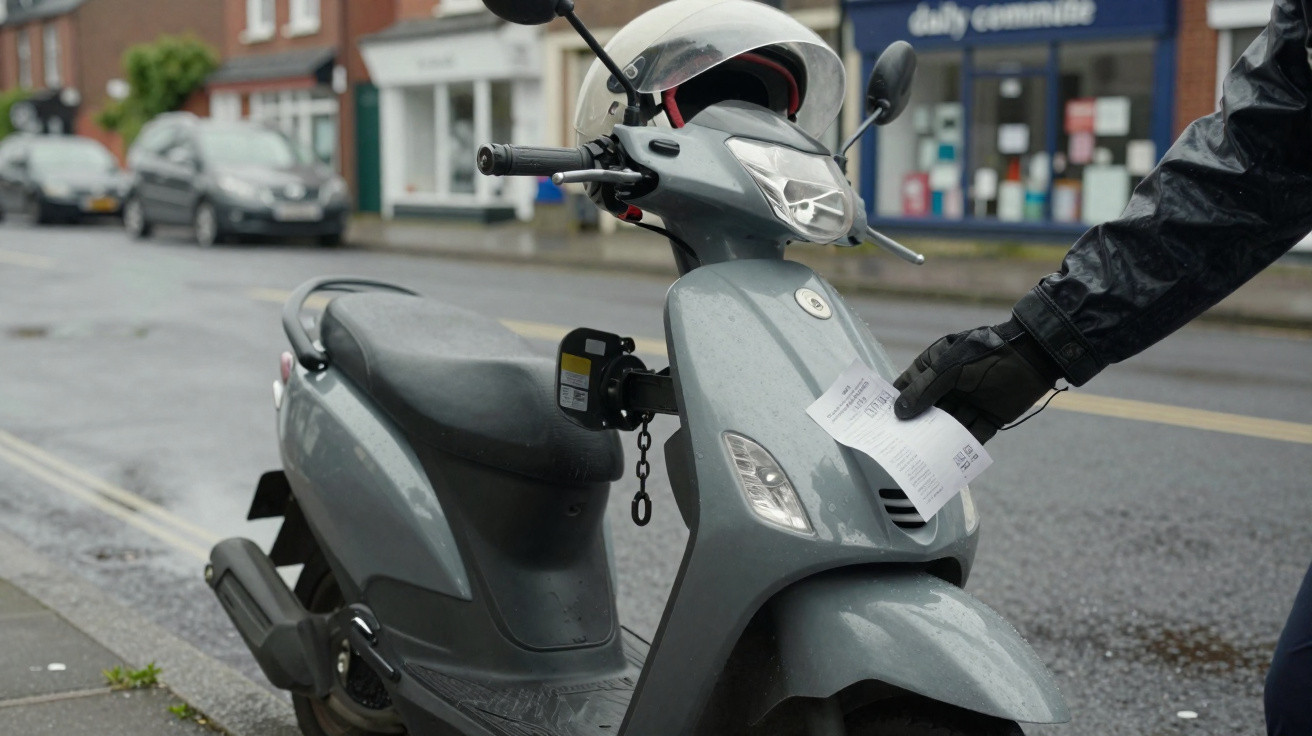
A small scooter can seem like a straightforward answer to expensive short car journeys, slow urban traffic and the struggle to park near work or the station. The Zontes 125 X is being promoted in some markets as a well-equipped 125cc scooter with a low headline price and very low fuel use.
UK buyers should pause before taking either claim at face value. The €2,999 figure is not a confirmed UK on-the-road price, and the 1.2L/100km claim should not be treated as an established real-world figure for this model. More importantly, a full UK car licence does not normally let someone ride a 125cc scooter without completing Compulsory Basic Training (CBT).
A scooter may cut the hassle of local travel, but fuel economy is only one part of the cost. Training, insurance, security, servicing and suitable riding kit matter just as much.
What is being claimed for the Zontes 125 X?
The Zontes 125 X is presented as an automatic 125cc scooter intended primarily for town and suburban use. Its appeal is the combination of a compact, lightweight format with equipment more commonly associated with more expensive machines.
Specifications circulated for the model include a liquid-cooled, four-stroke single-cylinder engine, continuously variable automatic transmission and peak power of up to 11kW. That is the maximum power normally permitted for a machine ridden on an A1 motorcycle licence.
Depending on the market and final specification, advertised equipment may include:
- dual-channel ABS;
- traction control;
- LED lighting;
- a colour TFT screen;
- under-seat storage;
- a lightweight aluminium frame.
Do not assume that every item advertised abroad will be fitted to a UK-supplied scooter. Before placing a deposit, ask for the exact UK specification in writing, including safety equipment, warranty cover and parts availability.
A quoted wet weight around 108kg would make the scooter relatively manageable when manoeuvring at low speed. However, a specification-sheet number cannot tell you whether the seat height, handlebar reach or balance suit you. Sit on the scooter, preferably with your normal riding footwear, before committing.
The advertised price is not a UK price
A price of €2,999 is a continental advertised figure, not evidence that the scooter costs less than £3,000 in Britain. Exchange rates change, and UK retail pricing can differ substantially even where the same model is officially available.
The final on-the-road cost can include delivery, pre-delivery inspection, registration, number plates and dealer charges. It may also depend on stock, location and whether the scooter is being imported through an official UK distributor.
Check these points with a dealer before comparing it with established alternatives:
- whether the model is type-approved and officially supplied in the UK;
- the full on-the-road price, including all compulsory charges;
- warranty length and who carries out warranty work;
- service intervals and likely servicing costs;
- availability of routine parts, tyres and body panels locally;
- the date of the first service and what it costs.
Remember to budget for ownership beyond the purchase price. Insurance for a new rider, particularly in a city postcode, can be a significant expense. You will also need security equipment, protective clothing, fuel, maintenance and, after three years, an annual MOT.
Can you ride a 125cc scooter with a UK car licence?
For most people, a car licence alone is not enough. A full UK category B car licence gives you provisional motorcycle entitlement, but you must normally complete CBT before riding a 125cc scooter on the road.
Once you have completed CBT, you can usually ride a learner-legal 125cc machine producing no more than 11kW. You must display L plates, cannot carry a pillion passenger and cannot use motorways. CBT normally expires after two years unless you pass a relevant practical motorcycle test.
To ride without L plates, carry a passenger or use motorways, you need the appropriate motorcycle entitlement. An A1 licence covers motorcycles and scooters up to 125cc and 11kW. Requirements vary according to your age and the route you take through motorcycle training, so check the current rules with GOV.UK or an approved training school.
Before buying, do these checks
- Check your driving licence entitlement. Use the GOV.UK service and make sure you understand what you are permitted to ride.
- Complete CBT with an approved training provider. Car-driving experience does not automatically prepare you for two wheels, braking technique or road positioning.
- Get an insurance quote first. Use the precise model details where possible, before paying a non-refundable deposit.
- Consider your route honestly. L-plate restrictions may make the scooter unsuitable if your regular journey requires motorway travel.
- Arrange further training. Additional post-CBT tuition can be particularly helpful before riding regularly in rain, darkness or congested traffic.
Treat the fuel figure with caution
The headline figure of 1.2L/100km is equivalent to roughly 235mpg in Imperial measurements. That is exceptionally low, and it should not be used as a guaranteed ownership figure without a clear current test method from the manufacturer.
A higher figure of 1.8L/100km has also been associated with the 125 X in published material. That converts to around 157mpg (Imperial), but it too should be treated as a quoted test result rather than a promise.
Fuel consumption varies markedly with riding conditions. Frequent rapid acceleration, steep hills, carrying luggage, cold starts, strong winds, low tyre pressures and sustained faster-road riding can all increase fuel use. A scooter used for gentle local journeys may return very different results from one used every day on exposed dual carriageways.
The useful question is not whether a brochure figure is possible in ideal conditions, but whether the scooter suits your actual route, riding style and weather tolerance.
To monitor your own consumption, fill the tank to a consistent level, reset the trip meter and record the litres needed at the next fill-up. Look at several full tanks rather than one short journey.
Think beyond the town-centre test ride
An automatic 125cc scooter can work very well for commuting across town, reaching a railway station or replacing short solo car trips. Its compact size can make permitted motorcycle parking easier to find, and automatic transmission is convenient in stop-start traffic.
It is less convincing if your normal journey includes long periods at fast A-road speeds. A modest-capacity scooter can feel busy in strong winds, while spray from larger vehicles and poor road surfaces can make wet-weather riding tiring.
Consider:
- your longest regular journey, not just the shortest;
- fast roads, exposed bridges and dual carriageway sections;
- secure parking at home and at work;
- where waterproofs, a laptop, shopping and a lock will go;
- whether you are realistically willing to ride through January rain and early darkness.
Check local parking rules too. Motorcycle parking policies vary between councils, workplaces and railway stations.
Safety kit and security are not optional extras
A legal helmet is only the starting point. For year-round UK riding, a properly fitting helmet, gloves, boots that protect the ankles, abrasion-resistant jacket and trousers, and waterproof layers are sensible essentials. Try a helmet on before buying: fit, visibility and comfort matter more than a bargain price.
Use a quality chain or disc lock as well as the steering lock, and secure the scooter to a fixed anchor where possible. Keep keys and security tags separate. Ask your insurer which security devices they recognise before declaring them on a policy.
On the road, leave extra space on wet painted markings, drain covers, diesel-contaminated junctions and fallen leaves. Small-wheeled scooters can react sharply to potholes and broken surfaces. Never ride after drinking alcohol or taking anything that affects alertness.
Common mistakes new scooter owners make
The most common error is choosing entirely on advertised price or fuel economy. A cheap scooter is not automatically cheap to own if insurance is high, dealer support is distant or parts are hard to obtain.
Other avoidable mistakes include:
- assuming a car licence is sufficient for a 125cc scooter;
- arranging insurance after paying a deposit;
- buying a helmet without confirming the fit;
- relying on the steering lock alone;
- neglecting tyre pressures, tread and brake checks;
- overestimating what under-seat storage can carry;
- riding at the same pace in rain as in dry weather;
- delaying servicing because the scooter still starts and runs.
Avoid unapproved lighting or exhaust modifications. They can create reliability, insurance and roadworthiness problems.
A practical way to judge the 125 X
The Zontes 125 X may be worth investigating if its UK price, specification and dealer support stack up. It should not, however, be treated as an automatic bargain on the strength of a euro price and an eye-catching fuel-consumption claim.
Compare the complete package with other 125cc scooters: on-the-road price, insurance quote, service costs, warranty arrangements, local dealer support, comfort and the availability of replacement parts. If possible, arrange a sit-on or test ride and make sure you can operate both brakes, move the scooter confidently and access the storage space with your usual belongings.
For local journeys, with CBT completed and proper kit bought, a light 125cc scooter can be a practical alternative to using a car for every errand. Make the decision using confirmed UK information, not a headline figure that may not apply to your journey or to Britain at all.





Comments
No comments yet. Be the first to comment!
Leave a Comment