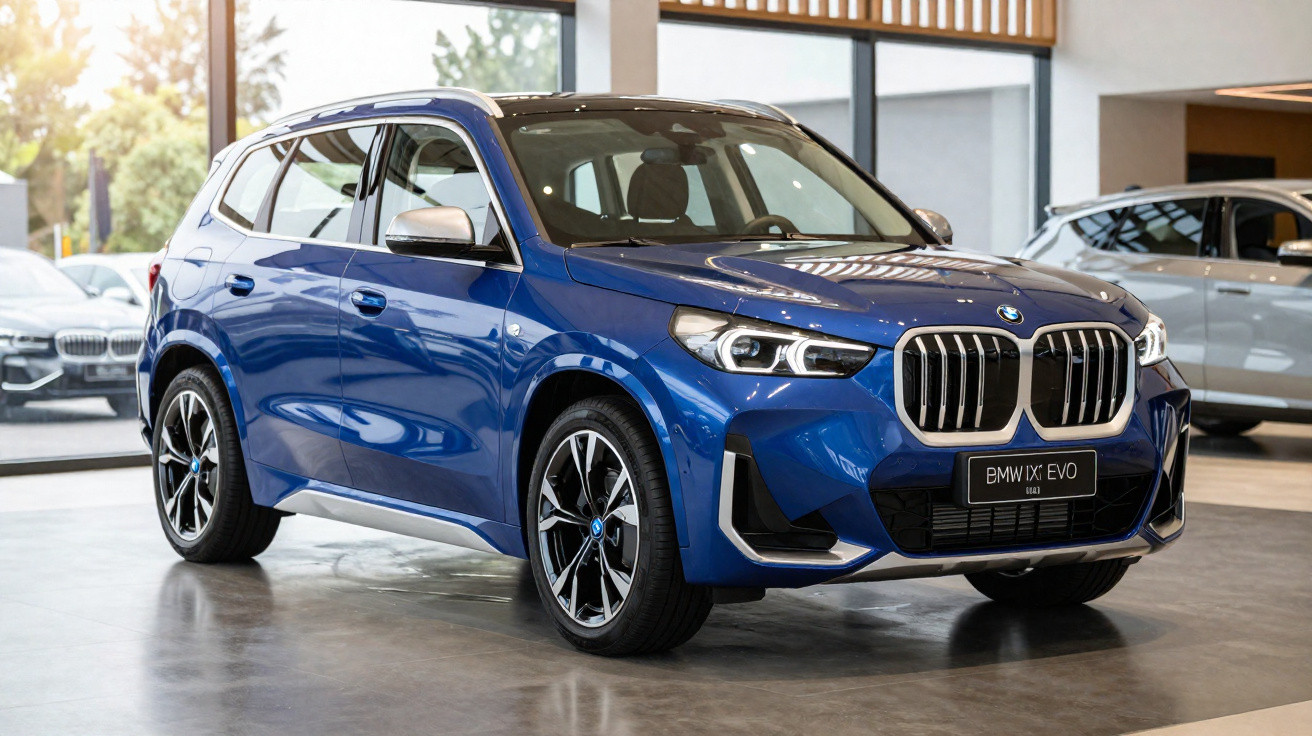
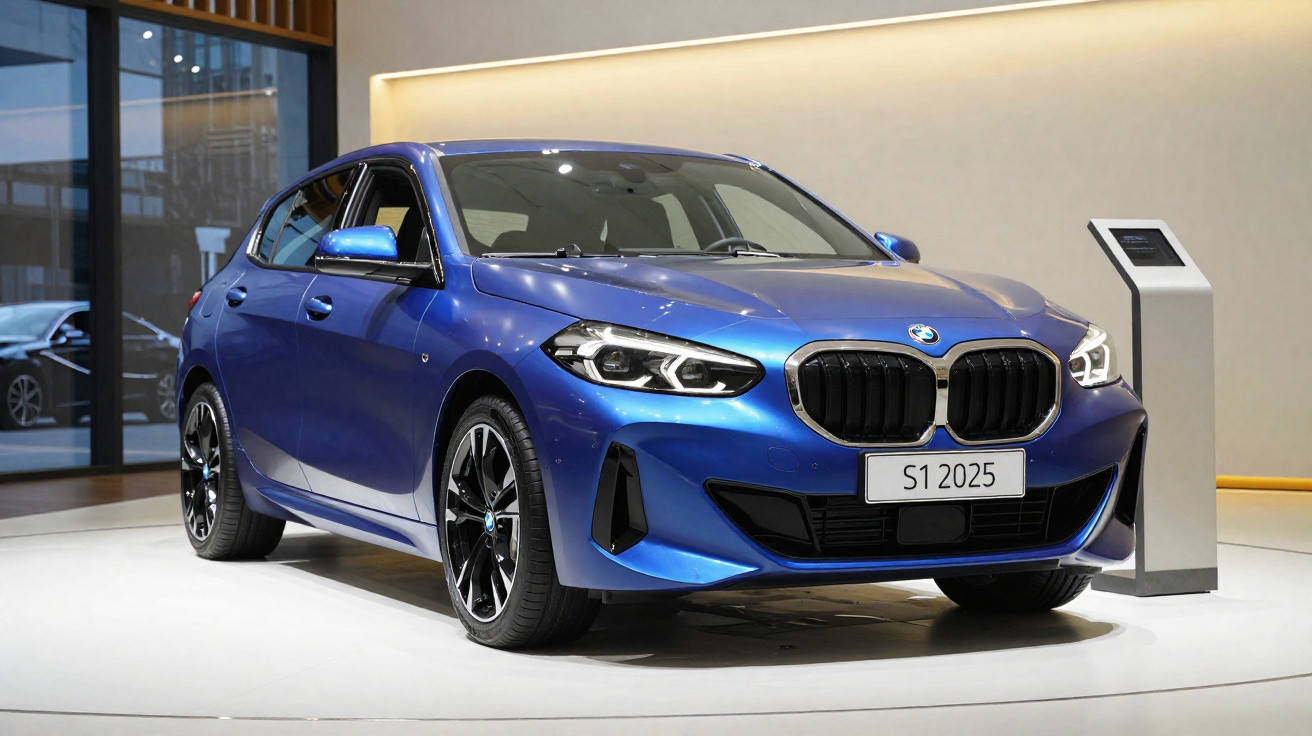
The BMW X1, the marque’s smallest SUV and also its best-selling model in Europe, has been unveiled in third-generation form. There is plenty that is new, starting with the introduction of the all-new, fully electric iX1.
Electrification is, in fact, among the key themes of BMW’s new compact SUV generation. Alongside the electric iX1, BMW has strengthened its plug-in hybrid offering with two versions offering greater range, while 48 V mild-hybrid systems have been added to the combustion-engined xDrive23i petrol and xDrive23d diesel models.
The new SUV line-up also includes the sDrive18i and sDrive18d, petrol and diesel respectively, which are the only versions with two-wheel drive. Every other X1 and iX1 model has four-wheel drive.
iX1, BMW’s new entry point into electric motoring
With BMW i3 production already scheduled to end this June, the new iX1 will take over as the Bavarian brand’s most affordable electric model. Despite that position, its initial availability solely as the xDrive30 - and it is not yet known whether this will be the only version - means it promises substantial power and performance.
The iX1 xDrive30 uses fifth-generation BMW eDrive technology and features two electric motors, one on each axle. Together, they deliver a peak output of 230 kW or 313 hp - available only temporarily through an overboost function - and maximum torque of 494 Nm.
That is enough to send the iX1 from 0-100 km/h in a brisk 5.7 seconds and on to an electronically limited top speed of 180 km/h.
The two electric motors are supplied by a lithium-ion battery positioned in the platform floor, with 64.7 kWh of usable capacity. Depending on specification, the iX1 has a maximum range of between 413 km and 438 km, while claimed energy consumption ranges from 17.3 kWh to 18.4 kWh.
As standard, the BMW iX1 comes with an 11 kW onboard AC charger, with a 22 kW unit available as an option. These allow the battery to be charged from 0 to 100% in 6 hours 30 minutes and 3 hours 45 minutes respectively.
With DC charging, the maximum charging rate increases to 130 kW, enabling the battery to go from 10% to 80% in a claimed 29 minutes.
At a charging point capable of supplying this output, 10 minutes is enough to add energy for 120 km of driving.
Plug-in hybrids with greater range
The electric iX1 is not the only electrified addition. In this new generation, the BMW X1 gains two plug-in hybrid variants: the xDrive25e and xDrive30e.
Both pair a 1.5-litre three-cylinder petrol engine, which powers the front axle, with an electric motor driving the rear axle. Their performance is what sets them apart.
The BMW X1 xDrive25e has a combined maximum output of 180 kW (245 hp) and 477 Nm - 136 hp from the petrol engine and 109 hp from the electric motor. Meanwhile, the X1 xDrive30e produces 240 kW (326 hp) and 477 Nm, with 150 hp from the petrol engine and 177 hp from the electric motor.
These figures enable the X1 xDrive25e to complete 0-100 km/h in 6.8 seconds and reach a top speed of 190 km/h. The X1 xDrive30e improves on those numbers, recording 5.7 seconds and 205 km/h respectively.
Both models share a battery with 14.2 kWh of usable capacity, up from 8.8 kWh. It gives the pair of plug-in hybrids an electric-only range of between 78 km and 89 km, a significant increase over the predecessor’s little more than 50 km.
The onboard charger has also been upgraded, rising from 3.7 kW to 7.4 kW, allowing a full battery charge in 2.5 hours.
More efficient combustion engines
The remainder of the engine range is split between two petrol and two diesel options. The petrol choices are a 1.5-litre turbocharged three-cylinder unit in the sDrive18i and a 2.0-litre turbocharged four-cylinder engine in the xDrive23i.
Both use the more efficient Miller cycle and produce 136 hp and 204 hp respectively.
On the diesel side, both the sDrive18d and xDrive23d use a 2.0-litre four-cylinder engine, although they offer different output levels: 150 hp and 197 hp respectively.
The xDrive23i and xDrive23d also receive assistance from a 48 V mild-hybrid system. Its electric motor can add a further 14 kW or 19 hp and 55 Nm in certain driving situations.
With the exception of the fully electric iX1, every powertrain is paired with a seven-speed automatic dual-clutch gearbox. The new X1 is therefore BMW’s latest model to abandon the manual gearbox, as was already seen with the updated 3 Series.
BMW X1 gains more interior space and versatility
While there are numerous changes beneath the bonnet, the new-generation BMW X1 also arrives with stronger credentials as a family vehicle.
It is longer, taller and wider than before, resulting in more generous interior dimensions and increased versatility. For example, the two sections of the second-row seats, split 60:40, can each be moved fore and aft independently through 13 cm; this is optional on combustion-only versions. As standard, the second row is configured in a 40:20:40 split.
Boot capacity has increased too, now standing at 540 litres - 35 litres more than its predecessor - in combustion versions. The plug-in hybrids and iX1 offer 490 litres, an increase of 40 litres.
As has become customary on BMW’s latest launches since the iX, the dashboards of both the X1 and iX1 are dominated by the BMW Curved Display. It combines a 10.25-inch instrument display with a 10.7-inch touchscreen for infotainment running BMW Operating System 8.
BMW also says the standard specification across the new X1 range has been enhanced. Every version receives dual-zone climate control, a leather sports steering wheel, navigation and several driving assistance systems, including Parking Assistante and Reversing Assist Camera. Apple CarPlay and Android Auto are also standard.
Naturally, in keeping with tradition, extensive personalisation remains available through a long options list, ranging from ambient lighting and a panoramic roof to a Harman Kardon audio system.
When does it arrive?
The first BMW X1 models to arrive will be the petrol- and diesel-only versions, from October. The two plug-in hybrid variants and the fully electric iX1 will follow shortly afterwards in November. Pricing has not yet been announced.



Comments
No comments yet. Be the first to comment!
Leave a Comment