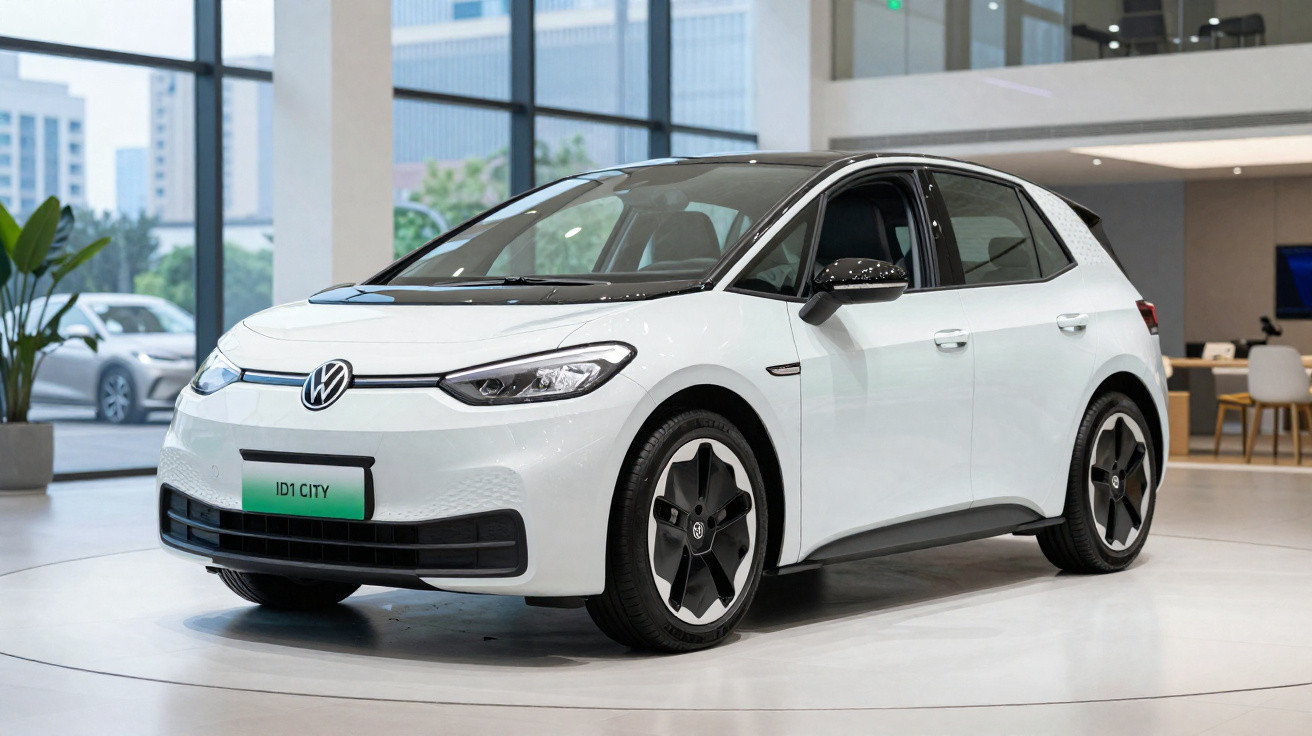
Volkswagen was set to invest around €11 billion in electric mobility by 2024, expanding the ID family with a substantial number of additional models. Among them was the planned all-new ID.1, intended to become the entry point to Volkswagen’s fully electric model range.
Production was expected to begin in 2025, following the unveiling of a concept car in 2023. The ID.1 would take over the role then held by the e-up!, the electric version of the German city car.
If this information proved correct, the little up! would remain in production for 14 years. Only the Fiat 500, which had already been built for 13 years and was due to continue for several more, was likely to exceed that figure.
2025? That is still a long way off
Why the lengthy wait? The previous year, it emerged that SEAT would be tasked with developing a more affordable electric platform within the Volkswagen Group, aimed at smaller cars with market prices below €20,000. The first model based on that architecture had been scheduled to arrive in 2023.
However, plans had changed by May of that year, and the revised strategy may have delayed the timetable, with production now expected to start in 2025.
Volkswagen, the brand itself, would reportedly take responsibility for developing this new dedicated platform. It was expected to be a smaller version of the MEB architecture introduced with the ID.3, a dedicated electric-vehicle platform that would underpin many further models.
The challenge, however, remained the same: achieving a price below €20,000. Creating a mini-MEB was not the real difficulty; the key was cutting costs sufficiently for the ID.1 and, most likely, other small electric cars from the German group to be priced well below €20,000. By comparison, the e-up! had a starting price of roughly €23,000, which was too high for a city car.
What can we expect from the Volkswagen ID.1?
Five years is a considerable period over which to make firm claims about what the ID.1 would be. Car Magazine reported that the ID.1 would use more modest battery capacities, helping to keep costs under control: 24 kWh and 36 kWh. These figures were comparable with those offered by the e-up!, yet the larger battery was still expected to deliver up to 300 km of range, or very close to it.
When SEAT was leading the project, the future sub-€20,000 electric car was announced with a length of less than 4.0 m. As it would be a city car, that was naturally expected to remain the case, although it would be interesting to see how closely the ID.1 would match the e-up!’s practical 3.60 m length.
By the time the ID.1 reached the market, the Volkswagen Group expected to be selling more than one million electric vehicles annually, its target for 2023.
With those volumes in view, Volkswagen said that electric vehicles based on the MEB could be 40% cheaper to manufacture than electric models derived from platforms originally designed to accommodate combustion engines, as was the case with the e-up!.
Perhaps volumes on that scale would be needed for the future ID.1’s business case to add up.
Before the ID.1 arrived, the Volkswagen ID.4, based on the ID. Crozz, was still due later that year. It would be larger than the ID.3 and take the form of a crossover.


Comments
No comments yet. Be the first to comment!
Leave a Comment