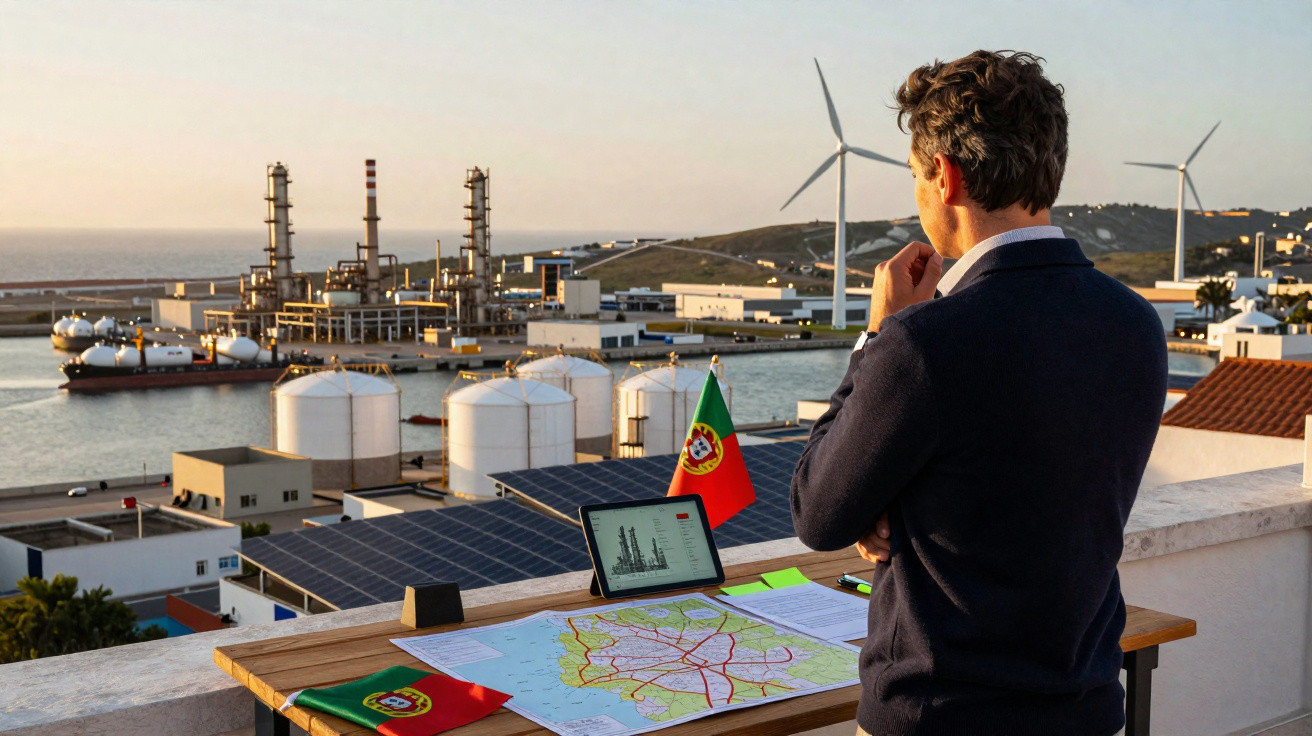
A changing fuel refining landscape in Portugal
Portugal’s fuel refining landscape could change over the coming months. The transaction currently being negotiated by Galp and Spain’s Moeve would establish a major Iberian refining and fuel distribution group, with the Portuguese company holding a minority stake of around 20%.
The deal includes the Sines refinery, which would be transferred to the new entity. Effective control of the country’s only refining facility would no longer be entirely Portuguese, as it has been until now. In return, Galp - in which the State holds an 8% stake through Parpública - would gain greater scale in Spain, commercial integration and access to two refineries across the border.
From a business perspective, the reasoning is understandable. The sector faces immense pressure: the energy transition, squeezed margins, refinery closures across Europe and the need for substantial decarbonisation investment. On a continent where scale has once again become essential for survival, the prospect of creating a “European champion” in the sector is appealing. Even if Repsol’s leadership does not appear to be under threat.
Sines refinery and Portugal’s strategic autonomy
Yet the timing could hardly be worse. The world has changed - or is changing… - at a dizzying pace. Europe is preparing for a scenario it believed had been left behind: the possibility of war within its geographical space, beyond Ukraine’s borders.
EU Member States are debating defence spending of around 5% of GDP. Terms such as strategic autonomy, industrial resilience and energy supply security are being heard again. All of this has returned to the realm of state policy - although, in truth, it never ceased to be.
This raises strategic questions that I hope we shall never need to answer. In the event of a serious disruption - conflict, prolonged scarcity, a state of emergency, and so on - which interest would guide that infrastructure: the Portuguese or the Spanish one?
Manuel Castro Almeida, the Economy Minister, has also acknowledged the importance of keeping control of the Sines refinery in national hands. “It would be better to have a refinery fully controlled from Lisbon. It is the only Portuguese refinery with significant weight in our economy and in the country’s sovereignty,” he said last week at the “Conversa Capital” conference organised by “Jornal de Negócios/Antena 1”.
The Minister for the Environment and Energy, Maria da Graça Carvalho, is leading and overseeing this matter, and has highly relevant experience in this field. The minister says she is “aware of the advantages and possible disadvantages” of the transaction.
When asked whether national energy sovereignty is at risk, she rejected that possibility. “I am a strong supporter of an open market. We have much to gain from an open market. Those who close themselves off do so because they are afraid.” I would not be so categorical. The minister’s confidence and experience should reassure us, but they should not make us complacent.
Energy security in extreme circumstances
History has shown that, in extreme scenarios, states almost always prioritise their own interests. After all, we are talking about fuel, but we could just as easily be talking about water. We all remember the recurring tensions and disputes between Portugal and Spain over the management of dams on shared rivers - the Douro, Tagus and Guadiana - with Portugal accusing Spain of retaining water for hydroelectric purposes while disregarding the minimum flows agreed under the Albufeira Convention.
Whatever the future brings, it is therefore important to remember that the Sines refinery is not merely an industrial asset. It is also an instrument of sovereignty. This dimension becomes more significant as we try to anticipate the problems troubling Europe’s future. There are many of them, and energy security is one of them.

















Comments
No comments yet. Be the first to comment!
Leave a Comment