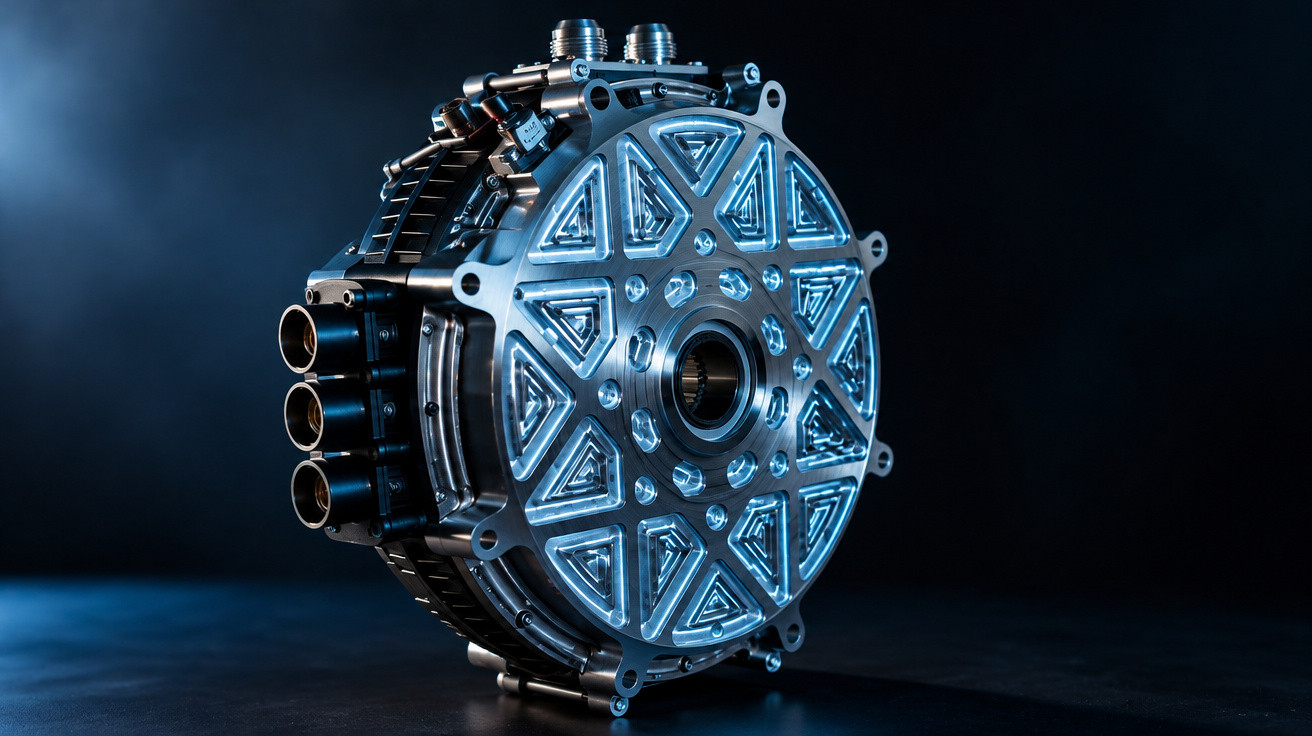
It has taken time to industrialise axial-flux motors for automotive use, largely because they are complex and expensive to make. In recent years, however, supercars including the McLaren Artura, Ferrari 296 and Lamborghini Temerario have all used the technology from the same supplier: YASA, now a Mercedes-Benz subsidiary.
YASA axial-flux motors expand production
The British company intends to build about 25,000 axial-flux motors next year, compared with only 1,000 units five years ago. Production is based at its new 5,574-square-metre super factory in Yanton, near Oxford. The motor is an ingenious design created by Oxford University graduate Tim Woolmer, who began developing the concept for YASA – short for ‘Yokeless and Segmented Armature’ – nearly 15 years ago as a mid-semester project.
How YASA's axial-flux motors work
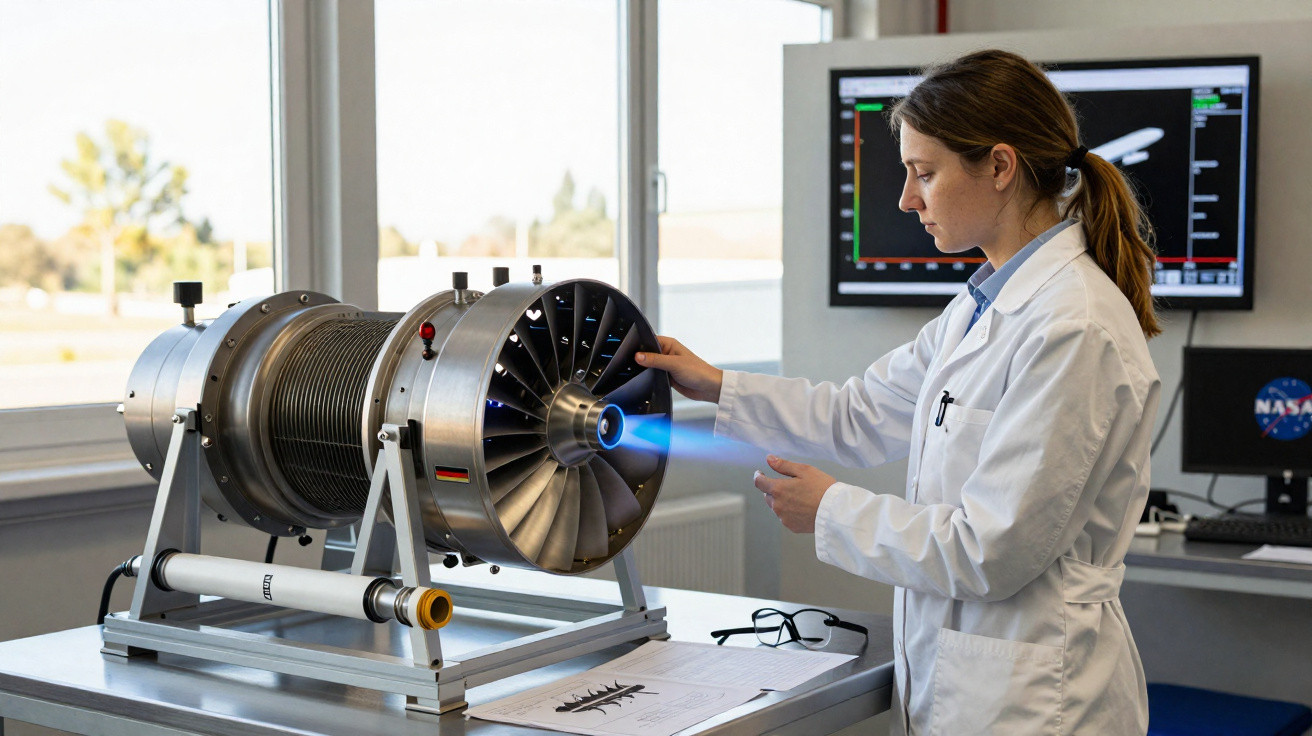
Like radial-flux units, axial-flux motors rely on a permanent-magnet arrangement to generate magnetic fields between rotor and stator. YASA’s design differs by placing a rotor on each side of the stator. As a result, the magnetic lines passing through the stator – referred to as the ‘flux’ – travel in only one direction, removing the requirement for a stator yoke. Edge-wound coils sit within the assembly, while cooling fluid occupies the surrounding spaces.
This arrangement brings clear packaging benefits: the YASA motor is 25kg lighter, 45 per cent smaller and up to four times more power-dense than most radial-flux motors. It also gives carmakers more freedom in how they design their vehicles. Axial motors may sit between the engine and transmission, or be fitted into a narrow space at the rear axle.
Ferrari and Lamborghini packaging choices
Consider the SF90. When Ferrari’s engineers decided to make it a hybrid, they needed a motor that would not raise the crank height. “Ferrari had a strict axial length, and meant the e-motor had to fit within a certain - and very small - diameter,” Woolmer told Top Gear.
“The LaFerrari’s battery and motors weigh almost 150kg, and most of this weight is sprung on the back of the vehicle. Ferrari hated this because it’s the absolute worst place to add mass to a high-performance car. So it wanted to do things differently with the SF90, the 296 and whatever else follows.”
Woolmer believes his creation could also create greater mechanical distinction between hybrid and electric performance cars, because motor placement is less fixed than with radial solutions. “For instance, the Temerario’s motors are permanently attached to the engine, so it can’t be clutched out, whereas the 296's is sandwiched independently just behind the engine, so there’s space for a proper clutch in there.
“Lamborghini’s set-up has the advantages of torque vectoring, while Ferrari’s has the familiarity of rear-drive only. There’s pros and cons to both layouts, but the core DNA is similar. They’ve just been packaged differently to suit the respective manufacturer’s needs and targets.”
Continuing innovation in axial-flux motors
Looking ahead, he said: “Our biggest defence - and I think all companies are the same to an extent - is speed and innovation. Every year, for the last 15 years, we’ve improved our product by 25 per cent. We’ve also developed new manufacturing techniques, so as long as we maintain our core DNA, we’ll be fine.
“But the risk is that, if you get some sort of huge monopoly and start relaxing, before you know it, you’ll be disrupted. I don’t want us to become complacent, so we have to keep disrupting our own technology. I hope that in 10 years we look back at what we’re currently doing and say, ‘Oh, that was a load of rubbish.’”










Comments
No comments yet. Be the first to comment!
Leave a Comment