The Isle of Man TT is the world’s most dangerous motorsport event. It would be easy to believe that the TT - the final stronghold of motorcycle road racing - takes a relaxed approach to safety. With 60.7 km of course to cover, average speeds now exceeding 135mph and 80–90 motorcycles on the circuit at once, one might assume that emergency treatment cannot be as comprehensive as it should be.
Isle of Man TT medical response
In reality, the TT sits at the forefront of medical capability. “If you look at most circuits, even F1 or Moto GP, they will stabilise [the patient] and evacuate,” said the Isle of Man TT’s chief medical officer, Dr Gareth Davies, “but we are now able to bring the whole hospital, the resuscitation team, the emergency theatre, to the patient’s side and stop the dying process at that point.”
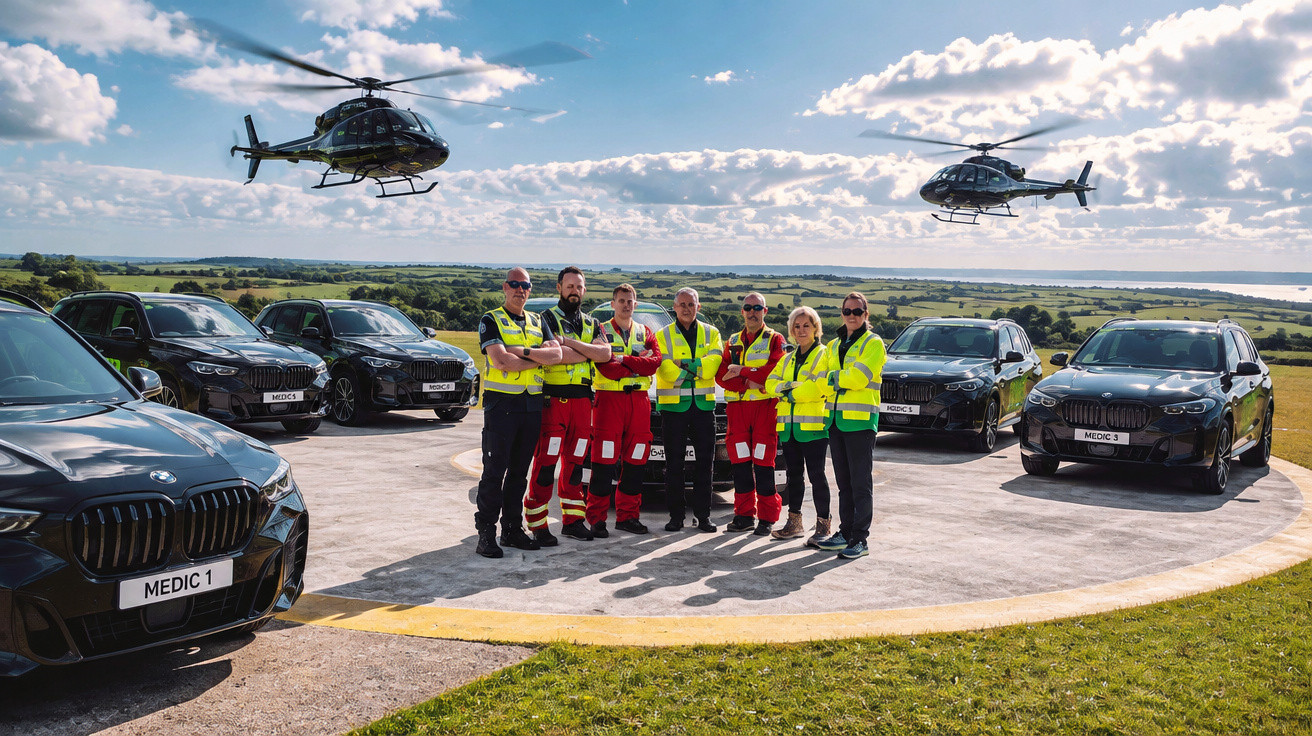
This approach is groundbreaking, although it demands highly complicated logistics. The TT trauma operation comprises 80 paramedics, doctors, nurses and ambulance technicians, seven fully equipped BMW X5s, a minimum of two helicopters and several rapid-response medical motorcycles.
Photography: Huck Mountain
Davies, an emergency medicine consultant, spent 30 years at the Royal London Hospital while also serving as medical director of London Air Ambulance. “In London we were always 15 minutes behind the point of wounding, whereas here, we’re on the scene within two or three minutes. It's a unique bit of medicine, the injuries tend to be very complex so we carry all the equipment necessary to perform major trauma surgery on a pavement, in a field, by a hedgerow, wherever really.”
Planning for TT crash locations
The response is about more than arriving quickly; support must also be placed where it is most likely to be required. “We’ve got a heat map of crashes going back over 100 years, so we know the likely black spots and position the response teams accordingly, but the corner speeds they’re now carrying are moving them further down the road, or creating issues in new places.
“The rider’s safety kit has improved dramatically since I started working on the TT back in 1990, with body airbags, PPE and improved helmet standards, but the appeal and uniqueness of the TT is its intrinsic danger and there’s only so much you can do to mitigate against that.”
Medical crews have also adopted practices from the race teams. Before beginning a procedure, they use a shadow board to confirm that each item is in its proper place, much as a mechanic checks their tools. They also rely on detailed checklists - a necessity given that each of the 140 medical bags positioned around the course contains more than 100 pieces of equipment.
Preventing accidents and monitoring riders
However, Davies, his deputies Sally Simmons and Paul Hancock, and the wider MRMS (Manx Road-racing Medical Services) team are seeking to stay ahead of developments by placing greater emphasis on accident prevention. “This year for the first time every competitor had a full medical before they were allowed to race. Plus we now have a voluntary research programme with the riders that looks at the physicality of the racing, measuring various parameters and monitoring them during the race.
“We're looking at this data to think how long races should be, because we are finding after six laps people are losing a lot of fluid, they're losing grip strength, they're losing concentration.”












Comments
No comments yet. Be the first to comment!
Leave a Comment