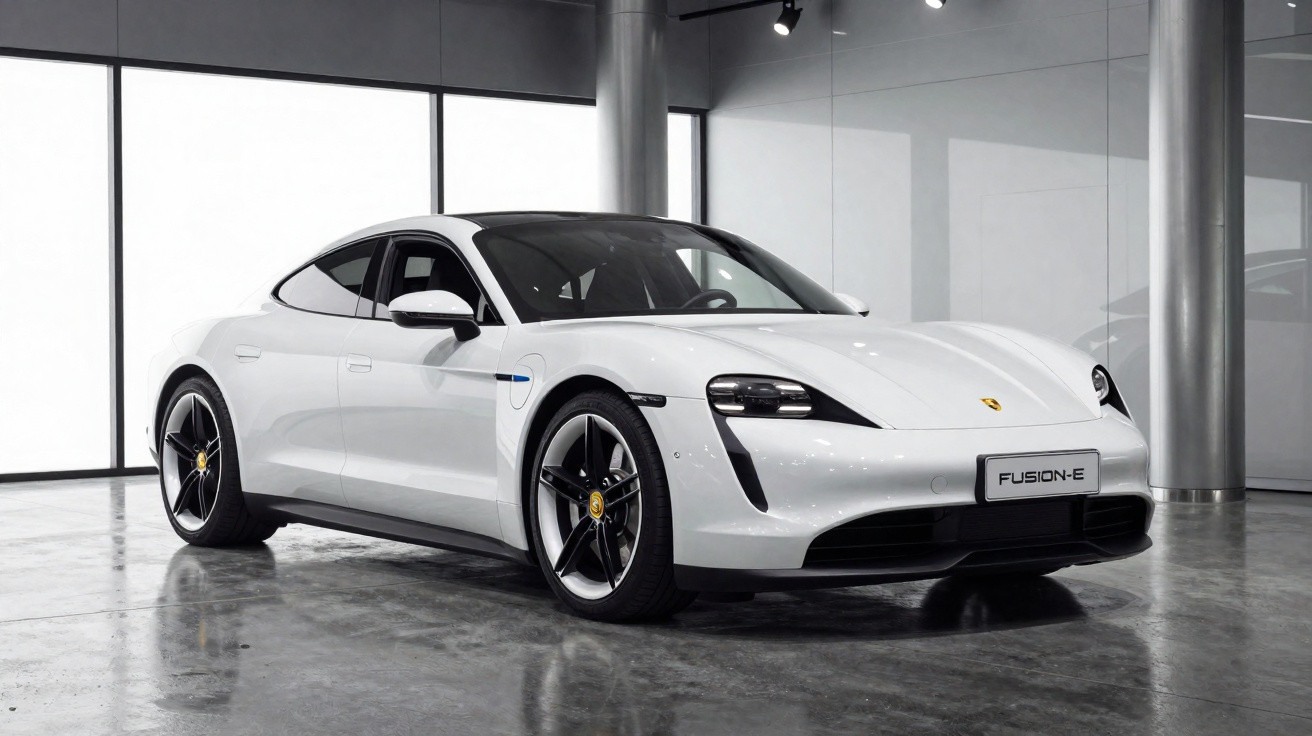
It is certainly a bold rescue plan, but Porsche has embraced risk ever since the Boxster saved the company in the 1990s, demonstrating that Stuttgart knows how to adapt when conditions turn against it.
Porsche’s new chief executive, Michael Leiters, did not take the wheel simply to go through the motions, and he is sharpening the budget axe at the start of 2026. He urgently needs to halt the financial losses that have cost the group €1.8 billion, following the delay to certain electric platforms and a rethink of its electric-car strategy. In China, Porsche’s biggest market from 2015 to 2023, buyers are abandoning the brand’s luxury saloons in favour of highly connected, more affordable domestic alternatives such as the Xiaomi SU7 and the newest NIO models.
Porsche must restore its reputation and recover its former appeal, meaning the company has to make a decision, even if some customers may find it divisive. Its range still includes the Panamera, the long-serving model that remains available with petrol power and as a hybrid, alongside the Taycan, the group’s electric-era pioneer. Can it really keep funding two separate models with similar body styles but entirely different platforms? Would it not make sense to combine them into one vehicle to ease the escalating costs of its electric transition?
A forced Porsche Panamera and Taycan merger to cut development costs
For Michael Leiters, the immediate task is to tighten control over research budgets. The proposal would therefore be to develop a single model line able to accommodate petrol, plug-in hybrid and fully electric power. It would be broadly similar to the approach taken with the new Cayenne Electric, due to begin deliveries later this year, and the Macan: models that share a name despite fundamentally different technical underpinnings.
At present, the Panamera sits on the MSB platform, engineered for internal-combustion engines, while the Taycan uses the J1 architecture, which is dedicated to electric power. This split is hugely expensive because Porsche has to finance two independent development programmes for cars that nevertheless compete in the same segment.
Wheelbase flexibility could unite the two models
This future model could use two wheelbases to bring together the strongest qualities of both cars. Engineers are developing a structure that can bridge the gap between the current Taycan’s 2,900 mm wheelbase and the standard Panamera’s 2,950 mm, while retaining the option to extend it to the 3,100 mm used by long-wheelbase luxury versions. Provided the design is conceived as flexible from the outset, this dimensional difference would not be fundamentally prohibitive. Above all, the merger would prevent the worst-case scenario: the removal of one of the two models on cost grounds.
China sales and margins add pressure on Porsche
For years Porsche’s golden goose, the Chinese market delivered a monumental blow to Porsche, with sales down 26% last year. As its operating margin has effectively collapsed to a tiny 0.2% over the first nine months of 2025, the Stuttgart manufacturer can no longer afford two distinct platforms. Making the Panamera and Taycan share a common foundation may be less glamorous on paper, but it is now one of the options the chief executive sees as a way to clear the brand’s debt and avoid ending up with a deeply loss-making balance sheet. Leiters also spent many years working in senior roles at McLaren and Ferrari, so he will manage Porsche like a racing team: if unnecessary weight must be removed from the budgets, there can be no half measures.
Comments
No comments yet. Be the first to comment!
Leave a Comment