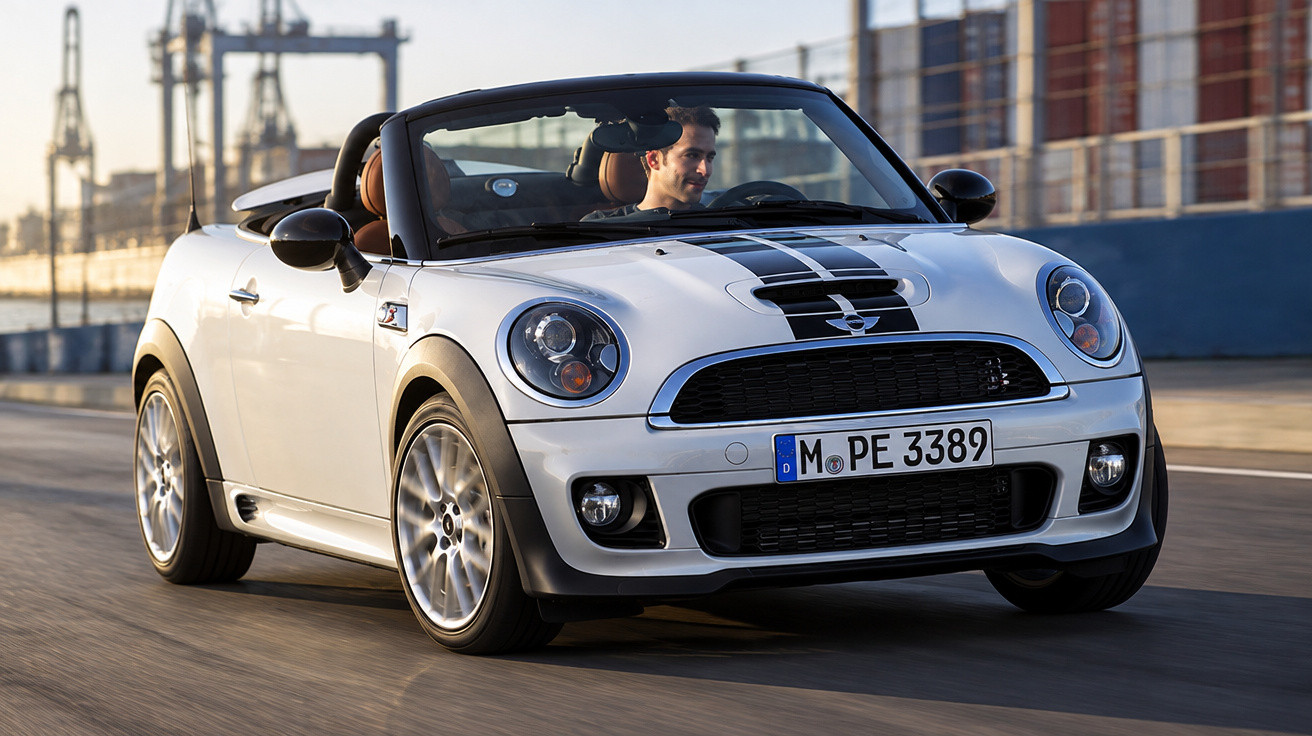
It is a fine day. The sun is out and the temperature is agreeably mild. A lively little roadster is exactly the sort of car I want or need, no more and no less. It has only two seats, but that is all that is required today. It is not a supercar, yet it is, to borrow that dreadful expression, as quick as the conditions permit. (And then some.) The lanes are twisty and tempting, albeit narrow and slightly uneven, so I am glad not to be in something low-slung or broad. The countryside looks wonderful and carries the scents of early spring. On the face of it, then, this is living the dream. It is not, however, a dream that occupies many minds.
When something is rare, does that make it exclusive, or does it simply mean it has failed? Consider the small, hatchback-based two-seat roadster. The Renault Wind has just tootled off for the last time, having been withdrawn from the UK because nobody was interested. The Ford StreetKa and Fiat Barchetta have long since disappeared. Does anyone recall the Honda CRX del Sol? In general, these compact cars do not prosper.
Yet the BMW-Mini group usually seems able to go where other manufacturers cannot, and buyers eagerly embrace the result. There have been exceptions: I cannot remember the last time I saw a 5-Series GT, while Mini Clubmans are hardly everywhere. Still, if you had to wager on one company making a success of a market sector where everyone else has stumbled, this would be the team to back.
Mini Roadster: a two-seat convertible
What, then, is the Mini Roadster? Some Minis have deliberately indirect names, such as the Paceman, but this one is self-explanatory. It is a Mini with two seats and an uncomplicated fabric roof. Apart from more pronounced plastic lower spoilers and side sills, its front bodywork is identical to that of the standard hatchback and, indeed, the four-seat Convertible. Its tail and sharply angled windscreen are shared with the new two-seat Coupe. Yes, the Mini hatchback has produced two distinct convertibles: a four-seater and this two-seater. Neither replaces the other, and both will remain on sale alongside one another.
That amounts to a formidable range of Minis: Hatch, Convertible, Clubman, Coupe and Roadster. Never mind the taller models, either: the Countryman and, later this year, its crossover-coupe offshoot, the Paceman. Distinguishing every Mini takes a practised eye. Equally, there will be no dramatic revelation about the way this one drives. The differences are mostly subtle.
With no rear seats, there is room for additional metal bracing behind the occupants, intended to reinforce the bodyshell. It also keeps the Convertible's strengthened sills. Even so, the reflection in the rear-view mirror still becomes blurred on rough roads. In other words, the structure is sufficiently stiff rather than genuinely rigid.
A pop-up spoiler mounted on the boot lid is intended to keep the car stable at speed. If that is not what achieves it, then something else does, because it does not wander. With the roof lowered, the aerodynamics within the cabin are another achievement. At motorway speeds, the stereo remains audible and turbulence does not turn your head to jelly. The heater and the cheek-scorchingly effective heated seats can still do their jobs. The reclined windscreen may benefit both styling and aerodynamics, but it places the screen pillars close to your head, making them substantial blind spots. Rearward visibility is nonetheless better than in the Convertible, as the hood folds flat. There is a major style advantage too: after all, the Convertible resembles a bit of a pram. The Roadster's roof is a straightforward single-layer canvas arrangement, with the frame rails exposed inside. So what? It seals extremely well, and electric operation is standard.
Cooper S handling and performance
I am driving a Cooper S on 16-inch wheels, and that is sufficient. The JCW's additional power, or the harshness of broader, lower-profile tyres on 18-inch wheels, for example, would not be appropriate. Not on these lumpy roads, at any rate. There is already torque steer when you floor the accelerator. As with the Coupe, the marginally firmer suspension is meant to deliver ‘sporty handling', but in the Roadster it cannot compensate for bodyshell flex, which undermines precision.
Nevertheless, corners can be enjoyable. It understeers slightly, but reacts keenly to the throttle and tucks into the bend with enthusiasm when you lift off. You sense its activities through the seat rather than the steering wheel because, as with every R56-generation Mini, the steering is fast and accurate but offers little feel. Torque steer, the occasional suspension clonk, the restless ride and inert steering all underline the Mini's advancing age; the entirely new hatchback is only a year away.
For all those dynamic shortcomings, it remains entertaining. Bring the new 184bhp engine onto boost, let it build some revs, and a surge of effort sends you forward. Extracting the best from a Mini is straightforward, since it communicates clearly what it is doing.
The Mini Roadster versus Mazda MX-5
What it is not, though, is a sports roadster. Here lies the vast elephant in the corner, ready to sit on and flatten every small front-wheel-drive convertible: the Mazda MX-5. In this Mini, you do not sit low and cocooned. You are not positioned over the rear wheels, nor is there a long bonnet stretching ahead. It lacks the steering purity of a rear-wheel-drive car and the gearchange's slickness. The Mazda is simply more distinctive. The Mini feels much like the last Mini you drove.
But that is the bargain. It envelops you in the psychological comfort blanket that the Mini name represents. Yes, Minis are everywhere, but - look at me! - this one has two seats... It is an individualistic statement for conformists. Small steps towards freedom.


Comments
No comments yet. Be the first to comment!
Leave a Comment